As a veterinarian, I often see well-meaning cat owners searching for a simple solution to two of the most common feline complaints: pesky hairballs and concerns about urinary health. The desire to address both with one convenient bag of food is completely understandable, especially for owners of long-haired cats or fastidious groomers. However, navigating the line between effective prevention and necessary medical treatment is where confusion—and potential risk—can arise.
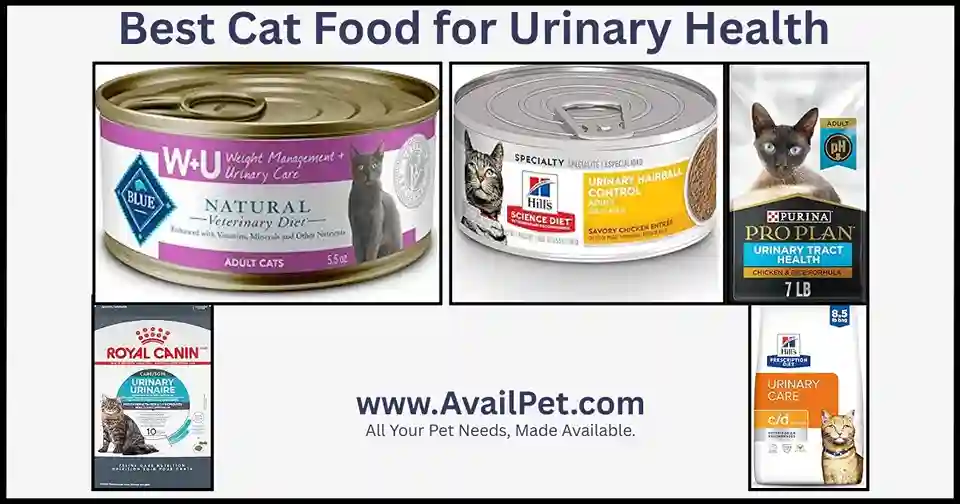
Our comprehensive guide to Best Cat Food for Urinary Health details the full spectrum of nutritional strategies, from over-the-counter maintenance to potent prescription therapies. Within that spectrum, Hill’s Science Diet Urinary & Hairball Control occupies a specific and important niche: it is formulated for prevention and maintenance, not for the treatment of active disease.
This is not a prescription diet. It cannot dissolve bladder stones or treat Feline Idiopathic Cystitis (FIC). What it can do is offer a scientifically balanced, over-the-counter option for healthy cats prone to both hairballs and urinary pH imbalances, helping to keep minor issues from becoming major ones.
🐾 Recommended for Pet Parents
Discover trusted resources, tips and tools for your furry friend!
Explore Free Pet Resources →In this review, I will clarify the precise purpose of this dual-benefit formula, identify the ideal cat for this food, and draw the critical line between supportive nutrition and medical necessity. My goal is to ensure you can make a safe, informed choice for your cat’s preventive care.
At-a-Glance: The Maintenance vs. Treatment Matrix
For cat owners deciding if this is the right tool for their cat, here is a clear, scannable breakdown of its role within the broader urinary health strategy. Understanding this distinction is crucial for your cat’s safety.
| Factor | Urinary & Hairball Control Verdict | The Clinical Insight |
|---|---|---|
| Primary Purpose | Dual-Issue Prevention: Supports urinary tract environment and manages hairball passage in healthy cats. | This is a “health maintenance” food, analogous to a daily vitamin. It is NOT medicine for a diagnosed illness. |
| Ideal Candidate | A healthy cat with no urinary stone history, who is prone to hairballs (e.g., long-haired breed, excessive groomer). | The perfect profile: Your cat sees the vet annually, gets a clean bill of health, but you want proactive support for two common issues. |
| Key Differentiator | OTC Convenience with Science: Blends controlled mineral levels for urine pH with specific fibers for digestive motility. | It brings a level of targeted nutrition to the OTC shelf but lacks the therapeutic mineral restrictions of a prescription. |
| Prescription Required? | ❌ NO. This is an over-the-counter (OTC) “health nutrition” diet. | This accessibility is its main benefit, but also the source of potential misuse if a cat has an undiagnosed condition. |
| Our Rating | 8/10 for Target Patients. An excellent preventive choice that fills a unique niche for the right cat. | It loses points because it’s dry food only, missing the crucial hydration boost of wet food for optimal urinary health. |
Bottom Line: Think of this as the proactive, daily-care option in your toolkit. If your cat is healthy and you want to support their urinary system while tackling hairballs, this is a strong choice to discuss with your vet. If your cat has any history of urinary crystals, stones, blockages, or FIC, this is not appropriate—your cat requires a prescription therapeutic diet and veterinary treatment.
Understanding the Dual-Issue Cat: A Profile, Not a Diagnosis
In veterinary practice, we frequently encounter a specific—and very common—patient profile: the otherwise healthy cat that presents with two interrelated, bothersome issues. Hill’s Science Diet Urinary & Hairball Control is formulated precisely for this profile.
The “Healthy but Hassled” Cat
This diet is designed for the cat who:
- Is clinically healthy on annual exams and bloodwork.
- May produce frequent hairballs (more than one every few weeks).
- Is a long-haired breed (Persian, Maine Coon, Ragdoll) or a meticulous groomer.
- Lives a typical indoor lifestyle where urinary health maintenance is a sensible priority.
- Has no history of urinary obstruction, stones (struvite or oxalate), or Feline Idiopathic Cystitis (FIC).
For these cats, hairballs are a nuisance, and urinary health is a concern for prevention—not a current medical crisis. This food aims to manage both proactively.
The Critical Distinction: Maintenance vs. Therapeutic
This is the single most important concept in this review. The nutritional goals for preventing problems and treating active disease are fundamentally different.
- Therapeutic/Prescription Diets (like Hill’s c/d Multicare):
- Purpose: To treat and dissolve existing struvite stones, or to manage a diagnosed condition like FIC.
- Action: Drastically restrict specific minerals (e.g., magnesium) and include targeted additives (e.g., L-tryptophan for stress).
- Access: Require a veterinarian’s prescription.
- OTC Maintenance Diets (like Urinary Hairball Control):
- Purpose: To support a healthy urinary environment and aid hair passage in a cat with no existing disease.
- Action: Balance and control mineral levels to promote a favorable urine pH and include dietary fiber.
- Access: Available over-the-counter.
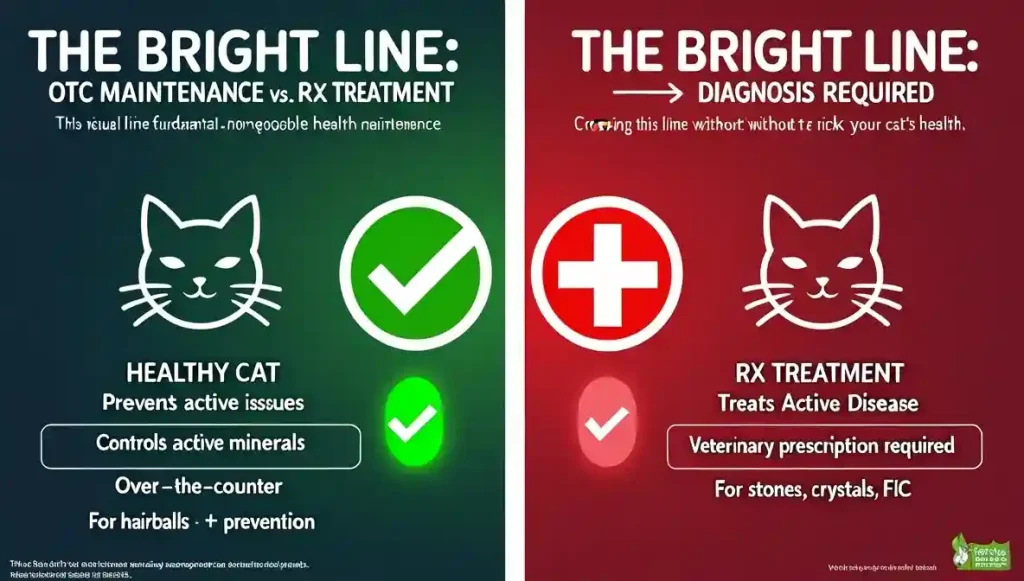
The Veterinarian’s Analogy: Think of it this way. If a urinary stone is a house fire, a prescription diet is the fire department coming to put it out. This OTC maintenance food is like having good smoke alarms and fire extinguishers in your home to prevent a fire from starting in the first place. You would never use a smoke alarm to fight an active blaze.
If your cat is showing symptoms of urinary disease—straining, vocalizing in the litter box, blood in urine, or frequent attempts to urinate—you need the fire department. Stop reading and call your veterinarian. This food is for prevention, not emergency response.
Dual-Mechanism Breakdown: How It Works
Hill’s Science Diet Urinary & Hairball Control operates on two parallel tracks, each addressing a distinct physiological system. Here’s how its formulation supports a healthy cat from the inside out.
Mechanism 1: Urinary Tract Support (The “Environment Manager”)
This pathway focuses on creating and maintaining a urine environment that is less hospitable to the formation of struvite crystals, the most common type in cats.
- Controlled Mineral Levels: The formula provides balanced amounts of magnesium, calcium, and phosphorus. It doesn’t restrict them to the extremely low levels of a prescription diet but ensures they are not present in excessive amounts that could contribute to crystal formation.
- Promotion of Optimal Urine pH: The ingredients are selected to help maintain urine in a slightly acidic range (around 6.3). This pH discourages the formation of struvite crystals, which prefer a more alkaline environment.
- The Goal: To promote the production of dilute, healthy urine with a balanced pH. Think of it as keeping the “plumbing system” clean and flowing smoothly to prevent sediment (crystals) from settling.
Mechanism 2: Hairball Control (The “Digestive Conveyor Belt”)
This pathway tackles hairballs not by preventing grooming, but by aiding the natural passage of ingested hair through the digestive tract.
- Natural Fiber Blend: The kibble includes specific fibers like cellulose and psyllium. These fibers are not digestible; instead, they add gentle bulk to the intestinal contents.
- How It Moves Hair: This increased bulk stimulates healthy gut motility. It acts like a soft brush, helping to move swallowed hair along the digestive tract so it can be passed safely in the feces, rather than accumulating into a hairball that is later vomited up.
- Skin & Coat Nutrients: The diet includes omega-6 fatty acids and vitamin E to support skin health and coat strength. A healthier coat may shed less and be less prone to breakage, potentially reducing the total amount of hair ingested.
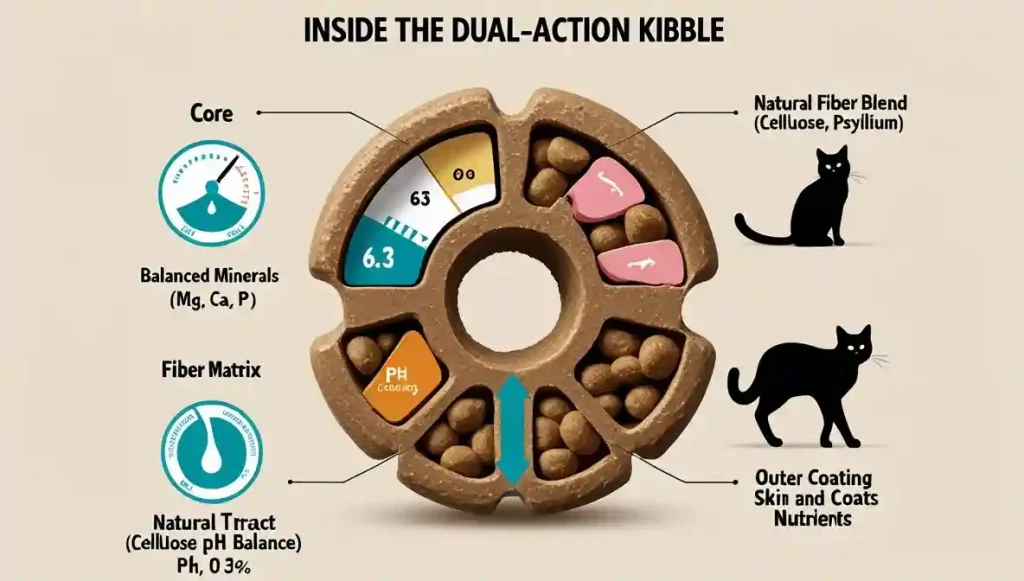
The Veterinarian’s Take: The elegance of this formula is in its simultaneity. It recognizes that a cat’s body is an interconnected system. By supporting the urinary environment and improving digestive transit, it addresses two frequent owner concerns with a single, science-backed nutrition plan. However, its mechanisms are designed for ongoing maintenance, not acute intervention.
Ingredient Intelligence Report: A Maintenance Formula
Let’s examine what’s inside the bag. As an over-the-counter “health nutrition” diet, its ingredient panel is designed for balanced support, not aggressive medical intervention. Below is my analysis of the formulation available via our affiliate link: View Hill’s Science Diet Urinary Hairball Control on Amazon.
(Note: Always check the label on your purchase for the most current information.)
Key Functional Ingredients & Their Role
| Ingredient | Category | Primary Function in This Diet | Veterinary Context |
|---|---|---|---|
| Chicken | Protein Source | Primary, high-quality protein for muscle maintenance and overall health. | A palatable, digestible protein that provides essential amino acids without excessive mineral load. |
| Brewers Rice, Corn Gluten Meal, Brown Rice | Carbohydrates / Energy | Provide a consistent source of calories and help form the kibble. | These ingredients allow for precise control over the mineral and protein matrix of the diet, which is essential for its urinary support claims. |
| ✶ Cellulose Fiber, Psyllium | Dietary Fiber | Core hairball-control ingredients. Insoluble fiber that adds bulk to promote intestinal motility and hair passage. | This is the specific functional difference from a standard urinary food. These are gentle, effective fibers for digestive health. |
| Chicken Fat (preserved with mixed tocopherols) | Fat / Energy | Concentrated source of energy and essential fatty acids. | Supports skin and coat health. Mixed tocopherols are natural, antioxidant preservatives. |
| Potassium Chloride, Choline Chloride | Urinary & Vital Nutrient Support | Help maintain proper electrolyte balance and support liver/kidney function. | Standard additions in quality cat foods to ensure nutritional completeness. |
| Vitamins & Minerals | Micronutrients | A full spectrum including Vitamin E (antioxidant) and Zinc (skin health). | Ensures the diet is nutritionally complete and balanced for adult maintenance. |
✶ Denotes Core Differentiating Ingredients for Hairball Control
What You Won’t Find (And Why That’s Okay)
It’s equally important to note what this OTC maintenance formula lacks compared to its prescription cousins:
- No L-Tryptophan or Hydrolyzed Milk Protein: Unlike Hill’s c/d Multicare Stress, it contains no specific calming nutrients. It does not directly address stress or anxiety.
- No Therapeutic Mineral Restriction: While minerals are controlled, they are not restricted to the extremely low levels required to dissolve existing struvite stones.
- No Added Urinary Acidifiers (e.g., Methionine): Relies on the overall ingredient blend to support optimal pH, rather than adding strong acidifying agents.
This absence is by design. It keeps the formula safe and appropriate for long-term, daily feeding in a healthy cat population without the need for veterinary monitoring that a therapeutic diet requires.
Nutritional Profile at a Glance (Dry Kibble)
| Nutrient | Typical Guarantee | Why It Matters for Maintenance |
|---|---|---|
| Crude Protein (Min) | ~32% | Adequate for adult maintenance without the higher levels that might alter urine pH. |
| Crude Fat (Min) | ~15% | Provides energy and supports skin/coat health to potentially reduce shedding. |
| Crude Fiber (Max) | ~6.5% | Higher than average. This reflects the added cellulose and psyllium for hairball control. |
| Moisture (Max) | ~10% | Critically Low. This is standard for dry food but underscores the absolute need to promote separate water intake. |
| Magnesium (Max) | ~0.12% | Controlled, but not at the ultra-low prescription level (<0.08%). Suitable for prevention, not treatment. |
| Taurine (Min) | Added | Essential nutrient for heart and eye health; always supplemented. |
The Bottom Line: This ingredient panel is that of a well-designed, functional maintenance food. It uses specific fibers to tackle hairballs and a careful balance of ingredients to support urinary health. It is formulated to be fed as a cat’s sole diet, providing complete nutrition while addressing two common concerns. It should be evaluated on its ability to prevent issues in healthy cats, not on its power to resolve existing medical conditions.
Clinical Assessment: Pros, Cons & The Ideal Patient
Based on its formulation and intended use, here is my clinical evaluation of where Hill’s Science Diet Urinary & Hairball Control excels, where it falls short, and—most importantly—exactly which cats should be eating it.
The Advantages: Why It’s a Valuable OTC Option
- Dual-Issue Convenience: For the right cat, it elegantly solves two problems with one bag. This simplifies feeding routines and can be more cost-effective than purchasing separate urinary food and hairball remedies.
- Proactive, Science-Backed Prevention: It brings a level of targeted nutritional science to the over-the-counter shelf. The specific fiber blend and controlled mineral levels are based on veterinary research, offering more than a generic “indoor cat” formula.
- No Prescription Needed: Its accessibility is a major benefit for owners of healthy cats who want to be proactive. It allows for easy acquisition and is often more affordable than prescription diets.
- High Palatability: In my experience, cats generally find this diet very palatable. Adherence is rarely an issue, which is critical for a long-term maintenance food.
The Limitations & Important Cautions
- NOT a Therapeutic Diet (The Critical Warning): This cannot be overstated. It will not dissolve bladder stones, treat urinary infections, or manage Feline Idiopathic Cystitis (FIC). Misusing it as a treatment for a sick cat delays proper veterinary care.
- Dry Food Only: This is its most significant nutritional drawback for urinary health. Dry kibble provides less than 10% moisture, whereas a cat’s natural prey is about 70% water. Relying solely on this food does not promote the high water intake essential for producing dilute, bladder-flushing urine.
- Potential for Misdiagnosis: A cat with subtle urinary symptoms might be switched to this food by a well-meaning owner. This can mask the progression of a disease like FIC or crystals, leading to a more serious crisis like a blockage later.
- Not for Weight Loss or Other Conditions: It is formulated solely for urinary/hairball maintenance in healthy cats. It is not a weight management, kidney support, or sensitive stomach diet.
The Ideal Patient Profile
This food is a precision tool for a specific, healthy demographic. Your cat is a strong candidate if they check ALL of these boxes:
- ✅ Annual Vet Visit: Sees the veterinarian at least yearly and receives a clean bill of health (normal bloodwork and urinalysis).
- ✅ No Urinary History: Has never been diagnosed with crystals, stones, blockage, or FIC.
- ✅ Prone to Hairballs: Is a long-haired breed, a senior cat with less efficient digestion, or a fastidious groomer that produces hairballs regularly.
- ✅ Indoor Lifestyle: Where proactive health maintenance is a priority.
If your cat matches this profile, this diet can be an excellent cornerstone of their preventive care. If your cat fails ANY of these criteria, particularly the first two, this diet is not appropriate, and you should consult your veterinarian for a therapeutic plan.
Comparative Analysis: Where It Fits in the Nutritional Landscape
To understand the unique role of this diet, it’s essential to see how it compares to other options, both within the Hill’s brand and on the broader market. This clarifies its position as a maintenance bridge, not a therapeutic endpoint.
Head-to-Head: Urinary Hairball Control vs. Key Alternatives
| Feature | Hill’s Science Diet Urinary Hairball Control (OTC) | Hill’s Prescription c/d Multicare (Rx) | Standard Hairball Control Formula (OTC) | Generic “Urinary Health” Food (OTC) |
|---|---|---|---|---|
| Primary Goal | Dual Prevention: Urinary pH + Hairballs | Medical Treatment: Dissolve struvite stones, prevent recurrence | Symptom Management: Hairball passage only | General Support: Vague urinary “health” |
| Urinary Efficacy | Supportive: Controls minerals for pH balance. | Therapeutic: Restricts minerals to dissolve stones. | None: Not formulated for urinary care. | Variable: Often lacks specific mineral control. |
| Hairball Efficacy | Active: Contains targeted fiber blend (cellulose, psyllium). | Incidental: May occur but not a design goal. | Active: Contains fiber, often less specific. | None: Not formulated for hairballs. |
| Best For… | The healthy, hairball-prone cat needing proactive urinary maintenance. | The cat with diagnosed struvite crystals/stones or FIC. | The healthy cat with only hairball issues. | The healthy cat where urinary care is a low-priority concern. |
| Access | Over-the-counter. | Veterinary Prescription Required. | Over-the-counter. | Over-the-counter. |
| Verdict | The strategic choice for combined, preventive care. | The necessary medical treatment for active disease. | A good single-issue solution. | A non-specific option with limited proven benefit. |
The Hill’s Family Tree: Navigating the “c/d” vs. “Science Diet” Line
Confusion often arises between Hill’s prescription and non-prescription lines. Here is the simple breakdown:
- Hill’s Prescription Diet:
- Names start with a letter/condition: e.g., c/d (urinary), k/d (kidney), i/d (digestive).
- Purpose: To treat, manage, or dissolve specific medical conditions.
- Access: Rx only. Sold by veterinarians or authorized pharmacies.
- Hill’s Science Diet:
- Names describe a benefit: e.g., “Urinary & Hairball Control,” “Adult Indoor Chicken.”
- Purpose: For lifelong nutrition & preventive health in healthy pets.
- Access: Over-the-counter. Sold in pet stores, online, etc.
Urinary Hairball Control is a “Science Diet” product. It is the OTC cousin to the prescription c/d line. They share nutritional philosophy but differ fundamentally in potency and purpose.
The Veterinarian’s Decision Framework
When a client asks about urinary and hairball issues, my thought process is:
- Is the cat showing ANY urinary symptoms (straining, blood, frequency)?
- YES → Urgent vet visit for diagnosis. Possible outcome: Prescription c/d diet.
- NO → Proceed to Q2.
- Is the cat otherwise healthy per recent vet exam?
- NO → Address underlying health issue first.
- YES → Proceed to Q3.
- Does the cat have problematic hairballs?
- NO → A standard urinary care food may suffice.
- YES → Hill’s Science Diet Urinary & Hairball Control is an excellent recommendation.
This diet finds its sweet spot at the intersection of Health + Hairballs + Proactive Urinary Care. It is not for the sick cat, the cat with only one issue, or the cat needing advanced medical nutrition.
Implementation & The Hydration Imperative
Success with this—or any—dry urinary maintenance diet hinges on one factor above all others: water. Implementing it correctly is not just about the kibble in the bowl; it’s about creating a complete hydration strategy.
Step 1: The Non-Negotiable Hydration Protocol
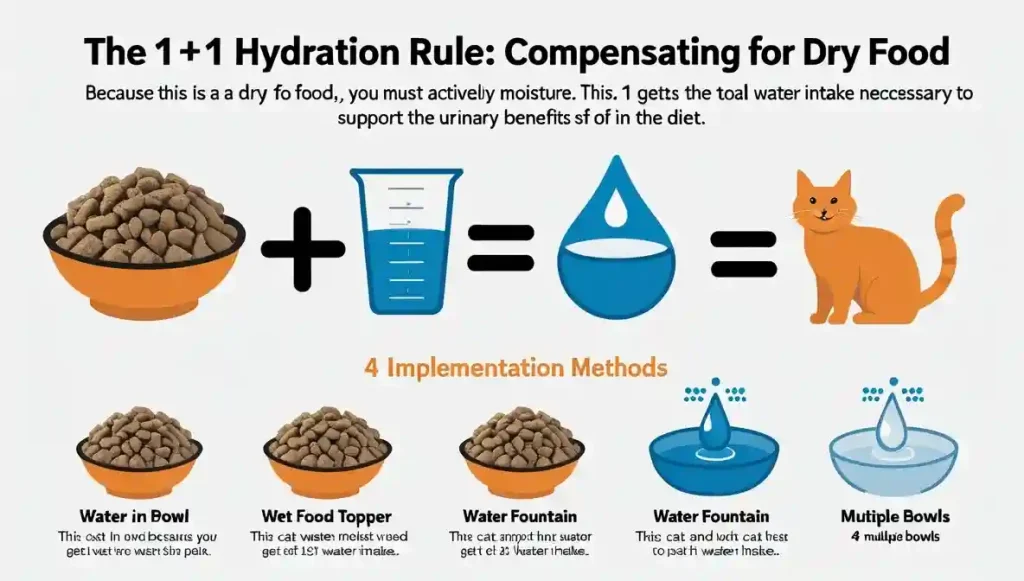
Because this is a dry food-only formula, you must actively compensate for its low moisture content. Dehydration is a primary risk factor for urinary crystal formation, negating the diet’s benefits.
How to Achieve This:
- The Food Bowl Boost: Add 1-2 tablespoons of warm water or low-sodium chicken broth to the kibble at every meal. Let it sit for a minute to soften and create a gravy.
- Strategic Wet Food Topping: Once daily, add a urinary-friendly wet food topper. A spoonful of a high-moisture option like Hill’s Science Diet Urinary Care wet food or a plain, cooked meat like chicken breast (in water) adds crucial moisture and palatability.
- Invest in a Water Fountain: Cats are biologically drawn to moving water. A ceramic or stainless-steel fountain encourages drinking.
- Multiple Water Stations: Place fresh water bowls in several quiet locations away from the food bowl and litter box.
Step 2: Transition & Feeding Guidelines
- Transition Slowly: Mix with your cat’s previous food over 7-10 days (25% new / 75% old, increasing gradually) to prevent digestive upset.
- Follow Feeding Charts: Use the guideline on the package as a starting point, based on your cat’s ideal weight. Adjust up or down to maintain a healthy body condition.
- Consistency is Key: Feed measured meals at consistent times rather than free-feeding. This helps monitor appetite and ensures the specific nutrient balance is maintained.
Step 3: Monitoring for Success & Signs of Trouble
What Success Looks Like (Within 4-8 Weeks):
- Reduction in vomiting episodes, especially hairballs.
- Normal litter box habits: regular urine clumps of good size, normal stool.
- A healthy, shiny coat.
Red Flags (Contact Your Vet Immediately):
- Any change in urinary habits: Straining, frequent attempts, crying in the box, blood in urine.
- Vomiting persists or increases, especially if it’s not hairball-related.
- Loss of appetite or lethargy.
- Constipation or diarrhea, which could indicate an issue with the fiber content.
The Long-Term Partnership with Your Veterinarian
Even for a healthy cat on a maintenance diet, annual veterinary check-ups are non-negotiable. At these visits, request:
- A urinalysis: This is the only way to objectively check if the diet is effectively maintaining a healthy urine pH and specific gravity (concentration).
- Weight and body condition assessment.
- A discussion of your hydration strategy.
This diet is a tool for partnering with your vet in preventive care, not a substitute for it. Regular check-ups ensure your “healthy” cat stays that way and allows for early intervention if any issues arise, preventing a minor imbalance from becoming a major health crisis.
FAQs About Hill’s Science Diet Urinary Hairball Control
Here are direct answers to the most common questions I receive from cat owners about Hill’s Science Diet Urinary & Hairball Control.
Can this food dissolve my cat’s existing bladder stones or crystals?
Absolutely not. This is the most critical distinction. This is an over-the-counter maintenance diet, not a prescription therapeutic food. It lacks the precise, restricted mineral levels required to dissolve struvite stones. If your cat has been diagnosed with stones or crystals, they require a veterinary-prescribed diet like Hill’s Prescription Diet c/d Multicare or Royal Canin Urinary SO. Using this food instead would be ineffective and delay proper treatment.
My cat was just diagnosed with Feline Idiopathic Cystitis (FIC). Is this a good choice?
No, it is not the optimal choice for FIC. FIC is primarily a stress-related disorder involving bladder inflammation. While this diet supports a healthy urinary environment, it contains no ingredients to address stress or anxiety (like L-tryptophan). For FIC, a diet specifically formulated for the condition, such as Hill’s Prescription Diet c/d Multicare Stress, combined with environmental enrichment, is the recommended nutritional approach.
Why is it only available in dry kibble? Doesn’t wet food help more with urinary health?
You are correct—wet food is superior for hydration. Formulating a stable wet food with the specific fiber blend needed for consistent hairball control presents significant technical challenges. The dry format ensures the fiber is evenly distributed and effective. This is precisely why the “Hydration Protocol” (adding water/wet toppers) is non-negotiable when feeding this diet. You must actively compensate for the lack of dietary moisture.
Is this food suitable for a multi-cat household where only one cat has a urinary history?
It can be a practical maintenance solution, but with a major caveat. If the cat with a history is currently healthy (no crystals, stones, or blockages) and only needs preventive support, and all other cats are healthy, it can be fed to the group. However, if the cat with a history has active disease or requires a prescription diet, they must eat their therapeutic food separately. It is unsafe to feed this maintenance diet to a cat that medically needs a prescription formula.
How long until I see fewer hairballs?
Most owners notice a reduction in vomiting episodes within 4 to 6 weeks of exclusive feeding. The fiber needs time to regulate digestion and improve the passage of hair through the gastrointestinal tract. Consistency is key—the diet must be fed as the sole nutrition to be effective.
Can I mix this with another urinary food or hairball supplements?
It is generally not recommended. Mixing it with another urinary food disrupts the precise mineral balance it’s designed to provide. Adding separate hairball gels or pastes is usually unnecessary, as the diet contains a targeted fiber blend. If you feel supplements are needed, consult your veterinarian first to avoid over-supplementation or nutrient imbalances.
My cat is on a weight management diet. Can I feed this instead?
No. This is not a weight loss diet. It is formulated for “adult maintenance,” meaning it provides calories to maintain an existing weight. If your cat needs to lose weight, you should use a diet specifically formulated for weight management, as feeding this could hinder their progress. Discuss your cat’s weight and urinary goals with your vet to find the right plan.
Ethical Guidance & Final Professional Verdict
Prescribing—or in this case, recommending—any diet carries an ethical responsibility. My final assessment is framed by the imperative to ensure this product is used correctly to support health, not mistakenly to treat disease.
The Veterinarian’s Gatekeeping Role for OTC Diets
Even without a prescription requirement, ethical recommendation demands a protocol:
- Confirm Health Status First: This diet should only be considered after a veterinary examination within the last 12 months confirming:
- No evidence of urinary crystals, stones, or inflammation on urinalysis.
- Normal kidney function and bloodwork.
- A healthy body weight.
- Educate on the “Bright Line” Rule: I make owners verbally acknowledge: “This is for my healthy cat. If my cat shows any urinary symptoms, I will stop this food and call the vet immediately.” This prevents dangerous delays in seeking care.
- Mandate the Hydration Plan: My recommendation is contingent on the owner committing to the “1+1 Hydration Protocol” outlined in this review. Without it, the diet’s urinary benefits are significantly undermined.
Your Action Plan: A Responsible Owner’s Checklist
Before purchasing this food, ensure you can answer YES to all of the following:
- My cat has had a veterinary check-up in the past year and was declared healthy.
- My cat has NEVER been diagnosed with urinary crystals, stones, or FIC.
- I am seeking a food for PREVENTION and MAINTENANCE, not to treat a current problem.
- My cat struggles with hairballs.
- I understand this is a DRY FOOD and commit to actively increasing my cat’s water intake.
If you answered “NO” to any of the first three items, consult your veterinarian before making any dietary change.
Final Professional Verdict
Hill’s Science Diet Urinary & Hairball Control is a well-formulated, intelligent solution for a specific and common niche: the otherwise healthy cat prone to hairballs whose owner wants to proactively support urinary tract health.
Its greatest strength—convenient, over-the-counter access—is also its greatest risk. It is powerless against active disease and must never be confused with treatment. For the healthy long-haired cat, the meticulous groomer, or the multi-cat household seeking sensible, science-backed prevention, it is an excellent choice that simplifies care.
However, it demands responsible ownership: vigilance for symptoms, commitment to hydration, and partnership with a veterinarian for annual wellness checks. Used correctly, it’s a valuable tool in your preventive care kit. Used incorrectly, it’s a dangerous placebo.
My Final Recommendation: “For the cat that matches the ideal profile, this diet is a strong yes. For any cat with a urinary history or current symptoms, it is a definitive no. When in doubt, the safest first step is always a veterinary visit.“
Where to Purchase:
- → View Hill’s Science Diet Urinary Hairball Control on Amazon
- Pet specialty stores, major retailers, and other online merchants.
Return to our comprehensive guide for all urinary health needs: Best Cat Food for Urinary Health
Sources
- Cornell Feline Health Center: “Feline Lower Urinary Tract Disease.”
- ACVIM Consensus Statement: “Treatment and Prevention of Uroliths in Dogs and Cats.” (2016).
- WSAVA Global Nutrition Guidelines:
- Hill’s Product Info
A Critical Disclaimer from Our Veterinarians: This article is for informational purposes and is reviewed by a veterinary professional. However, urinary issues can constitute a medical emergency, especially for male cats who are prone to life-threatening blockages. Always consult your veterinarian for a diagnosis and treatment plan before changing your cat’s diet. The recommendations here are intended to be used under veterinary guidance.