In my veterinary practice, I routinely face a particularly challenging and increasingly common scenario: the cat who is not just overweight, but whose excess weight is complicating—or being complicated by—urinary tract issues. Obesity creates a state of chronic, low-grade inflammation that can predispose cats to urinary crystal formation and other lower urinary tract diseases. Conversely, the stress and metabolic changes associated with urinary problems can impact a cat’s activity and eating habits, sometimes contributing to weight gain. It’s a frustrating cycle for both pet and owner.
Our comprehensive guide to Best Cat Food for Urinary Health explores the full range of nutritional solutions, from over-the-counter maintenance to specialized prescription therapies. Within that spectrum, managing two conditions at once has historically required a complex, multi-diet strategy or difficult compromises.
Enter Blue Buffalo Natural Veterinary Diet W+U (Weight Management + Urinary Care). This prescription diet represents a targeted approach to this dual challenge. It aims to do two things simultaneously under one label: promote safe, effective weight loss and maintain a urinary environment hostile to crystal formation. Furthermore, it does so with a “natural” ingredient philosophy—a formulation choice that resonates deeply with a significant segment of modern pet owners.
In this review, I will analyze whether this grain-free, natural-ingredient focused formula can deliver on its dual therapeutic promises. I’ll break down the science, identify the ideal candidate, and provide the critical veterinary context needed to determine if this is the right strategic tool for your cat’s specific health journey.
At-a-Glance: The Dual-Therapeutic Matrix
For owners and veterinarians evaluating this diet, here is a precise breakdown of its unique positioning within the therapeutic landscape. This diet is not a general solution; it is a specialized tool for a specific, dual-diagnosis scenario outlined in our broader urinary health strategy.
| Factor | Blue Buffalo W+U Verdict | The Clinical Insight |
|---|---|---|
| Primary Purpose | Comorbidity Management: Veterinary-supervised weight loss for cats with concurrent urinary crystal risk or history. | This is a medical treatment plan in a bag, designed to address two interrelated conditions that commonly occur together. |
| Key Innovation | Dual-Action Rx Formula: Merges calorie restriction & L-Carnitine for fat metabolism with controlled minerals & optimal pH for urinary health. | It eliminates the need to juggle two separate prescription diets or make risky compromises in care. |
| Ingredient Philosophy | Grain-Free & “Natural”: Features deboned meat, fruits (cranberries, blueberries), and omits artificial colors, flavors, preservatives. | Caters to the growing owner demand for “cleaner” ingredient labels, even within the prescription space. |
| Prescription Required? | ✅ ABSOLUTELY. This is a veterinary therapeutic diet for specific medical diagnoses. | Its use must be initiated and monitored by a veterinarian to ensure safe weight loss and urinary efficacy. |
| Our Rating | 8.5/10 for Target Patients. A highly effective, niche solution when both conditions are present. | It loses points only because its specific formulation makes it unsuitable for cats with kidney disease or those at a healthy weight. |
Bottom Line: Think of this as the specialized surgical tool in the urinary health toolkit. If your cat is overweight or obese and has a history of urinary crystals, this diet is a leading contender. If your cat has only one of these issues, a more targeted diet (urinary-only or weight-loss-only) is safer and more appropriate. This diet’s power is in its precise, dual-purpose design.
The Modern Feline Health Crisis: The Obesity-Urinary Link
The intersection of weight and urinary health is not coincidental; it’s a well-established clinical relationship driven by physiology. Understanding this link is crucial for effective, long-term management.
The Data-Driven Reality
Current veterinary studies indicate that over 60% of domestic cats are classified as overweight or obese. In my practice, I observe that these cats are at least three times more likely to present with recurrent lower urinary tract signs, including crystals, than their lean counterparts. This isn’t just correlation; it’s causation.
How Excess Weight Fuels Urinary Risk
- Chronic Inflammation: Adipose (fat) tissue is not inert; it secretes pro-inflammatory hormones. This systemic inflammation can affect the bladder lining, making it more susceptible to irritation and crystal adherence.
- Reduced Activity & Litter Box Avoidance: Overweight cats are often less mobile. They may drink less water, urinate less frequently, or avoid the litter box if it’s difficult to enter. Infrequent voiding allows minerals in the urine more time to crystallize.
- Metabolic Alterations: Obesity can change a cat’s metabolism and urine composition, potentially affecting pH and mineral concentration.
- Complicating Treatment: An overweight cat with urinary stones faces higher anesthetic risk if surgery is needed, and their weight can make monitoring via palpation or ultrasound more challenging.
The Treatment Challenge & This Diet’s Niche
Historically, managing this comorbidity created a dilemma:
- Option A: Feed a urinary prescription diet, but risk continued weight gain or insufficient weight loss due to its calorie content.
- Option B: Feed a weight loss prescription diet, but leave the urinary tract unprotected.
- Option C: Attempt to feed two separate specialized diets, a complex and often impractical regimen.
Blue Buffalo W+U is formulated as “Option D”: A single, dual-therapeutic diet designed to break the cycle by attacking both problems at their nutritional root. It acknowledges that treating the urinary tract in isolation is insufficient if the inflammatory state of obesity persists.
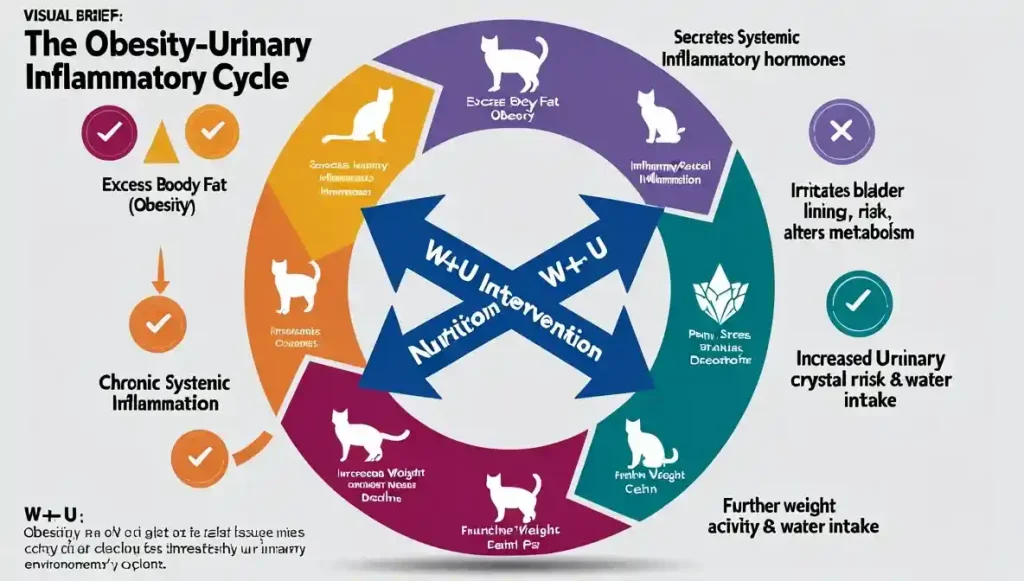
This diet’s role is to be that interventive arrow, providing the targeted nutrition needed to address both ends of the problem simultaneously.
Dual-Therapeutic Science: The Mechanisms Behind Weight Loss & Urinary Health
Blue Buffalo W+U operates on two distinct but complementary physiological pathways. Its formulation is a calculated balance of specific nutrients designed to achieve two separate clinical outcomes simultaneously.
Pathway 1: Weight Management & Healthy Satiety
This pathway is engineered to promote safe, consistent fat loss while preserving precious lean muscle mass—a critical goal often missed in simple calorie restriction.
- Reduced Calorie Density with High Satiety: The formula uses a blend of lean protein and specific fibers to create a food that feels filling but delivers fewer calories per cup than a maintenance diet. This helps curb begging and manages hunger.
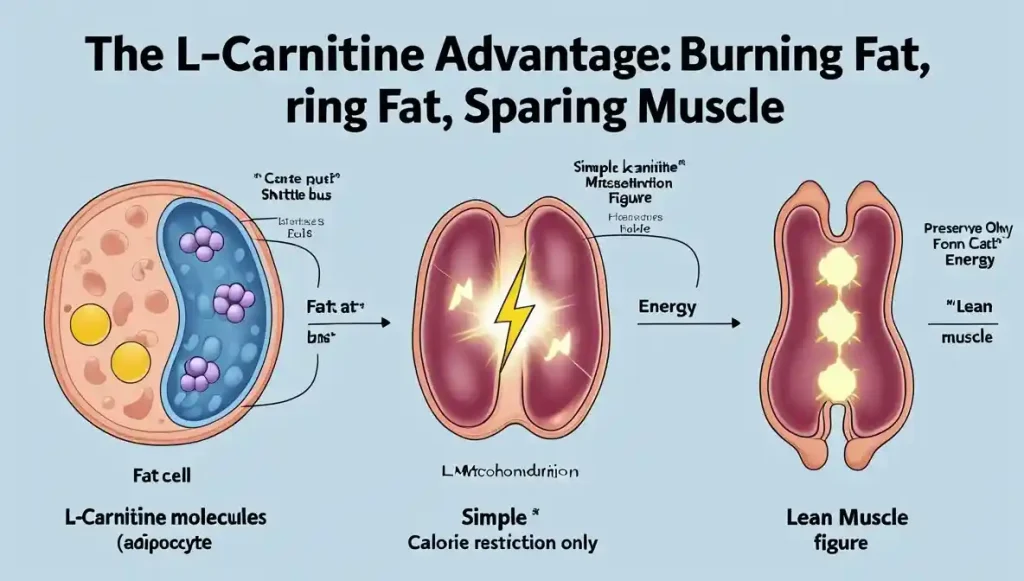
- L-Carnitine Supplementation (Key Driver): This amino acid is central to the diet’s weight loss efficacy. L-Carnitine acts as a shuttle, transporting fatty acids into the mitochondria where they are burned for energy. This process:
- Enhances the body’s ability to use stored fat as fuel.
- Helps preserve lean muscle tissue during weight loss, preventing the cat from becoming “skinny fat.”
- Targeted Outcome: When fed the prescribed amount, the diet is formulated to support a safe, veterinary-supervised weight loss of approximately 1-1.5% of the cat’s current body weight per week.
Pathway 2: Urinary Crystal Prevention
This pathway runs in parallel, creating a urine environment that is unfavorable for the formation of the most common crystals (struvite and calcium oxalate).
- Restricted Mineral Levels: The recipe provides controlled, low levels of magnesium, phosphorus, and calcium. By limiting these building blocks, the diet reduces the raw material available in the urine to form crystals.
- Optimized Urine pH: The ingredients are balanced to promote a slightly acidic urine pH (target ~6.3). This pH range is optimal for discouraging the formation of struvite crystals, which require a more alkaline environment.
- Antioxidant & Urinary Tract Support: Inclusion of cranberries and blueberries provides antioxidants. These compounds can help support the health of the bladder lining (Note: It’s important to clarify they do not treat bacterial infections) and contribute to overall well-being.
The Veterinarian’s Synthesis: The brilliance of this formulation is not in doing one thing exceptionally, but in doing two medically necessary things well and safely together. It recognizes that for many patients, achieving lasting urinary health is inextricably linked to achieving a healthy body weight. This is not a maintenance food; it’s an active intervention.
Ingredient Intelligence: Decoding the “Natural Veterinary” Formula
Let’s examine the components that make this dual-action therapy possible. As a prescription diet with a “natural” positioning, its ingredient panel tells a specific story. Below is my analysis of the current formulation available via our affiliate link: View Blue Buffalo Natural Veterinary Diet W+U on Amazon.
(Formulaulations can change; always verify the label on your purchase.)
Therapeutic Ingredient Spotlight
| Ingredient | Category | Primary Therapeutic Function | Veterinary Context |
|---|---|---|---|
| Deboned Chicken | Protein Source | Primary, high-quality protein for muscle preservation during weight loss. Highly palatable. | Preserving lean mass is critical. This “natural” meat-first ingredient aligns with owner preferences while serving a medical need. |
| Pea Protein, Peas, Tapioca Starch | Carbohydrate / Protein / Fiber | Provide energy, fiber for satiety, and structure in this grain-free formula. | These are common grain-free carbohydrate sources. They allow for precise calorie control while adhering to the grain-free premise. |
| ✶ L-Carnitine | Amino Acid | The key weight loss nutrient. Facilitates the conversion of stored fat into usable energy, supporting lean body mass. | This is what differentiates a true weight loss diet from a simple low-calorie food. It’s an essential supplement in therapeutic weight management. |
| Chicken Fat (preserved with mixed tocopherols) | Fat / Energy | Concentrated source of essential fatty acids (Omega-6) for skin/coat health. | Maintains coat quality during weight loss. Mixed tocopherols are natural, antioxidant preservatives. |
| Fish Oil (source of Omega-3 Fatty Acids) | Anti-Inflammatory | Provides EPA & DHA, which help modulate the systemic inflammation associated with obesity. | This addresses the core inflammatory link between obesity and urinary disease. A significant therapeutic addition. |
| Cranberries & Blueberries | Fruit / Antioxidant | Provide antioxidants and support urinary tract health. | Manages expectations: These support general bladder wall health but do not treat or prevent bacterial UTIs. |
| Potassium Citrate | Urinary Modifier | Helps maintain the target urinary pH in the optimal, slightly acidic range to prevent crystals. | A cornerstone of urinary health diets, ensuring the dietary acid-base balance is correct. |
✶ Denotes the Core Differentiating Ingredient for Weight Management
The “Natural” & “Grain-Free” Context: A Balanced View
This diet explicitly caters to the “natural pet food” movement. In the prescription context, this means:
- No artificial colors, flavors, or preservatives.
- Named meat proteins as the first ingredient.
- The use of grain-free carbohydrate sources (peas, tapioca).
Important Veterinary Perspective:
- For cats with confirmed grain sensitivities, this grain-free approach is suitable.
- For the majority of cats without grain allergies, high-quality grains (like rice, corn) are safe, digestible, and often used in other excellent prescription diets (e.g., Hill’s, Royal Canin) to achieve precise nutrient balances.
- The choice is philosophical. The efficacy of W+U comes from its nutrient profile and restrictions, not solely from the absence of grains.
Nutritional Profile at a Glance (Dry Kibble)
| Nutrient | Significance for Dual Therapy |
|---|---|
| High Protein | Preserves lean muscle during calorie restriction. |
| Moderate Fat | Provides essential fatty acids while controlling calories. |
| Elevated Fiber | Promotes satiety and healthy digestion. |
| Low Magnesium & Phosphorus | Therapeutic restriction for urinary crystal prevention. |
| Added L-Carnitine | The marker of a true weight-loss diet. |
| Added Omega-3 Fatty Acids | For anti-inflammatory support. |
The Bottom Line: This ingredient list reflects a modern therapeutic philosophy: achieving medical outcomes with an ingredient palette that meets contemporary owner values. It is a legitimate medical tool that also speaks the language of the “natural” pet food aisle. Success depends on using it for the right medical indications under veterinary guidance.
Clinical Assessment: Pros, Cons & The Ideal Patient
Based on clinical application and nutritional analysis, here is my balanced evaluation of Blue Buffalo W+U, identifying its clear strengths, important limitations, and the precise patient profile for which it is designed.
The Advantages: Why It Earns a Place in the Veterinary Formulary
- Dual-Therapeutic Efficacy for a Common Comorbidity: This is its primary strength. It is the only mainstream prescription diet that legitimately combines proven weight loss science with targeted urinary mineral management in a single “natural” formula. It simplifies care for a complex, frequent presentation.
- High Owner Acceptance & Compliance: The “natural,” grain-free, meat-first ingredient list resonates deeply with a significant segment of pet owners. This philosophical alignment increases the likelihood of long-term adherence, which is absolutely critical for successful weight loss and chronic urinary management.
- Integrated Anti-Inflammatory Support: The inclusion of fish oil (Omega-3s) is a sophisticated touch. It directly addresses the systemic inflammation that links obesity and urinary tract irritation, supporting overall health beyond mere weight loss.
- Palatability and Wet Food Option: Cats generally find it highly palatable. The availability of a wet food version is non-negotiable for optimal urinary health, providing essential moisture and helping with satiety during calorie restriction.
The Considerations & Important Cautions
- Not for Kidney Disease (CKD): This diet contains moderate to high levels of protein and phosphorus, which are not appropriately restricted for cats with chronic kidney disease. It is contraindicated for cats with impaired renal function.
- Premium Cost & Philosophical Choice: The specialized ingredients and dual action command a premium price. Furthermore, the “grain-free” aspect is a philosophical and formulation choice that owners should understand, not a universal medical necessity.
- Requires Strict Veterinary Supervision: This cannot be a “set it and forget it” diet. Weight loss must be actively managed with regular weigh-ins. Too-rapid weight loss is dangerous, and insufficient weight loss fails the treatment goal.
- Specificity is a Limitation: Its very design makes it unsuitable for cats who are at a healthy weight but have urinary issues, or for overweight cats with no urinary risk. Using it outside its niche is ineffective or potentially harmful.
The Ideal Candidate: A Checklist
This diet is a precision instrument. Your cat is a strong candidate only if they meet ALL of the following criteria:
- Diagnosed as Overweight or Obese: Body Condition Score (BCS) of 7/9 or higher, as assessed by a veterinarian.
- Concurrent Urinary History or Significant Risk: A previous diagnosis of urinary crystals (struvite or oxalate), or high risk due to breed, history of FIC, or recurrent sterile cystitis.
- Normal Kidney Function: Recent bloodwork (SDMA/Creatinine) confirming no evidence of chronic kidney disease.
- Owner Alignment: The caregiver values a “natural,” grain-free ingredient philosophy and is committed to the necessary veterinary follow-up for weight monitoring.
If your cat is at a healthy weight or has kidney disease, this diet is not appropriate. A urinary-only or kidney-specific prescription diet would be the correct choice. The power of W+U is unlocked only when both conditions—excess weight and urinary risk—are present and actively managed.
Comparative Decision Framework: Finding the Right Therapeutic Fit
To understand where Blue Buffalo W+U stands, it must be compared to the alternatives. This framework helps clarify when it’s the optimal choice versus when another diet from our urinary health arsenal is more suitable.
Head-to-Head: W+U vs. The Alternatives
| Feature | Blue Buffalo W+U (Natural Rx) | Hill’s c/d + Metabolic (Traditional Rx) | Purina Pro Plan OM (Weight Loss Rx) | OTC “Weight Control” + Urinary Food |
|---|---|---|---|---|
| Primary Goal | Weight Loss + Urinary Health (Dual Therapy) | Weight Loss + Urinary Health (Dual Therapy) | Weight Loss Only | Vague “Support” |
| Urinary Efficacy | ✅ Therapeutic (Rx): Mineral restriction + pH control. | ✅ Therapeutic (Rx): Mineral restriction + pH control. | ❌ None: Not formulated for urinary care. | ⚠️ Maintenance Only: Cannot treat or prevent crystals. |
| Weight Loss Science | ✅ L-Carnitine + Calorie Control | ✅ Specific Fiber Matrix + Calorie Control | ✅ High Protein + Fiber for Satiety | ⚠️ Calorie Reduction Only |
| Ingredient Philosophy | Grain-Free, “Natural” Ingredients | Precise Nutrition (may include grains/by-products) | Varied; focused on satiety | Consumer-Focused Marketing |
| Best For… | The overweight cat with urinary risk whose owner prioritizes natural ingredients. | The overweight cat with urinary risk where proven, precise science is the top priority. | The overweight cat with no urinary issues. | The healthy cat where mild weight maintenance is a casual concern. |
| Verdict | The natural-ingredient specialist for dual therapy. | The gold-standard workhorse for dual therapy. | The specialist for weight-only. | A non-therapeutic option. |
- Start: My cat is Overweight + Has Urinary Risk/History. (If NO, follow other paths in the main guide).
- Decision: What is our household’s primary nutritional philosophy?
- If “Natural/Grain-Free Preferred” → BLUE BUFFALO NATURAL VETERINARY DIET W+U
- If “Proven Science & Precision First” → HILL’S PRESCRIPTION DIET C/D + METABOLIC
The Critical Distinction: Rx “Natural” vs. OTC “Natural”
A major point of confusion is between this diet and Blue Buffalo’s over-the-counter lines (like Wilderness).
- Blue Buffalo W+U (This Diet):
- Classification: Veterinary Therapeutic Diet.
- Regulation: Meets standards for managing disease. Contains therapeutic levels of L-Carnitine and restricted minerals.
- Access: Prescription Required.
- Blue Buffalo Wilderness (OTC):
- Classification: Adult Maintenance Food.
- Regulation: Formulated to sustain a healthy animal. Cannot make disease management claims.
- Access: Over-the-counter.
They share a brand name and ingredient philosophy, but not a medical purpose. Feeding an OTC food to a cat needing therapeutic intervention is ineffective and risky.
The Veterinarian’s Synthesis
In practice, the decision between W+U and a diet like Hill’s c/d + Metabolic often comes down to owner values and cat acceptance. Both are effective for their dual purpose. My role is to present the options:
- “This diet (Hill’s) is backed by decades of specific research for these conditions and uses ingredients chosen for precise nutrient delivery.”
- “This diet (Blue Buffalo) is also clinically formulated for these conditions but uses a grain-free, natural ingredient list that many owners prefer.”
For the cat that fits the profile, both are valid paths. Blue Buffalo W+U is the definitive choice when the “natural” pathway is the one that will ensure long-term owner commitment and compliance. Its value lies in merging efficacy with philosophy to achieve lasting results.
Implementation: The Veterinary-Supervised Weight Loss Protocol
Prescribing Blue Buffalo W+U is not a one-time event; it is the initiation of a structured medical protocol. Safe, effective outcomes depend entirely on proper implementation and vigilant monitoring. Here is the clinical framework I use in practice.
Step 1: The Veterinary Foundation (Non-Negotiable)
This diet must begin in the veterinarian’s office with a complete health assessment:
- Confirm Diagnoses: Document overweight/obesity (BCS ≥7/9) and urinary risk/history.
- Rule Out Contraindications: Check bloodwork to ensure normal kidney function and rule out other metabolic diseases (e.g., hyperthyroidism).
- Establish Baselines: Record exact current weight and determine ideal body weight.
- Calculate Calories: The vet will calculate the Resting Energy Requirement (RER) for the ideal weight and prescribe a specific daily calorie intake, typically starting at 70-80% of the RER for weight loss.
Step 2: The Feeding & Hydration Strategy
Feed the Prescribed Calories, NOT the Bag Guidelines.
Bag guidelines are averages. Your vet’s calculation is specific to your cat. Use a kitchen scale for absolute accuracy with dry food.
The Hydration & Satiety Protocol:
Because this is a therapeutic process, hydration and fullness are critical.
- Leverage the Wet Food: Integrate the W+U wet food as a scheduled meal. Its high moisture content aids urinary health and its volume helps the cat feel full.
- The Water Boost: Add 1-2 tablespoons of warm water to any dry food meals to create a gravy and increase fluid intake.
- Zero-Calorie Enrichment: Use food puzzles for kibble to slow eating and provide mental stimulation.
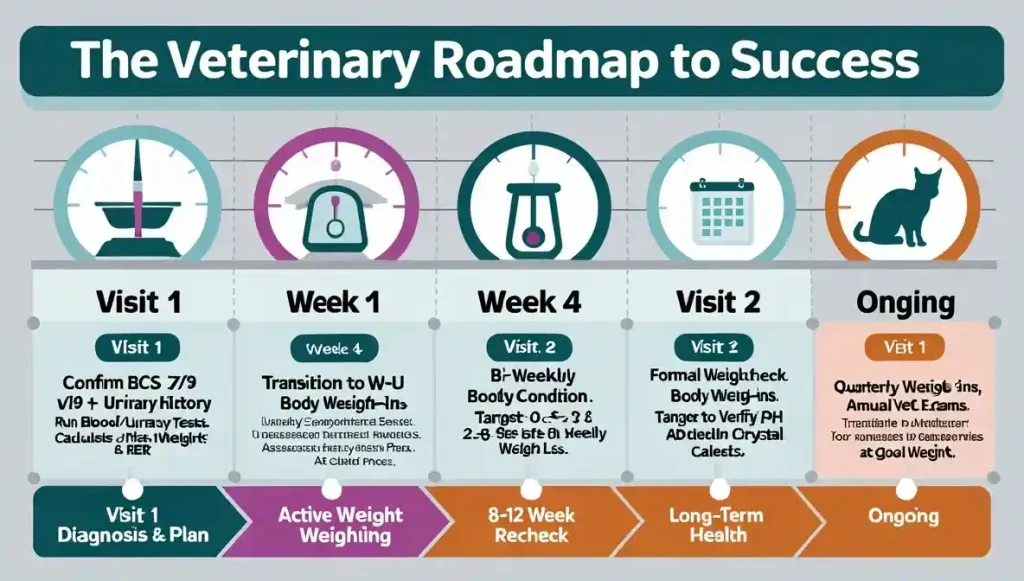
Step 3: The Monitoring Timeline & Success Metrics
[CRITICAL PROTOCOL TIMELINE]
│
├── **WEEK 1-2:**
│    Transition to 100% W+U. Monitor for acceptance and normal litter box habits.
│
├── **EVERY 2-4 WEEKS:**
│    *Weigh-In* (at home or clinic).
│    ► TARGET: Loss of 0.5-2% of body weight per week.
│    ► ACTION: If weight loss is too fast/slow, the vet adjusts the daily calorie amount.
│
├── **MONTH 2-3 (8-12 Weeks):**
│    *First Veterinary Recheck*
│    ► Weight assessment & body condition scoring.
│    ► **Urinalysis:** Check urine pH (target ~6.3) and confirm no crystals.
│    ► Adjust long-term plan.
│
└── **ONGOING (Every 3-6 Months):**
     Follow-up exams to monitor maintenance, adjust calories as needed, and recheck urinary health.
Step 4: Troubleshooting & Red Flags
What Success Looks Like:
- Steady, gradual weight loss.
- Normal, frequent urination with large clumps.
- Maintained energy and lean muscle mass.
Red Flags (Contact Your Vet Immediately):
- No weight loss after 4 weeks on the prescribed calories.
- Rapid weight loss (>2% per week), which risks hepatic lipidosis.
- Return of urinary symptoms: straining, blood, frequent attempts.
- Loss of appetite for more than 24 hours.
- Vomiting or diarrhea.
The Long-Term Perspective: From Weight Loss to Maintenance
This diet is for the active weight loss phase. Once the ideal body weight and condition are achieved, your veterinarian will determine the next steps. This may involve:
- Calculating a new, higher maintenance calorie amount for W+U to prevent regain while continuing urinary protection.
- Transitioning to a urinary-only prescription diet at appropriate maintenance calories, if the weight issue is resolved.
The key insight: This diet is a powerful tool for a specific phase of care. Its use is dynamic and must evolve under professional guidance to ensure lifelong health after the weight loss goal is met.
FAQs About Blue Buffalo Natural Veterinary Diet
Here are direct answers to the most common and critical questions cat owners have about Blue Buffalo Natural Veterinary Diet W+U.
Is this diet safe and appropriate for a diabetic cat that is also overweight?
It can be a supportive component, but it is NOT a primary diabetic diet. Diabetic cats require very specific carbohydrate and protein management to regulate blood glucose. While W+U’s weight loss focus is beneficial, its carbohydrate sources (peas, tapioca) may not be ideal for all diabetics. Always use the diet your veterinarian primarily prescribes for diabetes management. This diet could be considered in consultation with your vet if urinary issues are also a major concern.
My cat is a healthy weight but has a history of urinary crystals. Can I use this to prevent recurrence?
No, this is not appropriate. The calorie restriction in W+U is designed for overweight cats. Feeding it to a cat at a healthy weight would cause unhealthy, dangerous weight loss and malnutrition. For a cat at a healthy weight with urinary issues, a urinary-specific prescription diet like Purina Pro Plan UR St/Ox or Royal Canin Urinary SO is the correct choice.
What does “natural” mean in the context of a prescription diet like this?
In this context, “natural” refers to the ingredient sourcing and processing, not the medical function. Per AAFCO, it means ingredients are derived from plant, animal, or mined sources without artificial synthesis. For W+U, this translates to: no artificial colors, flavors, or preservatives, and named meat proteins as primary ingredients. It is still a scientifically formulated medical food with therapeutic levels of nutrients and restricted minerals.
Is there a link between grain-free diets and heart disease (DCM) in cats, like there is in dogs?
The FDA’s investigation into diet-associated DCM has primarily focused on dogs. There is no established or widely accepted link between grain-free diets and DCM in cats at this time. However, nutritional research is ongoing. It is prudent to choose a grain-free diet for a specific reason (e.g., a diagnosed grain sensitivity), not merely as a default. The therapeutic benefits of W+U for its intended conditions are its primary justification.
How does this prescription W+U differ from Blue Buffalo Wilderness, which is also grain-free?
This is the most critical distinction. W+U is a Veterinary Therapeutic Diet (Rx). Wilderness is an Over-the-Counter Maintenance Food.
- W+U contains therapeutically restricted minerals for urinary health and added L-Carnitine for weight loss. It is proven to manage disease.
- Wilderness is formulated only to sustain an already healthy animal. It cannot claim to treat, prevent, or mitigate disease.
- You cannot substitute an OTC food for a prescription diet. Doing so for a cat with medical needs would be ineffective and potentially harmful.
How long will it take to see weight loss results?
With strict adherence to the vet-prescribed calorie amount, you should see measurable weight loss within 2-4 weeks. The goal is slow and steady—about 0.5-2% of body weight per week. Regular weigh-ins are essential. Rapid weight loss is dangerous and can cause hepatic lipidosis (a life-threatening liver condition).
Can I give treats while my cat is on this diet?
Treats must be strictly accounted for and should ideally be eliminated or drastically reduced. Any extra calories, even from a few treats, can sabotage the precise calorie deficit required for weight loss. If you must give treats, use a few pieces of the prescription kibble from their daily allotted amount, or ask your vet for approved, very low-calorie options (e.g., a single green bean).
Ethical Guidance & Final Professional Verdict
Recommending any therapeutic diet carries a profound responsibility. My final assessment of Blue Buffalo W+U is framed by the imperative to ensure it is used as a precise medical instrument—for the right patient, at the right time, with the right oversight.
The Veterinarian’s Prescription Protocol
My ethical prescription of this diet is contingent on a clear, documented protocol:
- Dual-Diagnosis Confirmation: I require objective evidence of both conditions:
- Overweight/Obesity: Documented Body Condition Score (BCS ≥7/9).
- Urinary Risk/History: Previous urinalysis showing crystals, imaging confirming stones, or a strong clinical history of sterile cystitis (FIC).
- Informed Consent & Owner Commitment: Owners must understand this is an active treatment plan, not a passive feeding routine. They must commit to:
- Regular weigh-ins (every 2-4 weeks).
- No extra treats or food outside the prescribed amount.
- Scheduled veterinary rechecks for urinalysis and plan adjustment.
- Contraindication Screening: I will not prescribe this diet if:
- The cat has Chronic Kidney Disease (CKD).
- The cat is at a healthy body weight.
- The owner is unable or unwilling to participate in the necessary monitoring.
Your Action Plan: A Responsible Owner’s Checklist
Before discussing this diet with your veterinarian, ensure you can answer YES to these foundational questions:
- Has my vet confirmed my cat is overweight/obese?
- Does my cat have a history of urinary crystals, stones, or recurrent sterile cystitis?
- Are my cat’s recent kidney bloodwork results normal?
- Am I willing to weigh my cat regularly and report to the vet?
- Am I prepared to feed only the prescribed amount with no extras?
- Does a “natural,” grain-free ingredient philosophy align with my values for therapeutic food?
If you answered “NO” to any of the first three items, this diet is not appropriate for your cat.
Final Professional Verdict
Blue Buffalo Natural Veterinary Diet W+U is a legitimate, sophisticated, and valuable tool in the modern veterinary arsenal. It successfully bridges the gap between evidence-based therapeutic nutrition and the growing consumer demand for natural-ingredient philosophies.
Its greatest strength is its specificity. It does not try to be all things to all cats. It is engineered for a defined, dual-diagnosis patient profile and executes that mission effectively by combining targeted weight loss support with proactive urinary mineral management.
However, its precision is also its limitation. It is not a general wellness food. Misapplied—to a cat with kidney disease, a healthy-weight cat, or one without urinary risk—it becomes an inappropriate and potentially harmful choice.
My Final Recommendation: “For the overweight cat with concurrent urinary issues and an owner committed to the ‘natural’ pet food pathway, Blue Buffalo W+U is an excellent and often ideal choice. It transforms a complex health challenge into a manageable, single-diet strategy. For any cat outside this specific profile, other solutions within our comprehensive urinary health guide are more appropriate and safer. As always, the journey begins with a veterinary diagnosis and a partnership in care.”
Where to Purchase (With a Valid Prescription):
- → View Blue Buffalo Natural Veterinary Diet W+U on Amazon
- Your Veterinary Clinic
- Authorized Online Veterinary Pharmacies
Sources
- Cornell Feline Health Center: “Feline Lower Urinary Tract Disease.”
- ACVIM Consensus Statement: “Treatment and Prevention of Uroliths in Dogs and Cats.” (2016).
- WSAVA Global Nutrition Guidelines:
- blue buffalo Product Info
A Critical Disclaimer from Our Veterinarians: This article is for informational purposes and is reviewed by a veterinary professional. However, urinary issues can constitute a medical emergency, especially for male cats who are prone to life-threatening blockages. Always consult your veterinarian for a diagnosis and treatment plan before changing your cat’s diet. The recommendations here are intended to be used under veterinary guidance.