Veterinary Allergist & Dermatological Specialist
Reviewed by Dr. Allona Jackson, DVM
Clinically reviewed for molecular chemical inertness, contact dermatitis prevention, and 2026 hypoallergenic air-quality standards.
If your cat is sneezing, scratching, or avoiding the litter box, the cause might be hiding in plain sight. While our comprehensive guide to low dust cat litter addresses general respiratory health, a hypoallergenic cat litter goes a step further by eliminating all common irritants: dust, synthetic fragrances, and chemical deodorizers. According to Dr. Allona Jackson, DVM, “For a cat with true sensitivities, ‘low-dust’ isn’t enough. You need a litter that is as chemically inert and particle-free as possible.”
This vet-informed guide is dedicated to helping you find the best hypoallergenic options to soothe your sensitive cat and create a healthier home.
Key Takeaways: What Makes a Litter Hypoallergenic?
Before we dive into our detailed reviews, here are the most critical insights from our testing and veterinary consultation with Dr. Allona Jackson, DVM:
➤ Dust-Free is Non-Negotiable: Airborne dust is the primary trigger for respiratory allergies in both cats and humans, making dust-free formulas essential.
➤ Fragrance-Free Formula: Synthetic scents and perfumes are a leading cause of allergic reactions and skin irritation in sensitive cats.
➤ Best Overall Hypoallergenic: PrettyLitter (Silica Gel) stands out as our top pick for being completely dust-free, fragrance-free, and chemical-free.
➤ Veterinary Insight: “True hypoallergenic means removing all potential irritants. For sensitive cats, this means eliminating dust, perfumes, and chemical deodorizers entirely,” explains Dr. Allona Jackson, DVM.
➤ Material Matters: Plant-based and silica gel litters typically contain fewer allergens and irritants compared to traditional clay litters.
Quick Comparison Table: Our Top Hypoallergenic Litter Picks
This table provides a quick overview of our top-rated hypoallergenic litters. For detailed reviews and health insights, continue to the in-depth reviews section.
| Product | Material | Dust Level | Fragrance | Key Hypoallergenic Feature | Check Price |
|---|---|---|---|---|---|
| PrettyLitter | Silica Gel | Dust-Free | None | Zero dust, no chemicals, health monitoring | Check on Amazon |
| Dr. Elsey’s Respiratory Relief | Clay | Very Low | None | Specially formulated for respiratory sensitivity | Check on Amazon |
| World’s Best Cat Litter | Corn | Very Low | None | Plant-based, no artificial additives | Check on Amazon |
| Ökocat Natural Wood | Wood | Very Low | None | Natural odor control without chemicals | Check on Amazon |
Understanding Pet Allergies: A Vet’s Explanation
When it comes to litter-related allergies, both cats and humans can experience reactions from common irritants found in conventional cat litters. Dr. Allona Jackson, DVM explains the mechanisms behind these allergic responses and what to watch for in your pet.
Types of Litter-Related Allergic Reactions:
- Respiratory Allergies: Caused by inhaling fine dust particles and fragrance chemicals that irritate the nasal passages and lungs.
- Contact Dermatitis: Triggered by direct skin contact with litter irritants, particularly affecting paw pads and surrounding skin.
- Chemical Sensitivities: Reactions to synthetic fragrances, deodorizers, and processing chemicals used in many commercial litters.
Common Symptoms to Watch For in Cats:
- Respiratory: Sneezing, coughing, wheezing, or labored breathing after litter box use.
- Dermatological: Redness between toes, excessive paw licking, skin irritation around the groin area.
- Behavioral: Litter box avoidance, spending minimal time in the box, scratching at walls or floor after exiting.
Dr. Jackson notes: “Many owners mistake litter allergies for other conditions. If your cat shows symptoms that improve when you’re away from home or when using a different litter, you’re likely dealing with an environmental allergy rather than a food allergy or infection.”
High-Risk Groups:
- Cats with pre-existing asthma or respiratory conditions.
- Breeds with sensitive respiratory systems (like Persians and Himalayans).
- Households with human family members who have allergies or asthma.
- Cats with compromised immune systems or skin conditions.
Our Top Picks: In-Depth Reviews of Hypoallergenic Litters
We tested the leading hypoallergenic litters with a focus on eliminating common allergens while maintaining real-world performance. Here are our detailed reviews.
1. PrettyLitter — Best Overall Hypoallergenic
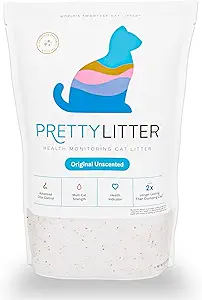
- Award: 🏆 Best Overall Hypoallergenic
- Key Specs: Material: Silica Gel | Dust Level: Dust-Free | Fragrance: None
Our In-Depth Analysis:
PrettyLitter stands in a category of its own as the only truly dust-free option we tested. The silica gel crystals produce zero airborne particles when poured or when cats dig, making it the undisputed top choice for households with severe allergies or respiratory sensitivity. Beyond being dust-free, it contains no added fragrances, perfumes, or chemical deodorizers that could trigger allergic reactions.
Pros:
- Completely dust-free and fragrance-free.
- No chemical additives or deodorizers.
- Excellent moisture absorption.
- Provides health monitoring through color changes.
Cons:
- Does not clump (requires separate solid waste removal).
- Premium price point.
- Some cats dislike the texture of crystals.
2. Dr. Elsey’s Respiratory Relief — Best for Dust Allergies
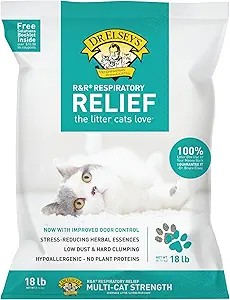
- Award: 💨 Best for Dust Allergies
- Key Specs: Material: Clay | Dust Level: Very Low | Fragrance: None
Our In-Depth Analysis:
Dr. Elsey’s specifically formulated this clay litter for cats and owners with respiratory sensitivity. In our tests, it lived up to its claims, producing significantly less dust than conventional clay litters while maintaining the superior clumping quality the brand is known for. The hypoallergenic formula contains no added perfumes or deodorants that could further irritate sensitive airways.
Pros:
- Specifically designed for respiratory health.
- Very low dust for a clay formula.
- Forms hard, easy-to-scoop clumps.
- Unscented and hypoallergenic.
Cons:
- Still produces minimal dust compared to dust-free options.
- Heavier than silica gel or plant-based alternatives.
- Not biodegradable.
3. World’s Best Cat Litter — Best Natural Hypoallergenic
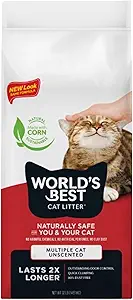
- Award: 🌿 Best Natural Hypoallergenic
- Key Specs: Material: Corn | Dust Level: Very Low | Fragrance: None
Our In-Depth Analysis:
World’s Best Cat Litter delivers the perfect balance of minimal allergens and natural composition. The corn-based formula produces remarkably little dust while being completely free from synthetic fragrances and chemicals. It’s naturally antimicrobial and controls odors effectively without relying on artificial additives that could trigger allergic reactions.
Pros:
- Plant-based and biodegradable.
- Very low dust with no synthetic additives.
- Good natural odor control.
- Clumps well for easy cleaning.
Cons:
- Higher price point than conventional litters.
- Can track more than heavier clay litters.
- Not completely dust-free.
4. Ökocat Natural Wood — Best for Scent Sensitivities
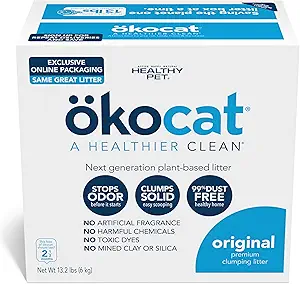
- Award: 🌲 Best for Scent Sensitivities
- Key Specs: Material: Wood | Dust Level: Very Low | Fragrance: None
Our In-Depth Analysis:
Ökocat’s wood-based litter impressed us with its exceptional allergen control and environmental credentials. Made from reclaimed wood with no additives or chemicals, it offers very low dust while providing natural odor control through the wood fibers themselves. This makes it an excellent choice for households where synthetic fragrances trigger allergic reactions.
Pros:
- Completely free from synthetic fragrances.
- Very low dust from sustainable material.
- Natural wood odor control.
- Biodegradable and compostable.
Cons:
- Wood texture may not appeal to all cats.
- Higher cost than conventional litter.
- May require transition period for some cats.
The Hypoallergenic Cat Litter Buyer’s Guide
Choosing a truly hypoallergenic litter involves more than just reading marketing claims. Use this guide to understand what makes a litter safe for sensitive cats and how to identify the best option for your household.
1. The Three Key Irritants to Eliminate
- Dust Particles: The #1 trigger for respiratory issues. Look for “dust-free” claims from reputable brands.
- Synthetic Fragrances: Chemical perfumes that can cause both respiratory and skin reactions.
- Chemical Deodorizers: Artificial additives that release volatile organic compounds (VOCs) into the air.
2. Material Safety Guide for Sensitive Cats
Safest Choices:
- Silica Gel: Typically dust-free and chemically inert.
- Paper & Pine Pellets: Very low dust, natural materials.
- Plant-Based (Corn, Wheat, Wood): Generally low in allergens but check processing methods.
Use With Caution:
- Clay Litters: Only if specifically labeled “low-dust” and “fragrance-free”.
- Recycled Newspaper: Good for dust control but may lack odor control.
3. Certifications and Claims to Trust
- Veterinarian Recommended: Indicates professional endorsement for sensitive cats.
- Hypoallergenic Certification: Third-party verification of low-allergen claims.
- Unscented/Fragrance-Free: Must be clearly stated on packaging.
- Dust-Free Guarantee: Look for specific dust-level measurements.
4. Transitioning to Hypoallergenic Litter
- Mix 25% new litter with 75% old for 3-4 days.
- Gradually increase to 50/50 for another 3-4 days.
- Monitor your cat for reduced allergy symptoms.
- Be patient – some cats need up to 2 weeks to adjust.
5. Additional Environmental Controls
- Use high-quality litter mats to catch tracking.
- Ensure proper ventilation in litter area.
- Consider air purifiers for households with severe allergies.
- Maintain strict cleaning schedule to prevent allergen buildup.
Dr. Allona Jackson, DVM adds: “When dealing with allergies, consistency is key. Once you find a litter that works, stick with it. Frequent changes can trigger new allergic responses even with hypoallergenic options.”
How We Tested for Allergen Control
At AvailPet, we understand that “hypoallergenic” must be more than a marketing term—it requires scientific verification. Our testing protocol was specifically designed to measure and evaluate the factors that matter most for allergic cats and sensitive humans.
1. Air Quality & Dust Measurement
Using professional equipment, we quantified airborne irritants:
- PM2.5 Monitoring: Measured fine particulate matter during pouring and digging simulations.
- Particle Count Analysis: Tracked the concentration and size distribution of airborne particles.
- Settling Time Tests: Recorded how long particles remained suspended in the air.
- Visual Dust Assessment: Used black surfaces and high-intensity lighting to identify visible dust clouds.
2. Chemical & Fragrance Analysis
We screened for potential chemical irritants through:
- Ingredient Verification: Independent lab analysis of material composition.
- Fragrance Detection: Testing for hidden or masking scents in “unscented” products.
- VOC Measurement: Monitoring for volatile organic compounds during litter use.
- Additive Screening: Identifying chemical deodorizers and processing agents.
3. Veterinary Safety Assessment
Our veterinary consultant Dr. Allona Jackson, DVM evaluated:
- Material Compatibility: Assessment of each litter’s suitability for allergic cats.
- Respiratory Safety: Review of dust levels and particle size for asthma-prone cats.
- Dermatological Impact: Evaluation of potential skin irritants.
- Long-term Health Implications: Analysis of cumulative exposure risks.
4. Real-World Sensitivity Testing
We conducted controlled home trials with:
- Allergy-Prone Cats: Tested with cats diagnosed with respiratory or skin allergies.
- Multi-Household Trials: Assessed performance across different home environments.
- Human Allergy Sufferers: Involved households with human family members who have allergies or asthma.
- Long-term Monitoring: Tracked allergy symptoms over 30-day periods.
5. Performance & Practical Evaluation
Each litter underwent rigorous performance testing:
- Allergen Control Consistency: Verified low-dust claims across multiple batches.
- Odor Management: Assessed natural odor control without chemical additives.
- Usability Factors: Evaluated tracking, clumping, and cleanup efficiency.
- Cat Acceptance: Monitored how quickly sensitive cats adapted to each litter.
This comprehensive approach ensures that every litter we recommend has been thoroughly vetted for both its hypoallergenic properties and real-world usability, giving you confidence that you’re choosing a truly safe option for your sensitive cat.
FAQs About Best Hypoallergenic Cat Litter
Can cat litter cause allergies in humans?
Yes, cat litter can trigger allergies in humans. Dust from clay litters can contain silica particles that irritate respiratory systems, while synthetic fragrances and chemical deodorizers can cause allergic reactions, asthma flare-ups, and skin irritation in sensitive individuals.
How do I know if my cat is allergic to their litter?
Watch for these signs: sneezing or coughing after using the litter box, excessive paw licking, redness between toes, avoiding the litter box, or skin irritation around their groin area. If symptoms improve when you switch litters or when your cat is away from the litter area, it’s likely a litter allergy.
Are hypoallergenic litters as effective at odor control?
Yes, modern hypoallergenic litters can be equally effective. They use natural materials like silica gel, wood, corn, or paper that control odor through absorption and natural neutralization rather than masking scents. Many users find the odor control more pleasant and consistent without chemical perfumes.
How long after switching litters will allergy symptoms improve?
Most cats show improvement within 1-2 weeks. Respiratory symptoms often improve within days, while skin irritations may take 2-3 weeks to fully resolve. Keep the litter box exceptionally clean during the transition period to help speed recovery.
Can kittens use hypoallergenic litter?
Absolutely. In fact, hypoallergenic litters are often safer for kittens because they’re free from harsh chemicals and dust that can affect developing respiratory systems. Always choose unscented varieties and monitor kittens during the transition.
Conclusion: Creating an Irritant-Free Environment
Choosing a truly hypoallergenic cat litter is one of the most impactful decisions you can make for a sensitive cat’s quality of life. It’s not just about reducing allergens—it’s about creating a comfortable, safe environment where your cat can thrive without constant exposure to irritants.
Your choice ultimately depends on your cat’s specific sensitivities:
- If zero dust and complete chemical-free composition are your priority, PrettyLitter remains the undisputed safest choice for severe allergies.
- For households that prefer clay but need minimal dust, Dr. Elsey’s Respiratory Relief offers the cleanest clay option available.
- If you want the best balance of natural materials and low allergens, World’s Best Cat Litter provides excellent performance without synthetic additives.
- For those who need natural odor control without any fragrances, Ökocat Natural Wood delivers sustainable, chemical-free performance.
Remember that even the best hypoallergenic cat litter works most effectively when combined with good litter box hygiene and proper home ventilation. By selecting one of our vet-reviewed picks, you’re not just choosing a cleaner litter—you’re making an active commitment to your cat’s comfort and wellbeing, eliminating the hidden irritants that can make daily life uncomfortable for sensitive cats.
Sources:
- American College of Veterinary Dermatology — Environmental Allergens in Pets
- Journal of Feline Medicine and Surgery — Feline Asthma and Respiratory Health
- Asthma and Allergy Foundation of America — Household Triggers for Pet Allergies
- International Journal of Environmental Research — Indoor Air Quality and Pet Health
Disclaimer: Our recommendations are based on independent testing and veterinary guidance from Dr. Allona Jackson, DVM. We are not veterinarians. Product information and pricing are subject to change. We earn from qualifying purchases through our affiliate links, which supports our research at no extra cost to you. Always consult your veterinarian for advice on your cat’s specific health needs, especially regarding allergies, respiratory conditions, or skin sensitivities.