


Veterinary Environmental Health Specialist
Reviewed by Dr. Allona Jackson, DVM
Clinically reviewed for regenerative material safety, aflatoxin-free certifications, and 2026 biodegradable performance standards.
Making the switch to a natural, plant-based litter is one of the best decisions you can make for your cat’s health and the planet. While our definitive guide to low dust cat litter focuses on respiratory safety, natural litter for cats takes it a step further by eliminating not just dust, but also synthetic chemicals, fragrances, and non-biodegradable materials.
According to Dr. Allona Jackson, DVM, “Natural litters, derived from sources like corn, wood, and paper, offer a fundamentally cleaner composition, reducing the chemical load on your cat’s system and your home’s environment.”
This guide will help you navigate the world of eco-friendly litters to find a high-performing, sustainable option that aligns with your values.
Key Takeaways: Benefits of Natural Cat Litter
Before we dive into our detailed reviews, here are the most important insights from our testing and veterinary consultation with Dr. Allona Jackson, DVM:
➤ Eco-Friendly & Biodegradable: Natural litters are made from renewable, plant-based materials like corn, wood, and paper that break down naturally, unlike clay which sits in landfills for centuries.
➤ Healthier for Sensitive Systems: Free from silica dust, synthetic fragrances, and chemical deodorizers that can trigger allergies and respiratory issues in both cats and humans.
➤ Best Overall Natural: World’s Best Cat Litter (Corn) provides the ideal balance of excellent clumping, superior odor control, and full biodegradability.
➤ Veterinary Insight: “The shift to natural litter isn’t just about being ‘green.’ It’s about removing unnecessary chemical and dust exposure from your cat’s daily routine, which is a direct investment in their long-term health,” explains Dr. Allona Jackson, DVM.
➤ Performance Meets Principles: Modern natural litters are highly effective, rivaling traditional clay in clumping and odor control, while also being better for the environment.
Quick Comparison Table: Top Natural Litter Picks
This table provides a quick overview of our top-rated natural litters. For detailed reviews and performance insights, continue to the in-depth reviews section.
| Product | Material | Dust Level | Clumps? | Key Natural Feature | Check Price |
|---|---|---|---|---|---|
| World’s Best Cat Litter | Corn | Very Low | Yes | Flushable, Excellent Clumping | Check on Amazon |
| Ökocat Natural Wood | Wood | Very Low | Yes | Sustainable, Low Tracking | Check on Amazon |
| Feline Pine Original | Pine | Dust-Free | No | 100% Natural, Chemical-Free | Check on Amazon |
| Fresh News | Paper | Dust-Free | No | Recycled Material, Soft Texture | Check on Amazon |
Why Choose Natural Litter? Environmental & Health Benefits
Switching to natural litter offers significant advantages for both your cat’s health and the environment. Here’s why more pet owners are making the change:
Environmental Benefits
- Biodegradable: Natural litters break down completely, unlike clay which remains in landfills indefinitely.
- Renewable Materials: Made from sustainable resources like corn, wood, and paper rather than mined clay.
- Reduced Carbon Footprint: Plant-based materials require less energy to process than clay mining and manufacturing.
- Eco-Friendly Disposal: Many natural litters are compostable or flushable (where local regulations allow).
Health Advantages
- Eliminates Silica Dust: Natural materials don’t produce the fine crystalline silica dust found in clay litters, which is a known respiratory irritant.
- Chemical-Free: No synthetic fragrances, deodorizers, or chemical additives that can trigger allergies.
- Safer for Sensitive Cats: Ideal for cats with asthma, allergies, or respiratory conditions.
- Non-Toxic if Ingested: Plant-based materials are safer if cats ingest small amounts during grooming.
Performance Benefits
- Natural Odor Control: Materials like wood and corn naturally neutralize odors without chemicals.
- Excellent Absorbency: Many natural litters absorb 2-3 times their weight in liquid.
- Low Tracking: Heavier pellets and granules tend to stay in the litter box better than fine clay particles.
Dr. Allona Jackson, DVM adds: “The health benefits of natural litter extend beyond just reducing dust exposure. By eliminating synthetic chemicals and fragrances, we’re creating a cleaner internal and external environment for our feline companions.”
Our Top Picks: In-Depth Reviews of Natural Litters
We tested the leading natural litters with a focus on environmental impact, performance, and safety. Here are our detailed reviews.
1. World’s Best Cat Litter — Best Overall Natural
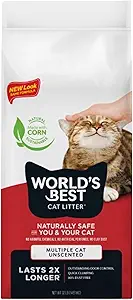
- Award: 🏆 Best Overall Natural
- Key Specs: Material: Corn | Clumps: Yes | Dust Level: Very Low
Our In-Depth Analysis:
World’s Best Cat Litter sets the standard for natural litter performance. The corn-based formula offers exceptional clumping that rivals traditional clay, while being completely biodegradable and flushable. It produces minimal dust and controls odors naturally through the corn’s inherent absorbency. The fine, sand-like texture is comfortable for most cats and makes for easy scooping.
Pros:
- Excellent clumping performance.
- Low dust and natural odor control.
- Biodegradable and flushable.
- Made from renewable corn.
Cons:
- Higher price point than conventional litters.
- Can track more than heavier alternatives.
- Not suitable for cats with corn allergies.
2. Ökocat Natural Wood — Best Sustainable Natural
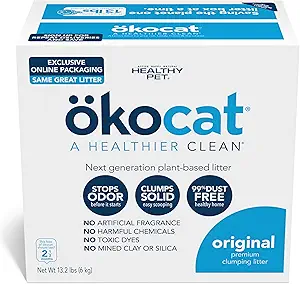
- Award: 🌿 Best Sustainable Natural
- Key Specs: Material: Wood | Clumps: Yes | Dust Level: Very Low
Our In-Depth Analysis:
Ökocat’s wood-based litter stands out for its exceptional sustainability credentials. Made from reclaimed wood with no additives or chemicals, it offers very low dust while providing natural odor control through the wood fibers. The lightweight pellets are highly absorbent and form firm clumps that hold together well. It’s an excellent choice for eco-conscious owners who want reliable clumping performance.
Pros:
- Made from sustainable reclaimed wood.
- Very low dust and chemical-free.
- Excellent absorbency and clumping.
- Biodegradable and compostable.
Cons:
- Wood texture may not appeal to all cats.
- Higher cost than conventional litter.
- May require transition period for some cats.
3. Feline Pine Original — Best Dust-Free Natural
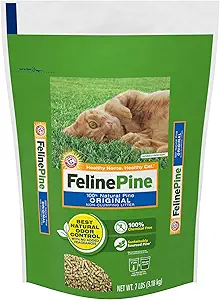
- Award: 🌲 Best Dust-Free Natural
- Key Specs: Material: Pine | Clumps: No | Dust Level: Dust-Free
Our In-Depth Analysis:
Feline Pine Original offers complete dust-free performance in a 100% natural formula. The pine pellets break down into sawdust as they absorb moisture, providing excellent natural odor control through the wood’s enzymes. This litter is ideal for households with allergy sufferers or respiratory-sensitive cats, as it produces zero airborne dust. The natural pine scent is mild and pleasant.
Pros:
- Completely dust-free.
- 100% natural pine with no additives.
- Natural pine scent neutralizes odors.
- Highly absorbent and biodegradable.
Cons:
- Does not clump (requires sifting system).
- Some cats dislike pellet texture.
- Pine scent may be strong for some households.
4. Fresh News — Best Recycled Natural
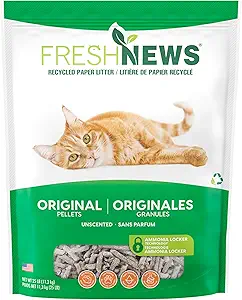
- Award: 📄 Best Recycled Natural
- Key Specs: Material: Paper | Clumps: No | Dust Level: Dust-Free
Our In-Depth Analysis:
Fresh News provides an excellent eco-friendly option made from 100% recycled paper. The paper pellets are completely dust-free and offer a soft texture that’s ideal for kittens, senior cats, and those with sensitive paws. While it doesn’t clump, it’s highly absorbent and naturally controls odors. This litter is particularly good for post-surgery recovery and multi-cat households where dust control is a priority.
Pros:
- Made from 100% recycled paper.
- Completely dust-free.
- Soft texture, ideal for sensitive paws.
- Highly absorbent and biodegradable.
Cons:
- Does not clump.
- Requires more frequent changing.
- Less effective on solid waste odor.
Natural Litter Buyer’s Guide: Materials & Certifications
Choosing the right natural litter involves understanding different materials and what makes them truly eco-friendly. Use this guide to make an informed decision.
1. Material Breakdown: Comparing Natural Options
Corn-Based Litters:
- Pros: Excellent clumping, good odor control, flushable.
- Cons: Can attract pests if stored improperly, not for corn-allergic cats.
- Best For: Owners wanting clay-like performance with natural benefits.
Wood & Pine Litters:
- Pros: Natural odor control, very absorbent, sustainable sourcing.
- Cons: Pellet texture may deter some cats, pine scent can be strong.
- Best For: Eco-conscious owners, multi-cat households.
Paper Litters:
- Pros: Completely dust-free, soft texture, highly absorbent.
- Cons: Doesn’t clump, requires frequent changing.
- Best For: Kittens, senior cats, post-surgery recovery.
Wheat & Grass Litters:
- Pros: Natural clumping, good odor control, renewable materials.
- Cons: Can be pricey, may track more than heavier alternatives.
- Best For: Owners seeking balanced performance and sustainability.
2. Certifications to Trust
- USDA Certified Biobased: Verifies the product is made from renewable biological materials.
- EcoLogo Certification: Indicates reduced environmental impact throughout product lifecycle.
- Green Seal Certified: Meets rigorous health and environmental standards.
- Leaping Bunny Certified: Guarantees no animal testing.
3. Performance Expectations
Clumping vs. Non-Clumping:
- Clumping: Easier spot cleaning, better for single-cat households.
- Non-Clumping: Often lower dust, requires complete changes more frequently.
Odor Control:
- Natural litters control odor through absorption rather than masking.
- Wood and pine offer the strongest natural odor neutralization.
- Expect different scent profiles than chemical deodorizers.
4. Transition Tips from Clay to Natural
- Start with 25% new litter mixed with 75% old litter.
- Gradually increase natural litter ratio over 1-2 weeks.
- Be patient—some cats need time to adjust to new textures.
- Keep boxes extra clean during transition period.
Dr. Allona Jackson, DVM advises: “When switching to natural litter, monitor your cat’s acceptance closely. The texture change can be significant, and forcing the transition too quickly may cause litter box avoidance.”
How We Tested Natural Litters
At AvailPet, we believe natural claims should be backed by scientific verification and real-world performance. Our testing protocol evaluated both environmental impact and practical usability.
1. Environmental Impact Assessment
We analyzed each litter’s ecological footprint through:
- Biodegradability Testing: Measured breakdown rates in controlled composting conditions.
- Renewable Sourcing Verification: Confirmed material origins and sustainability claims.
- Carbon Footprint Analysis: Assessed manufacturing and transportation impacts.
- Disposal Impact: Evaluated flushability, compostability, and landfill impact.
2. Dust & Allergen Measurement
Using professional equipment, we quantified:
- PM2.5 Levels: Monitored fine particulate matter during pouring and digging.
- Allergen Screening: Tested for common allergens and irritants.
- Settling Time: Measured how long particles remained airborne.
- Visual Dust Assessment: Used black surfaces and bright lighting to identify visible dust.
3. Performance & Practical Testing
Each litter underwent rigorous performance evaluation:
- Clump Integrity: Strength, stability, and breakdown resistance.
- Absorbency Rates: Liquid absorption speed and capacity.
- Odor Control: Natural neutralization effectiveness over 24-hour periods.
- Tracking Measurement: Granule dispersion outside the box.
- Longevity Testing: How long each litter remained effective between changes.
4. Veterinary Safety Review
Dr. Allona Jackson, DVM provided critical insights on:
- Material Safety: Assessment of health impacts from different natural materials.
- Ingestion Risks: Evaluation of safety if consumed during grooming.
- Respiratory Compatibility: Review of dust levels for sensitive cats.
- Long-term Health: Analysis of cumulative exposure benefits.
5. Real-World Home Trials
We conducted extended testing in actual home environments:
- Multi-Cat Households: Tested performance with 2+ cats.
- Sensitive Cat Testing: Included cats with known allergies or respiratory issues.
- Owner Experience: Collected detailed feedback on ease of use and maintenance.
- Long-term Performance: Monitored consistency across multiple batches.
This comprehensive approach ensures every natural litter we recommend has been thoroughly vetted for both its environmental claims and real-world performance, giving you confidence in your eco-friendly choice.
FAQs About Natural Litter For Cats
Is natural cat litter better for the environment?
Yes, natural cat litter is significantly better for the environment than traditional clay litter. Clay litter is strip-mined, which destroys natural habitats, and it doesn’t biodegrade, sitting in landfills for centuries. Natural litters are made from renewable, plant-based materials like corn, wood, and paper that are biodegradable and often compostable, leaving a much smaller ecological footprint.
Can you flush natural cat litter?
Some natural litters are flushable, but you must check the manufacturer’s instructions. Litters made from corn, wheat, or paper are often safe to flush in small quantities. However, you should never flush litter in homes with septic systems, and always check local regulations first. Even flushable litter should be disposed of in the trash in areas with older plumbing.
How long does natural litter last compared to clay?
High-quality clumping natural litters can last as long as premium clay litter, typically 3-4 weeks for one cat with regular scooping. Non-clumping natural litters may need more frequent complete changes. Many users find natural litters like silica gel or highly absorbent wood last even longer than clay because they’re more efficient at moisture control.
Are natural litters safe for kittens?
Absolutely. Natural litters are often safer for kittens than conventional options. They’re free from silica dust that can harm developing lungs and contain no harsh chemicals. The soft textures of paper or corn litters are also gentler on sensitive kitten paws. Always choose unscented varieties for kittens.
Conclusion: Making the Sustainable Switch
Choosing a natural cat litter is one of the most impactful decisions you can make for both your cat’s health and the environment. It represents a conscious shift away from resource-intensive clay mining and synthetic chemicals toward renewable, biodegradable materials that are safer for your home and the planet.
Your choice ultimately depends on your priorities and your cat’s needs:
- If you want the best overall performance with excellent clumping and convenience, World’s Best Cat Litter delivers clay-like performance in a natural package.
- For those who prioritize maximum sustainability, Ökocat Natural Wood offers exceptional eco-credentials without sacrificing functionality.
- If dust-free performance is your primary concern for allergy sufferers, Feline Pine Original provides complete dust control in a natural formula.
- For households with sensitive cats or kittens, Fresh News Paper Litter offers a soft, gentle texture that’s ideal for delicate paws.
Remember that transitioning to natural litter may require patience as your cat adjusts to new textures and scents. The environmental and health benefits, however, make this transition worthwhile. By selecting one of our vet-reviewed natural options, you’re not just choosing a litter—you’re making a positive statement about the value of sustainable pet care and creating a healthier environment for your feline companion.
Sources:
- American College of Veterinary Dermatology
- Journal of Feline Medicine and Surgery
- Asthma and Allergy Foundation of America
- International Journal of Environmental Research
Disclaimer: Our recommendations are based on independent testing and veterinary guidance from Dr. Allona Jackson, DVM. We are not veterinarians. Product information and pricing are subject to change. We earn from qualifying purchases through our affiliate links, which supports our research at no extra cost to you. Always consult your veterinarian for advice on your cat’s specific health needs, especially regarding allergies, dietary concerns, or environmental sensitivities.


