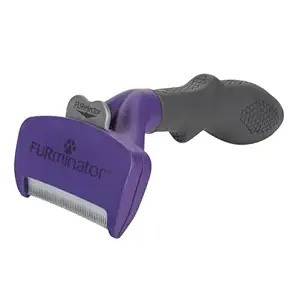
The FURminator is the most famous deshedding tool on the market.
You’ve seen it on Instagram. Your cat-owning friend swears by it. Amazon reviews are glowing.
But is it actually good for your cat? Or just good marketing?
I’m Dr. Allona Jackson, a practicing veterinarian with 12 years of experience. I’ve recommended the FURminator to hundreds of clients – and I’ve also treated cats who were injured by it.
The difference? How you use it.
This is my honest, vet-reviewed deep dive into the FURminator deshedding tool for cats.
In this review, I’ll cover:
- What the FURminator actually does (and doesn’t do)
- Pros and cons from a vet’s perspective
- Safety warning (most important section – read twice)
- How to use it correctly (step-by-step)
- Who should buy it – and who should skip it
By the end, you’ll know if the FURminator is right for YOUR cat – and how to use it without hurting your cat.
📚 Part of AvailPet’s complete cat brush guide series:
→ Best Cat Brush for Shedding – Parent guide
→ Best Cat Brush (Ultimate Guide) – Start here
What Is the FURminator? (And How Is It Different from a Regular Brush?)
The FURminator is not a regular brush. It’s a deshedding tool.
What it is: A stainless steel edge with teeth that reaches deep into your cat’s undercoat to remove loose fur – without cutting the top coat.
How it works:
- The stainless steel edge catches loose undercoat fur
- Teeth spacing allows the top coat to pass through unharmed
- Your cat feels a deep scratch, not a painful pull
Versus regular brushes:
| Feature | FURminator | Regular Slicker Brush |
|---|---|---|
| Reaches undercoat | ✅ Yes | ❌ No |
| Removes loose fur | 80-90% | 30-40% |
| Daily use safe? | ❌ No (1-2x/week max) | ✅ Yes |
| Risk of skin injury | Medium (if overused) | Low |
| Price | $$$ ($40-50) | $$ ($15-25) |
The Pros – What the FURminator Does Well
I recommend the FURminator for the right cats. Here’s why.
Pro #1: Dramatically Reduces Shedding
The FURminator removes 80-90% of loose undercoat in a single session. Owners regularly tell me they fill an entire grocery bag with fur.
Real example: One of my clients has a Maine Coon who sheds enough fur to make a second cat. After one FURminator session, she sent me a photo of a fur pile the size of a dinner plate. That’s not coming off on her furniture anymore.
Pro #2: Cats Actually Enjoy It
Unlike slicker brushes (which some cats hate), the stainless steel edge feels like a deep scratch. Many cats purr during FURminator sessions. Some even lean into it.
Why it feels good: The tool mimics the sensation of being scratched by another cat’s claws during grooming. It’s instinctual.
Pro #3: Lasts for Years
The stainless steel edge doesn’t dull. You buy it once, and it lasts for the life of your cat. No replacement heads needed.
Pro #4: FURejector Button
Press the button, and the fur clump ejects. No touching the wet, staticky fur ball. This is a small feature that makes a big difference.
Pro #5: Available in Cat-Specific Size
The cat version has a smaller head and shorter teeth than the dog version. It’s designed for cat body contours and thinner cat skin. Don’t buy the dog version for your cat.
For daily maintenance between FURminator sessions, see → Self Cleaning Slicker Brush Review
The Cons & Safety Warnings – Read This Before Buying
The FURminator can hurt your cat if used incorrectly. I’m not being dramatic – I’ve treated the aftermath.
Con #1: Can Injure Skin If Overused (CRITICAL WARNING)
This is the most important section of this review. Read twice.
| Overuse Consequence | What Happens |
|---|---|
| Brush burn | Red, raw, irritated skin from metal friction (like rug burn) |
| Bald spots | Fur pulled out before it was ready to release |
| Skin irritation | Redness, flaking, discomfort that lasts days |
| Brush fear | Cat learns to run and hide when they see the FURminator |
⚠️ CRITICAL VET WARNING:
*”Use the FURminator 1-2x per week maximum – even during peak shedding season in spring and fall.*
Never daily. Never every other day.
I’ve treated cats with brush burn so severe that the skin was raw and bleeding. Every single owner said the same thing: ‘I thought more brushing was better.’
It’s not. Set a calendar reminder.”
— Dr. Allona Jackson, DVM
Con #2: Not for Daily Use
The FURminator is a weekly tool, not a daily brush. For daily maintenance (the other 5-6 days of the week), use a slicker brush or rubber brush.
Con #3: Expensive
At $40-50, the FURminator costs 2-3x more than basic brushes. For budget-conscious owners, there are alternatives (see comparison below).
Con #4: Requires Technique
You can’t just hack away at your cat’s fur. You need:
- Light pressure (imagine brushing a balloon)
- One pass per area (don’t go over same spot)
- Direction of fur growth only (never against the grain)
Many owners press too hard. Don’t be that owner.
Con #5: Not for All Cats
| Cat Type | Should You Use FURminator? | Why |
|---|---|---|
| Heavy shedder (Maine Coon, Ragdoll, Persian) | ✅ Yes | Benefits outweigh risks |
| Short hair, heavy shedder (British Shorthair) | ✅ Yes (use short hair version) | Effective with lighter pressure |
| Normal shedder (Domestic Shorthair) | ❌ Probably not needed | Overkill for normal shedding |
| Cat with thin skin (Sphynx, senior cats) | ❌ No | Too aggressive, even 1x/week |
| Cat with skin allergies or dermatitis | ❌ No | Can flare up existing conditions |
| Cat who hates the FURminator | ❌ No | Stop. Use something else. |
Related: For short-haired cats, see → FURminator for Short Hair Cats Review
How to Use the FURminator Correctly (Step-by-Step)
Most problems come from incorrect use. Follow these steps exactly.
Step 1: Choose the Right Day
| Season | Frequency |
|---|---|
| Spring (March-May) | 2x per week (peak shedding) |
| Fall (Sept-Nov) | 2x per week (peak shedding) |
| Summer | 1x per week |
| Winter | 1x per week or every other week |
Pro tip: Brush 1-2 days after a bath (if your cat tolerates water). Damp fur releases more undercoat.
Step 2: Start with a Slicker Brush (2 minutes)
Remove surface loose fur first with a slicker brush. This prevents the FURminator from clogging after two strokes.
Step 3: Use Light Pressure
Imagine brushing a balloon. That’s the pressure. If you’d pop a balloon, you’re pressing too hard.
Let the tool do the work. The stainless steel edge doesn’t need force.
Step 4: One Pass Per Area
Don’t go over the same spot repeatedly. One pass. Move on.
If you miss a spot, get it next week. Over-brushing one area causes brush burn.
Step 5: Brush in Direction of Fur Growth Only
Never against the grain. Never back and forth. Always neck to tail in smooth, long strokes.
Step 6: Stop After 10-15 Minutes
Even if more fur is coming out. Even if your cat seems to love it. Over-brushing is real. Stop.
Step 7: Clean the Tool
Press the FURejector button. The fur clump pops off. Wipe the edge with a dry cloth. No soap needed.
The Golden Rules (Post on Your Fridge)
| Rule | Why |
|---|---|
| 1-2x per week maximum | Prevents brush burn |
| Light pressure | Prevents skin injury |
| One pass per area | Prevents over-brushing |
| Stop at 15 minutes | Prevents irritation |
| Never on thin-skinned cats | Prevents injury |
Related: Aumuca Cat Brush for Shedding Review – budget alternative with same rules
FURminator vs. Alternatives
| Feature | FURminator | Aumuca Cat Brush | Hertzko Slicker |
|---|---|---|---|
| Price | $$$ ($40-50) | $ (under $20) | $$ ($15-25) |
| Removes deep undercoat | ✅ Yes (80-90%) | ✅ Yes (60-70%) | ❌ No |
| Safe for daily use? | ❌ No | ❌ No | ✅ Yes |
| Self-cleaning | ✅ Yes (button) | ✅ Yes (button) | ✅ Yes (button) |
| Best for | Heavy shedders | Budget buyers | Daily maintenance |
| Vet warning | Overuse risk | Temperature variability | None |
| Amazon link | Buy Now | Buy Now | Buy Now |
When to Choose FURminator
- ✅ Your cat sheds heavily (fur tumbleweeds, clouds when petting)
- ✅ You have a double-coated breed (Maine Coon, Ragdoll, Persian)
- ✅ You will follow the 1-2x/week rule (set a calendar reminder)
- ✅ You have the budget ($40-50)
When to Choose Something Else
- ❌ Budget tight → Buy the Aumuca cat brush (under $20)
- ❌ Need a daily brush → Buy the Hertzko slicker brush
- ❌ Cat has thin skin → Skip deshedders entirely, use rubber brush
- ❌ Cat hates metal tools → Try a rubber grooming glove
For the budget alternative, see → Aumuca Cat Brush for Shedding Review
FAQs About the FURminator deshedding tool for cats
Can I use the FURminator every day?
No. This is the most common mistake I see. Use 1-2x per week maximum. Daily use causes brush burn, bald spots, and skin irritation.
I’m serious. I’ve treated cats who needed veterinary care because owners thought “more is better.” Set a calendar reminder.
Is the FURminator painful for cats?
Not when used correctly. With light pressure and 1-2x/week frequency, most cats enjoy it – they lean in and purr.
Pain happens when owners press too hard or use it daily. That’s not the tool’s fault. That’s user error.
Can I use the FURminator on a short-haired cat?
Yes, but buy the short hair version (shorter teeth, labeled for short hair). And use even less pressure – short-haired cats have thinner skin than long-haired breeds.
How much fur should the FURminator remove?
- Spring/fall (peak shedding): A grocery bag full over multiple sessions is normal.
- Summer/winter: Much less – a small handful.
If you’re still getting huge fur clumps in winter: Your cat may have a medical issue (hyperthyroidism, allergies, poor nutrition).
Related: Why is my cat shedding so much?
My cat hates the FURminator. What do I do?
Stop. Some cats don’t like the metal edge feeling. That’s fine.
Alternatives:
- Try a slicker brush (softer feel)
- Try a rubber brush (feels like petting)
- Try a self-grooming wall brush (zero handling)
Not every tool works for every cat.
Related: Self Grooming Cat Brush Guide
How do I clean the FURminator?
- After each use: Press FURejector button. Fur pops off. Wipe edge with dry cloth.
- Weekly: Run under warm water. Dry completely.
- Monthly: No soap needed – water is fine.
Never: Submerge the handle in water. The ejector mechanism can rust.
Can I use the FURminator on a cat with mats?
No. The FURminator is for loose fur only, not mats.
Using it on a mat will:
- Pull your cat’s skin painfully
- Not remove the mat
- Potentially injure your cat
For mats: Use detangling spray + slicker brush. For severe mats, see a vet or professional groomer.
What’s the difference between the cat and dog FURminator?
The cat version has:
- Shorter teeth (cat undercoat is shallower)
- Smaller head (fits cat body contours)
- Different edge angle (designed for cat fur)
Don’t buy the dog version for your cat. It’s too aggressive and can hurt cat skin.
The Bottom Line – Should You Buy the FURminator?
Buy the FURminator if:
- ✅ Your cat sheds heavily (double-coated breed or seasonal heavy shedder)
- ✅ You will follow the 1-2x per week rule (set a calendar reminder today)
- ✅ You have the budget ($40-50)
- ✅ Your cat has normal-to-thick skin (not a Sphynx or senior with thin skin)
Skip the FURminator if:
- ❌ You want a daily brush (buy a slicker brush instead)
- ❌ Your cat has thin skin or skin allergies
- ❌ You’re on a tight budget (buy the Aumuca instead – under $20)
- ❌ Your cat already hates it (don’t force it)
My Final Verdict
“The FURminator is the gold standard for deshedding – but ONLY when used correctly.
*1-2x per week. Light pressure. One pass per area. Stop at 15 minutes.*
Used correctly: 5 stars. Used daily: 0 stars and a vet bill.
Buy it. Respect the rules. Your cat will thank you – and your vacuum will too.”
— Dr. Allona Jackson, DVM
Rating: 4.5/5 stars ⭐⭐⭐⭐½ (deduction for user error risk – the tool is excellent but requires discipline)
Medical Disclaimer
This article is for informational purposes only and does not constitute veterinary medical advice. Every cat is different. Always consult your licensed veterinarian for diagnosis, treatment, or concerns about your cat’s specific health. The author (Dr. Allona Jackson, DVM) is a practicing veterinarian but cannot diagnose your cat without an in-person examination.
Affiliate Disclosure
As an Amazon Associate, AvailPet.com earns from qualifying purchases. This does not affect our vet-reviewed recommendations. We only recommend products Dr. Jackson has personally tested or extensively researched. Your purchase helps support free veterinary content like this guide.