📅 Spring Shedding Alert (April 2026)
“We’re in peak shedding season right now. If your cat is leaving fur clouds, use the recommendations below this week—not next month. Spring shedding lasts March through May.”
— Dr. Allona Jackson, DVM
If you’re vacuuming every other day and still finding fur tumbleweeds, you don’t need a better vacuum—you need a better brush.
I’m Dr. Allona Jackson, a practicing veterinarian with 12 years of experience. And every spring, my clinic fills with owners asking the same question: “Why is my cat shedding so much?“
The answer is usually simple: You’re using the wrong brush. Or you’re using the right brush incorrectly.
In this guide, I’ll show you 3 Best Cat Brush for Shedding:
- The 3 best deshedding brushes (with pros, cons, and Amazon links)
- Why your cat is shedding so much (vet explains normal vs. abnormal)
- When shedding peaks (seasonal calendar for 2026)
- How to brush for maximum fur removal (without hurting your cat)
By the end, you’ll dramatically reduce your cat’s shedding—most owners see a major improvement within two weeks.
Let’s fix your shedding problem.
Why Is My Cat Shedding So Much? (Vet Explains)
Before I recommend brushes, let’s make sure you’re dealing with normal shedding—not a medical problem. Read full Guide here!
Normal Shedding Causes (85% of cases)
| Cause | Why It Happens |
|---|---|
| Seasonal changes | Spring and fall are peak shedding periods |
| Indoor heating | Dry winter air increases shedding |
| Natural coat turnover | Cats replace their entire coat every 60-90 days |
Abnormal Causes That Need a Vet (15% of cases)
| Cause | Symptoms (besides shedding) |
|---|---|
| Hyperthyroidism | Weight loss, increased appetite, vomiting, hyperactivity |
| Allergies | Itching, red skin, ear infections, paw chewing |
| Ringworm | Circular bald spots, scaly skin, crusty lesions |
| Stress | Hiding, overgrooming, peeing outside litter box |
| Poor nutrition | Dull coat, dry skin, weight changes |
🐾 Vet callout: “If shedding comes with bald spots, behavior changes, or weight changes—call your vet. Otherwise, you probably just need a better deshedding tool.”
— Dr. Allona Jackson, DVM
When Do Cats Shed the Most? (2026 Seasonal Calendar)
Knowing when to brush is almost as important as what you brush with.
Peak Shedding Seasons
| Season | Months | Why | Deshedding Frequency |
|---|---|---|---|
| Spring | March 1 – May 31 | Losing winter coat | 2x per week |
| Fall | Sept 1 – Nov 30 | Growing new winter coat | 2x per week |
| Summer | June – August | Indoor cats shed steadily | 1x per week |
| Winter | Dec – February | Indoor heating increases shedding | 1x per week |
Indoor vs. Outdoor Cats
- Outdoor cats → Dramatic spring/fall peaks (nature’s clock)
- Indoor cats → Milder peaks but year-round shedding (artificial light + constant temperature)
Geographic note: Cats in warm climates (Florida, Texas, California) shed more evenly year-round with less dramatic peaks. Read our full Review here..
The 3 Best Cat Brushes for Shedding (Vet Tested)
I’ve tested dozens of deshedding tools on clinic cats, foster cats, and my own. These three are the only ones I recommend to my clients.
Brush #1: FURminator Deshedding Tool for Cats (Top Pick)
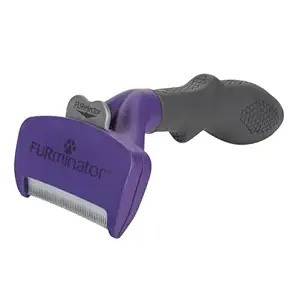
What it is: A stainless steel edge with teeth that reaches deep into the undercoat to remove loose fur without cutting the top coat.
Best for: Heavy shedders, double-coated cats (Maine Coon, Ragdoll, Norwegian Forest Cat), spring/fall peak shedding.
Pros
- Removes 80-90% of loose undercoat in one session
- Cats actually enjoy it (feels like a deep scratch)
- Stainless steel edge stays sharp for years
- FURejector button ejects fur (no touching)
Cons
- Expensive ($40-50)
- Can injure skin if overused (see warning below)
- Not for daily use
- Requires technique (light pressure)
⚠️ CRITICAL VET WARNING
*”Use the FURminator 1-2x per week maximum. Never daily. Overuse causes brush burn, bald spots, and skin irritation. I’ve seen cats who needed veterinary treatment because owners thought ‘more is better.’ Set a calendar reminder.”*
— Dr. Jackson
How to Use
- Brush in direction of fur growth only
- Use light pressure (let the tool do the work)
- One pass per area (don’t go over same spot repeatedly)
- Stop after 10-15 minutes max
Price: $33.57 (premium)
Verdict: Buy this if your cat sheds heavily and you’ll follow the 1-2x per week rule.
Read Full Review- FURminator deshedding tool for cats
Brush #2: Self Cleaning Slicker Brush for Cats (Best for Daily Use)

What it is: Fine wire bristles with protective plastic tips on a padded base. One-button self-cleaning.
Best for: Daily maintenance between deep deshedding sessions, cats who tolerate brushing well, removing surface loose fur.
Pros
- Safe for daily use (unlike FURminator)
- Self-cleaning button saves time and frustration
- Rounded wire tips won’t scratch skin
- Affordable ($15-25)
- Removes surface fur before it falls on your furniture
Cons
- Doesn’t remove deep undercoat (needs deshedder for that)
- Less effective on very thick double coats
- Cheap versions have poor tip quality
How to Use
- Use daily for 5-10 minutes
- Brush in direction of fur growth
- Press self-cleaning button after each session
- Pair with FURminator 1-2x weekly for heavy shedders
Price: $14.99 (mid-range)
Verdict: Buy this for daily maintenance. Use alongside a deshedding tool for peak shedding seasons.
Read full Review: Self Cleaning Slicker Brush for Cats
Brush #3: Aumuca Cat Brush for Shedding (Best Budget)
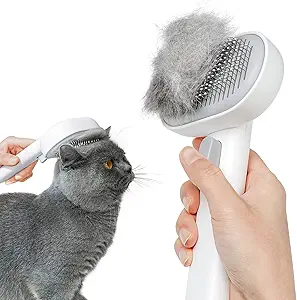
What it is: Budget-friendly deshedding tool with similar design to FURminator. Includes a silicone grooming glove.
Best for: Budget-conscious owners, first-time deshedder buyers, cats with moderate shedding.
Pros
- Under $20 (significantly cheaper than FURminator)
- Self-cleaning button
- Includes silicone grooming glove ($10 value)
- Good for moderate shedders
Cons
- Less durable than FURminator (may dull faster)
- Not as effective on very thick double coats
- Bristle tips less refined
How to Use
Same technique as FURminator. 1-2x per week maximum. Light pressure.
Price: $16.98 (budget)
Verdict: Buy this if you’re on a budget or have a moderately shedding cat. Upgrade to FURminator if shedding is extreme.
Read Full Review – Aumuca cat brush for shedding
Side-by-Side Comparison
| Feature | FURminator | Self Cleaning Slicker | Aumuca |
|---|---|---|---|
| Best for | Heavy shedding | Daily maintenance | Budget buyers |
| Price | $$$ ($40-50) | $$ ($15-25) | $ (under $20) |
| Removes deep undercoat? | Yes (80-90%) | No (surface only) | Yes (60-70%) |
| Safe for daily use? | No (1-2x/week max) | Yes | No (1-2x/week max) |
| Self-cleaning? | Yes (button) | Yes (button) | Yes (button) |
| Risk of skin injury? | Medium-high (if overused) | Low | Medium (if overused) |
| Includes bonus? | No | No | Grooming glove |
| Best time to buy | Buy NOW (spring/fall peak) | Buy anytime | Buy NOW if budget matters |
| Amazon link | Check Price | Check Price | Check Price |
📅 Seasonal buying tip from Dr. Jackson: *”If we’re in March-May or September-November (peak shedding seasons), order your deshedding tool today. You’ll see results in 48 hours. In off-seasons, you have more time to compare.”*
Quick Recommendation
| Your Situation | Buy This |
|---|---|
| Heavy shedder + budget okay | FURminator |
| Heavy shedder + tight budget | Aumuca |
| Any cat + daily maintenance | Self cleaning slicker |
| Best combo | FURminator (1-2x/week) + Self cleaning slicker (daily) |
How to Brush a Shedding Cat (Step-by-Step)
What you’ll need:
- Deshedding tool (FURminator or Aumuca)
- Slicker brush (for daily maintenance)
- High-value treats (freeze-dried chicken or tuna)
- Towel (to catch flying fur)
Step-by-Step Instructions
Step 1: Choose the right day
Brush 1-2 days after a bath (if your cat tolerates water). Damp fur releases more undercoat.
Step 2: Start with the slicker brush (daily)
Remove surface loose fur first. This prevents the deshedding tool from clogging.
Step 3: Use the deshedding tool (1-2x per week)
- Brush in direction of fur growth only
- Use light pressure (imagine brushing a balloon)
- One pass per area (don’t go over same spot)
- Start at neck → back → sides → tail (avoid belly)
Step 4: Reward immediately
Treats + praise within 30 seconds of finishing.
Step 5: Clean your brush
Remove fur after every session. Self-cleaning buttons make this easy.
Pro tip: Brush outdoors or on an easy-to-clean surface. You’ll be shocked how much fur comes off.
5 Vet-Approved Ways to Reduce Shedding (Beyond Brushing)
Brushing is #1. But add these for even better results.
1. Upgrade Their Diet
Look for foods with omega-3 and omega-6 fatty acids (fish oil, flaxseed). Better nutrition = healthier coat = less shedding.
2. Add a Fish Oil Supplement
Ask your vet for dosage. Omega-3s reduce inflammation and improve skin health. Most cats shed less after 4-6 weeks on fish oil.
3. Maintain Indoor Humidity
Dry air increases shedding. Use a humidifier in winter (target 40-50% humidity).
4. Reduce Stress
Stress shedding is real. Provide hiding spots, vertical space (cat trees), and consistent routines. Feliway diffusers help some cats.
5. Regular Vet Checkups
Rule out medical causes: hyperthyroidism, allergies, ringworm. Annual blood work for senior cats.
Vet note: *”These tips reduce shedding by 20-30% on top of brushing. But brushing is still 80% of the solution.”*
FAQs About Best Cat Brush for Shedding
Can I use a deshedding tool (like FURminator) every day?
No. Absolutely not. This is the most common mistake I see.
Use deshedding tools 1-2 times per week maximum—even during peak shedding season.
What happens if you use it daily:
- Brush burn (like rug burn from metal)
- Bald spots (fur pulled out before it’s ready to release)
- Skin irritation and redness
- A cat who learns to fear the brush
Safe schedule:
- Spring (March-May): 2x per week
- Fall (Sept-Nov): 2x per week
- Summer/Winter: 1x per week or every other week
When to use a slicker brush instead: For daily maintenance between deshedding sessions, use a self-cleaning slicker brush (it’s safe for daily use).
*”I’ve treated cats who needed veterinary care because owners thought ‘more brushing = less shedding.’ Respect the 1-2x per week rule. Your cat’s skin will thank you.”* — Dr. Jackson
How often should I deshed my cat?
1-2x per week during peak shedding (spring/fall). 1x per week or every other week during off-seasons. Never daily.
Can I use a FURminator on a short hair cat?
Yes, but use extra light pressure and less frequently (1x per week max). Short hair cats have thinner skin than long-haired breeds.
My cat hates the deshedding tool. What do I do?
Stop. Use a self-cleaning slicker brush daily instead. Some cats hate the metal edge feeling. Respect that. Not every cat tolerates every tool.
Is shedding worse in some cat breeds?
Yes.
Heavy shedders: Maine Coon, Ragdoll, Norwegian Forest Cat, Siberian, British Shorthair
Light shedders: Sphynx, Devon Rex, Cornish Rex, Bengal
When should I worry about shedding?
Bald spots + weight changes + behavior changes + skin redness = call your vet. Otherwise, it’s likely normal.
The Bottom Line from Dr. Allona Jackson, DVM
Shedding is normal. But you don’t have to live in a fur-covered house.
My top pick for heavy shedders: FURminator Deshedding Tool (1-2x/week) + Self Cleaning Slicker Brush (daily).
My top pick for budget buyers: Aumuca Cat Brush for Shedding + the included grooming glove.
My top pick for daily maintenance only: Self Cleaning Slicker Brush (skip the deshedder if shedding is mild).
Final vet reminder: *”Brush 1-2x per week during spring and fall. Use light pressure. Never over-deshed. And if shedding comes with bald spots or behavior changes—call your vet.”*
— Dr. Allona Jackson, DVM
Related Guides from Dr. Jackson
- Best Cat Brush (Ultimate Guide) →
- Best Cat Steam Brush →
- Best Brush for Long Haired Cats →
- Best Cat Brush for Short Hair →
- Self Grooming Cat Brush →
Medical Disclaimer
This article is for informational purposes only and does not constitute veterinary medical advice. Every cat is different. Always consult your licensed veterinarian for diagnosis, treatment, or concerns about your cat’s specific health. The author (Dr. Allona Jackson, DVM) is a practicing veterinarian but cannot diagnose your cat without an in-person examination.
Affiliate Disclosure
As an Amazon Associate, AvailPet.com earns from qualifying purchases. This does not affect our vet-reviewed recommendations. We only recommend products Dr. Jackson has personally tested or extensively researched. Your purchase helps support free veterinary content like this guide.