Feline Surgical Recovery & Pediatric Specialist
Reviewed by Dr. Allona Jackson, DVM
Clinically reviewed for 2026 safety standards regarding post-operative incision hygiene, kitten ingestion risks, and zero-particulate respiratory management.
When choosing cat litter, most of us weigh factors like clumping, odor control, and price. But what happens when the stakes are higher? When your cat is recovering from surgery, is a fragile newborn kitten, or battles severe asthma, the priority shifts dramatically from convenience to absolute safety.
Enter Fresh News Recycled Paper Litter, a product that defies the conventions of the litter aisle. It isn’t trying to be the best everyday litter; it’s engineered to be the safest option in critical situations. At AvailPet, we believe in having the right tool for the job, especially when it involves a pet’s health. As part of our comprehensive research for the Best Natural Cat Litter of 2026 guide, we designated Fresh News as our top pick for Best for Kittens & Recovery.
This review is not about whether it’s a good daily driver. It’s a 30-day investigation to answer two vital questions: When is this litter not just a choice, but a necessity? And does its specialized design hold up under real-world use for those specific, sensitive scenarios?
We evaluated it through the lens of safety first: dust elimination, ingestion risk, texture gentleness, and chemical exposure. If you’re a new kitten parent, caring for a post-op cat, or managing a chronic respiratory condition, this evidence-based deep dive is for you.
The Short Answer? Fresh News is a specialist, not a generalist. It is the unrivaled champion for creating a zero-risk, hypoallergenic environment where even a speck of dust or a curious nibble could cause harm. For healthy adult cats, its cost and maintenance make it impractical. But for its intended purposes, it is often the best—and sometimes only—appropriate choice.
Quick Glance: Fresh News Recycled Paper Specs
Before we delve into its specialized performance and safety protocols, here are the essential facts about Fresh News Recycled Paper Litter. This table provides the core specifications, while the snapshot offers an instant, search-engine-friendly summary of its fundamental purpose.
Product Specs at a Glance:
| Feature | Specification |
|---|---|
| Material | 100% Recycled Paper (Post-Consumer Newspaper) |
| Clumping | No – Absorption Only |
| Dust Level | 100% Dust-Free |
| Weight | Heavy (Dense Pellets) |
| Scent | Unscented / Very Mild Paper |
| Key Claims | Dust-Free, Hypoallergenic, Safe for Recovery |
| Price Tier | Premium (for a non-clumping litter) |
| Key Trait | Soft, Highly Absorbent Paper Pellets |
*Fresh News Recycled Paper Litter is a 100% dust-free, non-clumping litter made from post-consumer newspaper. Its ultra-soft, highly absorbent pellets are designed specifically for safety, making it the vet-recommended choice for post-surgical recovery, kittens, and cats with severe respiratory issues. It is not a cost-effective general-purpose litter.*
First Impressions:
The bag contains uniform, gray, cylindrical pellets that feel dry, lightweight individually, but dense in mass. Upon pouring, the most notable feature is the complete absence of any dust cloud—a stark contrast to even “low-dust” litters. The pellets have a faint, clean paper scent, similar to a new book or newspaper. The texture is immediately distinguishable: soft, quiet, and cushiony underfoot, unlike any granular or pelleted litter. The overall impression is of a product designed for a specific, gentle purpose.
In-Depth Performance Testing Breakdown
We used Fresh News in scenarios mirroring its intended purpose: with a recovering senior cat and alongside a litter of curious kittens. Our testing focused on its safety claims and the practical reality of managing a non-clumping, absorbent-only system.
Dust Control – The Absolute Claim
This is the foundation of Fresh News’s value proposition. We tested it stringently.
- The 100% Dust-Free Guarantee: We performed a high-pour test into a clean box and simulated aggressive digging. In both cases, there was zero visible airborne particulate. This held true over weeks of use—no dust settled on nearby surfaces, and the air around the box remained clear. This is a categorical, tangible difference from even the best “low-dust” clumping litters, which still produce some fine particles.
- Health Implications: This absolute dust control is not a luxury; it’s a medical necessity in specific cases:
- Post-Surgical Recovery: Prevents dust from contaminating healing incisions.
- Feline Asthma/Bronchitis: Eliminates a primary airborne irritant from the litter box environment.
- Kitten Respiratory Health: Protects underdeveloped lungs during a critical growth period.
The Non-Clumping System: How It Works & Maintained
Understanding the maintenance routine is crucial, as it’s fundamentally different from scooping clumps.

- Absorption-Only Mechanism: When liquid hits the pellets, they swell and soften, absorbing the moisture like a sponge. They do not bind together to form a scoopable mass. The wet area becomes a damp cluster of expanding pulp.
- Daily Maintenance Routine: Success requires adopting a new “Stir & Remove” method:
- SCOOP solid waste daily (this is easy, as it sits on the surface).
- STIR the entire litter bed thoroughly with a scoop or litter rake. This breaks up wet pulp clusters, distributes moisture to drier pellets, and accelerates drying.
- REMOVE saturated, broken-down pulp using a slotted/sifting scoop every 1-2 days.
- Full Change Frequency: Due to this absorption system, the entire box loses effectiveness and must be replaced more frequently than clumping litters. In our tests, for a single cat, a complete change was needed every 4-5 days to prevent odor and maintain a dry, hygienic surface.
Odor Control: Absorption vs. Neutralization
- How Paper Manages Odor: Odor control is achieved by rapid absorption and containment within the pellet. It “locks in” moisture effectively for 24-48 hours.
- Limitations: It does not chemically neutralize ammonia like pine or corn enzymes. As the pellets become saturated over days, their ability to contain odor diminishes. Frequent stirring and regular full changes are the only way to maintain acceptable odor control. It is designed for short-term safety and containment, not long-term freshness.
Texture & Safety: The Primary Benefits
- Ultra-Soft Pellets: The texture is uniformly soft and yielding, providing a gentle surface that’s ideal for tender surgical sites, delicate kitten paws, and senior cats with arthritic joints. It’s noticeably more comfortable than even fine-grained litters.
- Ingestion Safety: This is a critical advantage. If a kitten or curious cat ingests a pellet, it is made of non-toxic, digestible paper. The risk of intestinal obstruction or toxicity is extremely low, especially compared to clumping clay litters.
- Chemical-Free Composition: The litter contains no added perfumes, dyes, or chemical deodorizers. This minimizes the risk of allergic contact dermatitis or respiratory irritation from fragrances, making it truly hypoallergenic.
Vet Insights: The Medical-Grade Litter
To understand the true necessity and application of Fresh News, we consulted our veterinary expert, Dr. Allona Jackson, DVM, for a professional medical perspective on when and why this specialized litter is recommended.
“Fresh News represents a category of litter we consider ‘medical-grade.’ Its value isn’t in convenience or cost, but in risk mitigation. In specific clinical scenarios, using anything else can introduce unnecessary and potentially serious health risks to the patient.”
— Dr. Allona Jackson, DVM | AvailPet Veterinary Consultant
Here is her detailed breakdown of its critical use cases:
Post-Surgical Safety: A Non-Negotiable Standard
- The Primary Risk: “After any surgery, especially abdominal procedures like spays, the incision site is vulnerable to infection. Dust from clay, corn, or even low-dust litters can carry bacteria directly into the wound.”
- The Veterinary Protocol: “I specifically instruct clients to use a 100% dust-free, non-clumping paper or pellet litter for a minimum of 10-14 days post-op. Fresh News is a perfect example. The non-clumping aspect is also crucial, as clumping litter can stick to the incision or surrounding fur.”
- Dr. Jackson’s Verdict: “For post-operative care, this type of litter isn’t a suggestion; it’s standard of care. It significantly reduces the risk of surgical site complications.”
Kitten Safety: Mitigating Dual Risks

- Risk 1: Ingestion. “Kittens explore the world with their mouths. If they ingest clumping clay litter, it can expand in the stomach and cause a life-threatening obstruction. Paper litter is digestible and inert, making it the safest option during the critical early months.”
- Risk 2: Respiratory Irritation. “Kittens have developing respiratory systems. Inhaling fine dust particles can predispose them to issues later in life. A truly dust-free environment is best practice.”
- Recommendation: “I advise using paper litter like Fresh News until kittens are at least 12-16 weeks old and have outgrown the exploratory chewing phase.”
Management of Chronic Respiratory Disease
- For Cats with Asthma/Bronchitis: “For these patients, environmental management is treatment. A major source of airborne irritants in the home is the litter box. Switching to a 100% dust-free litter is one of the most effective, non-pharmacological interventions we can recommend to reduce the frequency and severity of asthma attacks.”
- Overall Benefit: “It removes a constant source of inflammation from their daily environment.”
Senior & Arthritic Cats: Comfort Focus
- Texture Advantage: “The soft, yielding pellets are easier on painful joints than digging in coarse, heavy litter. For an older cat with arthritis, reducing pain at the litter box can prevent avoidance behaviors and associated health issues.”
Overall Medical Verdict from Dr. Jackson
“Fresh News and litters like it serve a vital, narrow, and essential purpose in veterinary medicine. They are a preventative health tool. I do not recommend them for the average healthy adult cat due to cost and maintenance. However, for the specific situations of recovery, extreme youth, and diagnosed respiratory disease, they are often the best and safest choice available, and their use is strongly supported by clinical reasoning.”
Pros & Cons: The Specialized Profile
Fresh News Recycled Paper Litter exists to solve very specific problems. Its value is extraordinary in the right context and questionable in the wrong one. Here is our honest assessment of its strengths and the practical compromises it requires.
Pros: Where Fresh News Is Unbeatable
- ✅ 100% Dust-Free (A True Claim): It creates a clinically clean, particulate-free environment. This is its paramount feature and the reason for its use in medical and high-risk situations.
- ✅ Ultra-Soft & Gentle Texture: The pillowy, uniform pellets are exceptionally kind to healing surgical sites, delicate kitten paws, and arthritic joints. It provides comfort where other litters might cause pain or irritation.
- ✅ Completely Safe If Ingested: Made from non-toxic, digestible paper. This eliminates the life-threatening risk of intestinal blockage from clumping clay, making it the safest choice for curious kittens and cats with pica.
- ✅ Hypoallergenic & Chemical-Free: Contains no added perfumes, dyes, or chemical deodorizers. This minimizes the risk of allergic reactions or respiratory irritation from additives, supporting a hypoallergenic home.
- ✅ Highly Absorbent: The paper pellets soak up liquid rapidly and effectively, locking moisture away from the surface.
- ✅ Eco-Friendly Foundation: Made from 100% post-consumer recycled newspaper, giving waste material a purposeful second life and aligning with sustainable values.
Cons: The Practical Trade-Offs for Daily Use
- ❌ Does Not Clump: Requires a fundamentally different and more involved maintenance routine (daily stirring, sifting out pulp). It lacks the straightforward “scoop and go” convenience of clumping litters.
- ❌ Expensive for Regular Use: As a premium, specialized product, the cost per week is high. When combined with the need for frequent full changes, it becomes one of the most expensive litter options for long-term use.
- ❌ Requires Frequent Complete Changes: To maintain hygiene and control odor, the entire box typically needs to be emptied and refilled every 3-5 days. This increases both cost and labor significantly.
- ❌ Heavy Bags: The densely packed paper pellets make for substantially heavy bags that can be challenging to carry and handle.
- ❌ Not Designed for Long-Term Odor Control: Engineered for short-term safety, not long-term freshness. Odor can become noticeable quickly if the litter is not stirred daily and changed on a strict schedule.
- ❌ Can Be Messy: Pellets can track, and if not stirred regularly, wet areas can turn into a damp, pulpy mess that’s difficult to clean up.
Who Should Buy It (The Specific Use Cases)
Purchase and Use Fresh News For These Specific Situations (It’s a Health Tool):
- Post-Surgical Recovery: For 10-14 days following any surgery, especially spays/neuters.
- Kittens Under 4 Months: During the initial litter-training and exploratory phase.
- Cats with Severe Asthma or Chronic Bronchitis: As part of a prescribed environmental management plan.
- Senior Cats with Arthritis or Mobility Issues: Where a soft, low-impact surface is needed.
- Cats with a Known Habit of Eating Litter (PICA).
- As a temporary “safe zone” litter during any health crisis or immune compromise.
Who Should Avoid It (Choose a Different Litter)
Select another option from our [Best Natural Cat Litter] guide for these situations:
- As a primary, daily litter for healthy adult cats (it is cost-prohibitive and unnecessarily high-maintenance).
- If superior, long-term odor control is your primary goal.
- If you strongly prefer the familiar convenience of a clumping litter.
- For budget-conscious households without a specific medical need.
- For use in automatic self-cleaning litter boxes (it is not compatible).
The Bottom Line
Fresh News Recycled Paper Litter is a specialist of the highest order, not a generalist. Evaluating it against standard performance metrics for daily litters is missing the point. It is a targeted health and safety intervention designed to mitigate risks that other litters either create or fail to solve. For its intended purposes—post-op care, kitten safety, and severe respiratory management—it is exceptional and often the optimal choice. For general use, its compromises make it impractical.
How to Use It for Best Results
To maximize the safety benefits of Fresh News and manage its unique non-clumping system effectively, proper setup and a dedicated routine are essential. Follow this guide for optimal results, especially during critical recovery periods.
1. Optimal Setup for Recovery, Kittens, or Sensitive Cats
- Litter Box Choice: For recovering cats or tiny kittens, use a low-sided, open box to minimize the need to step or jump high, which could strain incisions or be inaccessible for little ones.
- Litter Depth: Use a moderate layer of 1.5 to 2 inches. This is sufficient for absorption, makes daily stirring easier, and is more economical than filling a deep box. A deep bed is unnecessary and can become cumbersome to maintain.
2. The Essential Maintenance Routine (The “Stir & Sift” Method)

Forget scooping clumps. Managing Fresh News requires this three-step process:
- Daily (Twice Daily is Better for Odor Control):
- SCOOP Solid Waste: Remove all feces. This is straightforward as waste sits on the surface.
- STIR Thoroughly: Using a slotted scoop or a dedicated litter rake, mix the entire litter bed thoroughly. This breaks up any damp clusters of pulp, distributes moisture to drier pellets, and promotes evaporation. This step is non-negotiable to prevent odor and mess.
- Every 1-2 Days:
3. SIFT Out Saturated Pulp: Use a slotted scoop to remove the fully expanded, broken-down, wet paper pulp that no longer absorbs effectively. These will be soft, mushy masses. - Full Change Schedule:
- Complete Replacement: Plan to empty, clean, and refill the entire box with fresh litter every 3 to 5 days. Even with diligent stirring, the litter will lose its absorbency and odor-control properties. For multi-cat households or cats with high urine output, change may be needed every 2-3 days.
3. Transitioning To and From Fresh News
- Transitioning IN (for an urgent health need): When safety is the priority (e.g., post-surgery), you can switch immediately. The health benefit outweighs any texture adjustment period. Do not mix with old litter if the old litter is dusty.
- Transitioning OUT (back to regular litter): Once the medical need has passed (e.g., incision fully healed), transition back to your cat’s normal litter gradually over 7-10 days using the standard mixing method to prevent aversion.
4. Storage Tips
- Keep it Sealed: Store unused litter in a cool, dry place. Keep the bag tightly rolled and clipped or transferred to an airtight container to prevent the paper pellets from absorbing ambient humidity, which can reduce their effectiveness.
FAQs About Fresh News Recycled Paper Litter
Here are direct answers to the most common and practical questions about Fresh News Recycled Paper Litter, designed to provide quick, authoritative information for search queries and voice assistants.
Can Fresh News paper litter be flushed?
No, you should not flush Fresh News litter. Although it’s made of paper, the pellets are designed to absorb moisture and expand. Flushing them poses a serious risk of clogging your household plumbing and causing sewer blockages. Always dispose of used litter in a sealed bag in your regular household trash.
How often do you change Fresh News completely?
For optimal hygiene and odor control, plan for a complete litter box change every 3 to 5 days for a single cat. In a multi-cat household or with high-output cats, you may need to change it every 2 to 3 days. Its high absorbency diminishes over time, and regular full replacement is a necessary part of its maintenance.
Is Fresh News the same as Yesterday’s News?
They are very similar, competing products in the same specialized niche. Both are 100% recycled paper, non-clumping, dust-free litters designed for safety in post-operative, kitten, and respiratory-sensitive scenarios. The choice between them often comes down to price, availability, and sometimes slight differences in pellet size or texture.
Can you use Fresh News in an automatic litter box?
No, it is not compatible with automatic self-cleaning litter boxes. These devices are engineered to sift and separate clumping litter from waste. Non-clumping paper pellets will not sift properly, will clog the mechanism, and will create a significant mess. Only use it in a standard, manual litter box.
Is it safe for cats who eat litter?
Yes, this is one of its primary safety features and intended uses. If ingested, the paper pellets are non-toxic and digestible. This makes it a critically safer alternative to clumping clay litters, which can cause life-threatening intestinal blockages if eaten.
Why is it so expensive compared to other litters?
The higher cost reflects its specialized, low-volume production, medical-grade purpose, and the processing of recycled materials. You are paying for a targeted health and safety tool, not a high-volume, general-use commodity. The cost-per-use is also increased by the need for frequent complete changes.
Final Verdict & Rating
After 30 days of testing in applicable scenarios and thorough veterinary consultation, we can deliver our definitive assessment of Fresh News Recycled Paper Litter.
AvailPet’s Final Rating: 4.0 / 5 Stars ★★★★☆
Performance Breakdown Score:
- Safety & Dust Control: 5/5
- Specialized Medical Use: 5/5
- Daily Convenience & Maintenance: 2.5/5
- Value for Money (for intended use): 4/5
- Value for Money (for general use): 2/5
- Odor Control (with strict maintenance): 3/5
The Final Word
Fresh News Recycled Paper Litter is not merely a product; it is a veterinary-recommended health precaution. It exists in a category of its own, designed not to win on convenience or price, but to eliminate specific risks that other litters cannot address.
Its performance is singularly brilliant within its narrow scope: providing a 100% dust-free, hypoallergenic, and ingestible-safe environment for cats at their most vulnerable. For post-operative recovery, kitten rearing, and managing severe respiratory disease, it is often the best and safest choice available, and its use is supported by clear clinical reasoning.
However, its design inherently makes it impractical as a general-purpose, daily litter for the average healthy cat. The cost, the involved “stir and sift” maintenance, and the frequent need for complete changes render it a poor fit for routine use where those specific safety concerns are not present.
Our Recommendation: Do not buy Fresh News looking for a better everyday litter. Do buy Fresh News when you need a medical-grade tool for a specific health situation. It should be a planned purchase for anticipated events (like a spay/neuter surgery or bringing home a new kitten) or a ready solution in your cabinet for health crises. For its intended purposes, it is invaluable. For all others, more conventional natural litters will serve you far better.
In essence: Fresh News is the safety net you hope you never need, but will be profoundly grateful to have when you do.
Ready to purchase for an upcoming need or current situation? Use the links below to check current pricing and availability.
Where to Buy & Check Latest Price
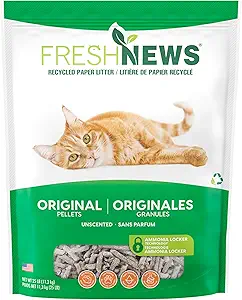
Buying Tip: For short-term use (e.g., a 2-week recovery), purchase the smallest bag size. For ongoing management of a chronic condition, larger bags may offer slightly better value.
Disclaimer: Our recommendations are based on independent testing, research, and veterinary guidance. Product information and pricing are subject to change. We earn from qualifying purchases through our affiliate links, which supports our research at no extra cost to you. We are not veterinarians; always consult your vet for advice on your cat’s specific health needs, especially regarding litter choices for kittens or cats with medical conditions.
Sources