I’ve had to sedate and shave Persians whose mats were so tight they pulled the skin with every step.
The owners loved their cats. They spent money on premium food, cozy beds, and expensive toys. They just didn’t have the right brush.
And their cats suffered in silence.
I’m Dr. Allona Jackson, a practicing veterinarian with 12 years of experience. I’ve treated hundreds of matted long-haired cats – Persians, Maine Coons, Ragdolls, Norwegian Forest Cats, Siberians, Himalayans.
Most of those cases could have been prevented with 5 minutes of daily brushing and the right tools.
In this (Best Brush for Long Haired Cats) guide, I’ll show you:
- The 3 best brushes for long-haired cats (with Amazon links)
- How to brush a cat with long hair and mats (step-by-step – read this carefully)
- Beginner’s guide to long-haired cat grooming tools (what to buy first)
- Daily routine for mat prevention (10 minutes or less)
By the end, you’ll have a complete toolkit and routine to keep your long-haired cat mat-free, comfortable, and beautiful.
📚 Related in-depth guides in this series:
- → Full Hertzko Self Cleaning Slicker Review
- → Full Undercoat Rake Review
- → Full Double Sided Pet Grooming Brush Review
- → Long Haired Cat Grooming Tools for Beginners: Complete Guide
- → How to Brush a Cat with Long Hair and Mats
Links open in-depth guides. This summary covers the essentials.
Why Long-Haired Cats Need Different Brushes Than Short-Haired Cats
The Anatomy Problem
Long-haired cats have two coat layers:
- Soft undercoat (dense, fluffy, traps loose fur)
- Longer top coat (protective, smooth)
Short-haired brushes only reach the top layer. The undercoat keeps shedding fur trapped against the skin, where it tangles into mats.
The Mat Problem
Mats form when loose undercoat gets trapped against the skin by the top coat. Once a mat forms, it tightens like a dreadlock.
Within weeks, a mat can:
- Pull skin so tight it cuts off circulation
- Trap moisture against skin (bacterial infections)
- Hide fleas, ticks, or wounds
- Cause pain with every step
The Pain Problem
Cats are masters of hiding pain. A matted cat won’t cry. They’ll just:
- Move less
- Groom less (which makes mats worse)
- Become irritable or withdrawn
Owners think “personality change” – but it’s pain.
| Consequence of No Brushing | What Happens |
|---|---|
| Mats | Fur tangles into tight balls against skin |
| Skin infections | Moisture + bacteria trapped under mats |
| Hairballs | Ingested loose fur blocks intestines |
| Fecal matter trapping | Mats around rear end collect waste |
| Sedated shaving | Severe mats require vet sedation + full shave |
Vet callout: “I’ve seen mats so tight they left permanent scars. Daily brushing isn’t optional for long-haired cats – it’s medical care.”
— Dr. Allona Jackson, DVM
The 3 Best Brushes for Long Haired Cats (Vet Tested)
I tested these brushes on Persians, Maine Coons, and Ragdolls at my clinic. Long-haired cats need a toolkit, not a single brush. These three work together.
Brush #1: Hertzko Self Cleaning Slicker Brush for Cats (Daily Driver)
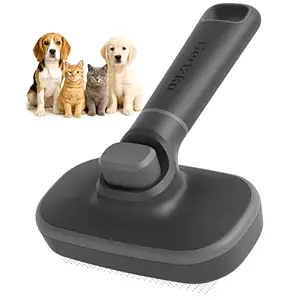
What it is: Fine wire bristles with protective plastic tips on a padded base. One-button self-cleaning.
Best for: Daily maintenance, removing surface loose fur, preventing mats before they form.
Pros
| Pro | Why It Matters for Long Hair |
|---|---|
| Self-cleaning button | Long hair clogs brushes instantly – this saves 5 minutes per session |
| Rounded wire tips | Prevents scratching delicate long-haired cat skin |
| Padded base | Gentle pressure even if you brush longer |
| Affordable | Under $20 |
Cons
| Con | Workaround |
|---|---|
| Doesn’t reach deep undercoat | Pair with undercoat rake |
| Can’t remove existing mats | Use detangling spray first or see vet |
How to Use (Daily)
- Brush in direction of fur growth only
- Start at neck, move to back, then sides
- Use short, gentle strokes (10-15 minutes daily)
- Pay extra attention to armpits, behind ears, and back legs
- Press self-cleaning button after each session
Price: $$ ($15-25)
Verdict: Buy this for daily brushing. Every long-haired cat owner needs one.
📖 For complete review: → Hertzko Self Cleaning Slicker: Vet’s In-Depth Review
Brush #2: Undercoat Rake for Long Haired Cats (Deep Cleaning)
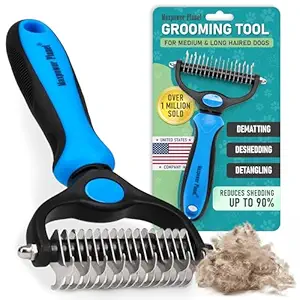
What it is: Long, widely spaced rotating teeth that pull loose undercoat without tugging the top coat.
Best for: Removing deep undercoat during shedding season, preventing mats at the root.
Pros
| Pro | Why It Matters for Long Hair |
|---|---|
| Rotating teeth | Prevents painful pulling on long hair |
| Wide spacing | Reaches through top coat to undercoat |
| Removes 80% of loose undercoat | Dramatically reduces mat formation |
| Affordable | Under $15 |
Cons
| Con | Workaround |
|---|---|
| Not for daily use | Use 1-2x per week only |
| Can’t use on existing mats | Detangle first or see vet |
| Doesn’t smooth top coat | Follow with slicker brush |
How to Use (1-2x per week)
- Brush before mats form (prevention is everything)
- Use gentle, long strokes from neck to tail
- Do not press hard – let the teeth do the work
- Follow with slicker brush to smooth top coat
⚠️ CRITICAL VET WARNING:
“Never use a rake on existing mats. The teeth will catch and pull your cat’s skin – I’ve seen cats scream from this. Detangle first with spray and a slicker brush, or see a professional.”
— Dr. Jackson
Price: $ ($10-15)
Verdict: Buy this if you have a Maine Coon, Persian, Ragdoll, or any long-haired double-coated cat.
📖 For complete review: → Undercoat Rake for Long Haired Cats: Vet’s Guide
Brush #3: Double Sided Pet Grooming Brush (All-in-One)
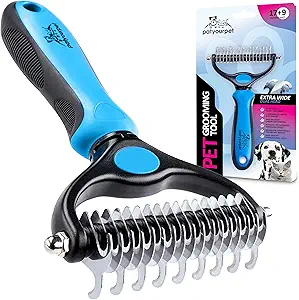
What it is: A brush with two sides – pin bristles on one side, soft bristles on the other.
Best for: Beginners who want one brush for both detangling and smoothing, travel, quick touch-ups.
Pros
| Pro | Why It Matters for Long Hair |
|---|---|
| Two sides in one | Detangle + smooth without switching brushes |
| Compact | Great for travel or small homes |
| Beginner-friendly | Harder to misuse than rake |
| Affordable | Under $15 |
Cons
| Con | Workaround |
|---|---|
| Less effective than dedicated tools | Use as supplement, not replacement |
| Pin side can pull if used wrong | Use gentle pressure |
| No self-cleaning | Clean manually after each use |
How to Use
- Use pin side first to remove loose fur and detangle
- Flip to soft bristle side to smooth and distribute oils
- Use daily for 5-10 minutes
Price: $ ($10-15)
Verdict: Buy this as a beginner brush or travel brush. Upgrade to slicker + rake for serious mat prevention.
📖 For complete review: → Double Sided Pet Grooming Brush: Is It Enough for Long Hair?
Comparison Table: 3 Brushes for Long Haired Cats
| Feature | Hertzko Slicker | Undercoat Rake | Double Sided |
|---|---|---|---|
| Best for | Daily maintenance | Deep undercoat removal | Beginners/travel |
| Price | $$ ($15-25) | $ ($10-15) | $ ($10-15) |
| Daily use safe? | Yes | No (1-2x/week) | Yes |
| Removes deep undercoat? | No | Yes (80%) | No |
| Works on existing mats? | No (detangle first) | No (dangerous) | No (detangle first) |
| Self-cleaning? | Yes (button) | No | No |
| Best for breed | All long hair | Maine Coon, Persian, Ragdoll | Beginners |
| Amazon link | Check The Price | Check The Price | Check The Price |
The winning combo for long-haired cats:
Hertzko Slicker (daily) + Undercoat Rake (1-2x/week) = mat-free cat
Long Haired Cat Grooming Tools for Beginners – What You Actually Need
Don’t buy everything at once. Start with this toolkit.
Essential Tools (Buy First)
| Tool | Purpose | Recommended |
|---|---|---|
| Slicker brush | Daily maintenance | Hertzko Self Cleaning |
| Undercoat rake | Weekly deep cleaning | Undercoat Rake |
| Cat-safe detangling spray | Loosens fine mats | Any alcohol-free, essential-oil-free brand |
| High-value treats | Positive reinforcement | Freeze-dried chicken or tuna |
Nice-to-Have Tools (Buy Later)
| Tool | Purpose |
|---|---|
| Double sided brush | Travel or quick touch-ups |
| Grooming glove | Bonding time, cats who hate brushes |
| Mat splitter | For experienced owners only (see warning below) |
| Professional grooming table | If you have multiple long-haired cats |
What NOT to Buy for Long-Haired Cats
| Tool | Why to Avoid |
|---|---|
| FURminator-style deshedder | Too aggressive for daily use on long hair |
| Human hairbrush | No protective tips – scratches skin |
| Scissors | Never cut mats – you will cut skin |
⚠️ Vet Warning on Mat Splitters:
“Mat splitters have a blade. I’ve seen owners accidentally cut their cat’s skin – deep enough to need sutures. Only use if you’re experienced and your cat is extremely still. When in doubt, see a vet or professional groomer.”
— Dr. Jackson
📖 For complete beginner’s guide: → Long Haired Cat Grooming Tools for Beginners: Starter Kit
How to Brush a Cat with Long Hair and Mats – Vet Technique
This is the most requested guide I give. Follow exactly.
Before You Start: Know When to STOP
| Stop and See a Vet If: | Why |
|---|---|
| Mat is tight against skin (can’t fit finger under) | You will hurt your cat |
| Mat covers more than 2 square inches | Too large to safely detangle |
| Cat screams or tries to bite when you touch mat | Pain indicates skin involvement |
| Multiple mats all over body | Professional shaving needed |
Step-by-Step: Brushing a Long-Haired Cat (No Mats)
Daily routine (10-15 minutes):
Step 1: Let cat sniff the brush. Give a treat.
Step 2: Use slicker brush. Brush in direction of fur growth only. Never against the grain.
Step 3: Start at neck → back → sides → tail. Save belly for last if cat allows (many don’t).
Step 4: Pay extra attention to hot spots where mats form first:
- Armpits
- Behind ears
- Inside back legs (the “pants” area)
- Under tail
- Belly (if cat allows)
Step 5: Use undercoat rake 1-2x per week (not daily).
Step 6: Finish with gentle hand massage. Give a treat.
Step-by-Step: Removing Fine Mats (Not Yet Tight)
For small, loose mats only. Do not attempt on tight mats.
Step 1: Spray mat with cat-safe detangling spray. Wait 30 seconds.
Step 2: Hold mat at the base (close to skin) with your fingers. This prevents pulling on the skin.
Step 3: Use slicker brush to gently tease the end of the mat – never the base.
Step 4: Work from outside of the mat inward, like untangling a necklace chain.
Step 5: If mat doesn’t release in 3 minutes, stop. See a professional.
Step 6: Reward cat immediately after session with treats and praise.
What to Do with Severe Mats (Tight Against Skin)
DO NOT attempt to brush or cut. Stop right now.
Step 1: Put down the brush. You will hurt your cat.
Step 2: Call your veterinarian.
Step 3: Schedule a sedated shave. Yes, sedation. It’s safer than you trying at home.
Step 4: After shave, start daily brushing to prevent regrowth mats.
Cost comparison:
- Sedated shave: $100-250 depending on severity and location
- Treating a cut from scissors: $300-800 + pain for your cat
- Treating a skin infection from a trapped mat: $150-400
Choose wisely.
The Long-Haired Cat Brushing Schedule (Daily + Weekly)
Daily (10-15 minutes)
| Task | Tool | Why |
|---|---|---|
| Remove surface loose fur | Slicker brush | Prevents fur from matting |
| Check hot spots (armpits, behind ears) | Fingers + slicker | Mats start here |
| Smooth top coat | Slicker brush | Distributes oils |
Weekly (1-2x per week, 5-10 minutes)
| Task | Tool | Why |
|---|---|---|
| Remove deep undercoat | Undercoat rake | Prevents mats at the root |
| Full body check | Fingers | Feel for lumps, bumps, early mats |
Seasonal Adjustment
| Season | Action |
|---|---|
| Spring (March-May) | Increase undercoat rake to 2x per week |
| Fall (Sept-Nov) | Increase undercoat rake to 2x per week |
| Summer/Winter | Rake 1x per week |
Breed-Specific Notes
| Breed | Special Consideration |
|---|---|
| Persian | Daily brushing non-negotiable. Armpits and belly mat fastest. Professional groom every 4-6 weeks recommended. |
| Maine Coon | Double coat. Undercoat rake essential in spring/fall. Sheds heavily. |
| Ragdoll | No undercoat, but fine fur mats easily. Slicker brush daily. |
| Norwegian Forest Cat | Thick double coat. Rake 2x per week year-round. |
| Himalayan | Same as Persian – daily brushing required. |
| Siberian | Triple coat. Rake 2-3x per week during shedding season. |
FAQs About Best Brush for Long Haired Cats
How often should I brush my long-haired cat?
Daily. 10-15 minutes every single day.
- Miss one day? Fine.
- Miss three days? Mats start forming.
- Miss a week? You’re looking at a sedated shave.
I’m not exaggerating. Long-haired cats mat faster than you think.
Can I use a FURminator on my long-haired cat?
Yes, but carefully. Use 1x per week maximum during shedding season. Daily FURminator use on long hair causes brush burn and bald spots.
Most long-haired cats do better with an undercoat rake than a FURminator. The rake is gentler on long coats.
Related: Best Cat Brush for Shedding
My long-haired cat hates being brushed. What do I do?
Try this progression:
| Step | Tool | Duration |
|---|---|---|
| 1 | Grooming glove (feels like petting) | 2 minutes |
| 2 | Double-sided brush (soft side first) | 3 minutes |
| 3 | Self-grooming wall brush (zero handling) | Cat chooses |
| 4 | Slicker brush (softest bristles) | 2 minutes with treats |
Some long-haired cats never tolerate slicker brushes. That’s okay. Use alternatives.
Related: Self Grooming Cat Brush
How do I prevent mats between professional grooms?
You can’t. Professional grooming every 4-8 weeks supplements home care – it doesn’t replace it.
Daily home brushing is required. No exceptions.
What’s the best brush for a Persian cat?
Undercoat rake (1-2x/week) + slicker brush (daily).
Persians have the most mat-prone coat of any breed. Don’t skip days. Consider professional grooming every 4 weeks.
Can I shave my long-haired cat at home?
No.
Cat skin is thinner than human skin. Electric clippers can cut them easily. I’ve treated cats with deep clipper burns from home shaving attempts.
Leave shaving to veterinarians or professional groomers.
My cat has a mat near her rear end with dried feces. Help.
This is common and dangerous.
Do not cut it. You cannot see where skin starts.
Do this instead: Take your cat to a vet or professional groomer for a sanitary trim – shaving around the rear end. Cost is usually $20-40. Worth every penny.
When should I see a vet instead of brushing?
See a vet immediately if:
- Mat is tight against skin (can’t fit finger under)
- Mat is wet or smells bad (infection)
- Cat is painful when you touch the area
- Cat has stopped eating or grooming
- You see redness, swelling, or discharge under a mat
The Bottom Line from Dr. Allona Jackson, DVM
Long-haired cats are not high-maintenance – they’re correct-maintenance.
My top pick for daily brushing: Hertzko Self Cleaning Slicker Brush – every long-haired cat owner needs this.
My top pick for deep undercoat removal: Undercoat Rake – essential for Maine Coons, Persians, and double-coated breeds.
My top pick for beginners: Double Sided Pet Grooming Brush – start here, then upgrade.
The winning combo: Hertzko Slicker (daily) + Undercoat Rake (1-2x/week) = mat-free cat
Final vet reminder:
“I’ve seen too many long-haired cats suffer from preventable mats. Five minutes of daily brushing prevents months of pain, expensive vet shaves, and skin infections.
Your cat can’t brush herself. She’s relying on you.
Don’t let her down.”
— Dr. Allona Jackson, DVM
Related Guides from Dr. Jackson
- Best Cat Brush (Ultimate Guide) →
- Best Cat Brush for Shedding →
- Best Cat Steam Brush →
- Best Cat Brush for Short Hair →
- Self Grooming Cat Brush →
Medical Disclaimer
This article is for informational purposes only and does not constitute veterinary medical advice. Every cat is different. Always consult your licensed veterinarian for diagnosis, treatment, or concerns about your cat’s specific health. The author (Dr. Allona Jackson, DVM) is a practicing veterinarian but cannot diagnose your cat without an in-person examination. Severe mats require veterinary attention – do not attempt to remove tight mats at home.
Affiliate Disclosure
As an Amazon Associate, AvailPet.com earns from qualifying purchases. This does not affect our vet-reviewed recommendations. We only recommend products Dr. Jackson has personally tested or extensively researched. Your purchase helps support free veterinary content like this guide.