If your cat has ever had a urinary flare-up seemingly “out of nowhere”—especially after a stressful event like a move, a new pet, or even a change in routine—you’ve witnessed the frustrating and well-documented link between a cat’s emotional state and their physical health. In my veterinary practice, I see countless cases of Feline Idiopathic Cystitis (FIC), where inflammation and painful urinary symptoms are directly triggered by stress, not bacteria or stones alone.
That’s why managing feline urinary health requires a more holistic approach. While our comprehensive guide on the Best Cat Food for Urinary Health covers the full spectrum of nutritional strategies, some cats need a specialized tool that addresses both sides of the problem.
Enter Hills cd Multicare Stress. This isn’t just another urinary food; it’s a pioneering therapeutic diet designed to break the cycle of stress-induced urinary disease. As a veterinarian, I consider it a first-line nutritional intervention for a specific but very common patient profile: the anxious cat prone to bladder trouble.
In this review, I’ll break down the unique dual-action science behind this diet, explain exactly which cats are the ideal candidates, and provide my clinical perspective on its pros, cons, and proper use within a complete urinary health plan.
At-a-Glance: Your Quick Decision Guide
For the cat parent in a hurry, here are the essential takeaways on Hill’s c/d Multicare Stress. This diet fills a critical niche that others in our urinary health cluster do not.
| Aspect | c/d Multicare Stress Verdict | Key Insight |
|---|---|---|
| Primary Purpose | Dual-Action Management: Combines struvite dissolution/prevention with clinical nutrition for stress. | This is the evolution beyond minerals-only formulas. It treats the cause (stress) and the symptom (crystals). |
| Ideal Candidate | Cats with Feline Idiopathic Cystitis (FIC) or urinary flare-ups linked to anxiety, multi-cat tension, or environmental changes. | If your cat’s issues spike after vet visits or house guests, this diet is designed for them. |
| Forms Available | Dry Kibble & Wet Pate. | Critical Note: The wet food is non-negotiable for maximum efficacy. Its high moisture content is vital for urinary flush. |
| Prescription Required? | ✅ ABSOLUTELY. Federal law classifies this as a veterinary therapeutic diet. | This is a medical intervention, not a maintenance food. A vet must diagnose the need and monitor progress. |
| Our Rating | 9.5/10 for Target Patients. The most sophisticated tool for stress-associated urinary disease. | It is not a cure-all, but for the right patient, it is exceptionally effective and often reduces reliance on medication. |
Bottom Line: Think of this as a specialized tool in your toolbox. If your cat’s urinary health issues are tangled with anxiety, this is the diet to discuss with your veterinarian. For general urinary crystal prevention without a strong stress component, other excellent options in our guide, like Royal Canin Urinary SO, may be more directly suited.
The Science of the Stress-Bladder Connection: Why This Diet Exists
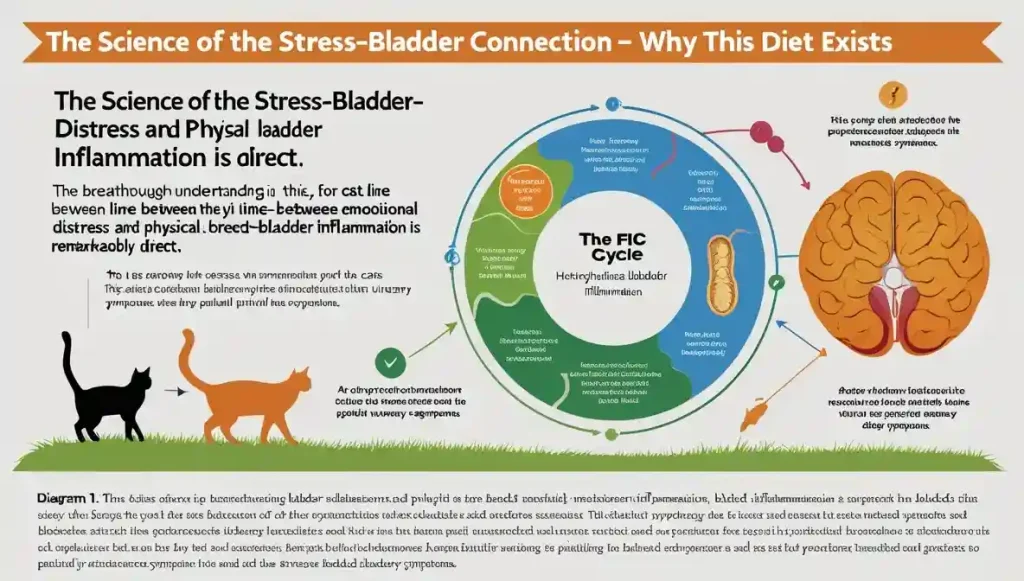
Many cat owners—and even some veterinarians—historically treated urinary issues as a purely mechanical problem: too many minerals, not enough water. While that’s part of the story, modern veterinary medicine recognizes a more complex picture for a huge number of patients.
The breakthrough understanding is this: For cats, the line between emotional distress and physical bladder inflammation is remarkably direct.
Feline Idiopathic Cystitis (FIC): The Core Problem
FIC is not an infection. The “Idiopathic” means “of unknown cause,” but we now understand the primary trigger is neurogenic inflammation—where stress signals from the brain directly inflame the bladder lining. This condition is estimated to be responsible for over 60% of lower urinary tract cases in cats under 10 years old.
When a stressed cat’s body releases certain neurotransmitters and hormones, it can:
- Compromise the protective bladder lining, making it vulnerable.
- Increase inflammation in the urinary tract.
- Cause painful muscle spasms.
The result? All the classic signs: frequent trips to the litter box, straining, vocalizing, and blood in the urine—even with a sterile urine culture and no visible crystals.
The Limitation of “Minerals-Only” Diets
This is why putting a cat with FIC on a standard urinary diet (which only manages mineral content and pH) can feel like treating a smoke alarm instead of the fire. It might help prevent crystal formation from the inflammation, but it does nothing to dampen the stress signal that started the blaze. The cycle continues.
Hill’s c/d Multicare Stress is engineered to interrupt this cycle at both points.
How It Works: A Dual-Pathway Mechanism
This diet’s innovation is targeting two physiological pathways simultaneously.
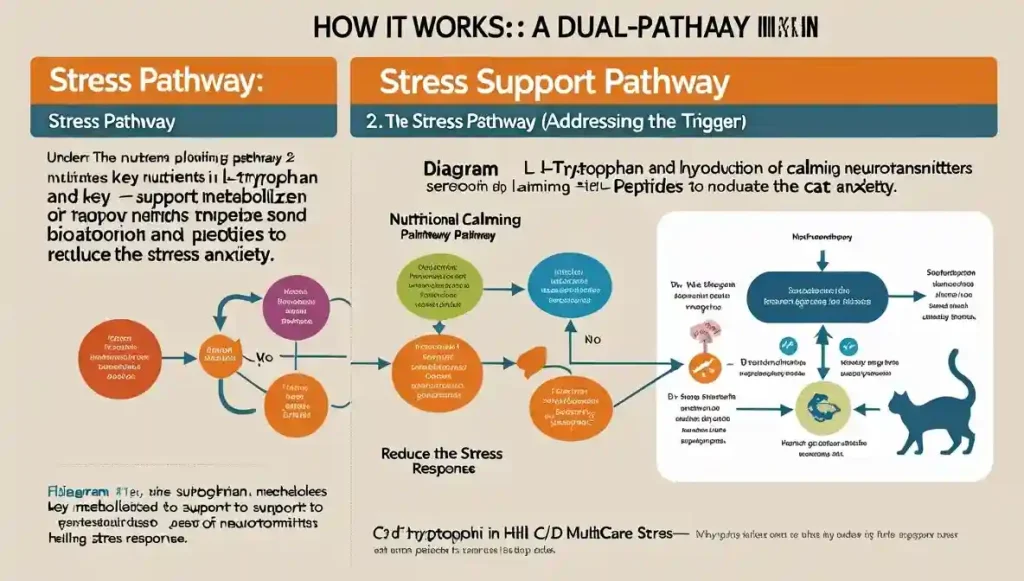
1. The Urinary Health Pathway (Managing the Symptom)
This is the proven, bedrock science shared with other top prescription urinary diets:
- Controlled Mineral Levels: Precisely balanced magnesium, phosphorus, and calcium to reduce the raw materials for struvite crystal formation.
- Optimized Urine pH: Maintains a slightly acidic urine environment (ideal range: 6.2-6.4), which helps dissolve existing struvite crystals and prevents new ones from forming.
- Promotes Dilute Urine: The formulation encourages water intake and urine dilution, which helps flush the bladder and keeps mineral concentrations low.
2. The Stress Support Pathway (Addressing the Trigger)
This is where c/d Stress breaks new ground. It incorporates specific nutrients to help modulate the nervous system’s response to stress:
- L-Tryptophan: An essential amino acid that is a direct precursor to serotonin, a key neurotransmitter that promotes feelings of calm and well-being.
- Hydrolyzed Milk Protein: Specially processed to release bioactive peptides that have been shown in studies to have calming properties.
- Antioxidant Blend (Vitamins E & C, Beta-Carotene): Helps combat oxidative stress that can be heightened during anxious states.
Think of it this way: The urinary pathway creates a “bladder-safe” environment. The stress pathway helps turn down the volume on the “anxiety alarm” that was damaging that environment in the first place.
This is not sedation or medication. It’s nutritional support for the neurological and inflammatory pathways involved in the stress response, making it a safe component of long-term management.
Ingredient Intelligence & Nutritional Breakdown: A Perspective
Let’s move from theory to the practical reality in the bag and can. As a veterinarian, I read ingredient panels with a therapeutic lens: What is the functional purpose of each component in managing this specific condition? This is different from judging an over-the-counter maintenance food.
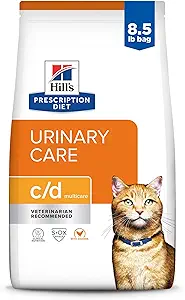
(Note: Always verify the label on the specific product you purchase, as formulas can be updated.)
Key Therapeutic Ingredients & Their Role
| Ingredient | Category | Primary Function in This Diet | Veterinary Context |
|---|---|---|---|
| Chicken | Protein Source | Provides highly digestible, bioavailable amino acids for overall health and tissue repair. | A common, palatable protein that minimizes the use of novel allergens, allowing the focus to remain on urinary/stress management. |
| L-Tryptophan | Amino Acid | The core stress nutrient. Direct precursor to serotonin, supporting mood regulation and a calm behavioral state. | This is a targeted nutritional intervention, not a drug. It helps support the body’s natural calming mechanisms. |
| Hydrolyzed Milk Protein | Protein Derivative | Source of bioactive casozepine peptides, studied for their anxiolytic (anxiety-reducing) effects. | The hydrolysis process breaks the protein into smaller pieces that can exert this calming effect. |
| Potassium Citrate | Urinary Modifier | Helps maintain the target urinary pH (slightly acidic) to dissolve and prevent struvite crystals. | A cornerstone of all effective prescription urinary diets. |
| Omega-6 Fatty Acids & Vitamins A & E | Skin/Coat & Antioxidant Support | Maintains skin barrier health and provides antioxidant protection against oxidative stress. | Important because stressed cats often over-groom, and systemic inflammation generates free radicals. |
Addressing Common Ingredient Concerns
I am often asked about ingredients like corn gluten meal and brewers rice in prescription diets. Here’s the critical perspective:
- These are not “fillers” in this context. In a therapeutic diet, they are carefully selected functional carbohydrates. They provide a precise, consistent, and highly digestible energy source that allows the formulation to:
- Keep protein levels moderate (excess protein can alter urine pH).
- Maintain the exact mineral balance crucial for urinary health.
- Ensure the diet is calorie-dense, so cats eat less volume to get their nutrients, thereby consuming fewer total minerals.
The Bottom Line: The ingredient list of a veterinary therapeutic diet is formulated like a medication. Each component serves a specific purpose in the clinical strategy. Judging it by the standards of a consumer-focused “natural” food misses the point of its medical efficacy.
Guaranteed Analysis: What the Numbers Mean
Below is a typical guaranteed analysis for the dry food formulation. The wet food will have different values, primarily much higher moisture.
| Nutrient | Typical Guarantee (Dry Food) | Why It Matters for Your Cat |
|---|---|---|
| Crude Protein (Min) | ~34% | Maintains muscle mass without over-supplying phosphorus. |
| Crude Fat (Min) | ~17% | Provides concentrated energy and supports skin/coat. |
| Crude Fiber (Max) | ~1.5% | Low fiber promotes nutrient absorption and doesn’t interfere with the precise mineral balance. |
| Moisture (Max) | ~10% | Very low, which is why supplementing with the wet food is so critical for total water intake. |
| Magnesium (Max) | ~0.08% | This is the key urinary number. Kept very low to prevent struvite crystal formation. |
| Taurine (Min) | Added | An essential amino acid for heart and eye health, always supplemented in cat foods. |
🔬 The Veterinarian’s Take: This profile is not an accident. It is the result of decades of research to create a nutritional matrix that consistently produces a urine chemistry hostile to struvite formation while incorporating novel stress-supporting nutrients. It is a formula for a specific medical condition, not a generic “healthy” food.
Clinical Assessment: Pros, Cons & The Ideal Patient
After prescribing and monitoring outcomes for cats on this diet in practice, I can provide a clear, evidence-based perspective on where it excels and where other options in our urinary health arsenal might be more suitable.
The Advantages: Why I Prescribe c/d Stress
- Targets the Root Cause for Most Recurrent Cases: For the majority of my patients with non-obstructive, recurrent FLUTD where FIC is suspected, stress is the primary trigger. This diet is the only nutritional tool that directly addresses this neuro-inflammatory pathway, often leading to a dramatic reduction in flare-up frequency.
- Clinically Proven Urinary Efficacy: It carries forward the proven effectiveness of the Hill’s c/d platform. It dissolves struvite stones and prevents recurrence through controlled minerals and optimal urine pH. You get a complete urinary management system.
- Potential to Reduce Pharmaceutical Reliance: For some cats, this diet can lower the needed dose of behavior-modifying drugs (like fluoxetine or gabapentin) or even preclude their need altogether. It serves as a foundational, side-effect-free component of a multimodal treatment plan.
- High Palatability: An effective medical food is useless if the cat won’t eat it. In my experience and in feeding trials, the palatability of both the dry and wet forms is excellent, which is critical for long-term compliance in often finicky patients.
The Considerations & Limitations
- Cost & Prescription Access: This is a premium, research-backed therapeutic diet. The cost is significant (typically $2.50-$4.00 per day), and the prescription requirement adds a step. This is a long-term investment in your cat’s health.
- Not a Standalone Solution: This diet is one pillar of FIC management. It works best alongside environmental enrichment (vertical space, puzzle feeders, calm havens) and stress reduction protocols. Nutrition alone cannot fix a stressful environment.
- Specific to Certain Urinary Issues: It is formulated primarily for struvite management and stress. It is not the first choice for:
- Oxalate stones (which require different mineral management).
- Chronic Kidney Disease (CKD) (these cats need phosphorus/protein restrictions not found here).
- Cats with no discernible stress component to their urinary issues.
The Ideal Patient Profile: Is This Your Cat?
This diet is not for every cat with urinary trouble. It is a precision tool. Your cat is likely a strong candidate if they match this profile:
- Diagnosis: Has a veterinary diagnosis of Feline Idiopathic Cystitis (FIC) or recurrent sterile cystitis.
- History: Urinary flare-ups correlate with stressful events (construction, new pets/people, vet visits, changes in routine).
- Behavior: Displays anxiety signs like hiding, excessive grooming, inter-cat aggression, or timidity.
- Lifestyle: Lives in a multi-cat household with observable tension or competition.
- Previous Response: Has had recurrent issues even on a standard urinary diet.
If your cat’s primary issue is straightforward struvite crystals with no apparent anxiety, a diet like Royal Canin Urinary SO may be a more direct and cost-effective choice. The value of c/d Stress is in its dual-action approach for a complex problem.
Comparative Analysis: Where c/d Stress Fits in Your Cat’s Care Plan
Choosing the right therapeutic diet requires understanding the landscape. Here’s how Hill’s c/d Multicare Stress compares to other leading options, both within the Hill’s line and against key competitors:
Head-to-Head: c/d Stress vs. Top Competitors
| Feature | Hill’s c/d Multicare Stress | Royal Canin Urinary SO | Purina Pro Plan UR St/Ox | OTC “Urinary” Food |
|---|---|---|---|---|
| Primary Strength | Dual-Action: Stress + Struvite | Gold-Standard Struvite Dissolution | Broad-Spectrum: Struvite & Oxalate | Maintenance & Prevention |
| Stress/Anxiety Support | ✅ Built-in (L-Tryptophan, Hydrolyzed Milk Protein) | ❌ None | ❌ None | ❌ None |
| Target Urinary Issue | Struvite crystals/stones + FIC | Struvite crystals/stones | Struvite & Oxalate crystals | General urinary “health” |
| Prescription Required | ✅ Yes | ✅ Yes | ✅ Yes | ❌ No |
| Best For… | The anxious cat with recurring sterile cystitis or stress-triggered flare-ups. | The classic struvite case with no major behavioral stress component. | The cat with mixed crystal history or a need for oxalate prevention. | Healthy cats with no history of clinical urinary disease. |
| Our Take | The holistic choice for the mind-body connection. | The most potent tool for confirmed struvite dissolution. | The versatile choice for complex crystal management. | For prevention only, not treatment. |
Key Insight: If your vet suspects or has diagnosed Feline Idiopathic Cystitis (FIC), c/d Stress is the only diet in this comparison with a mechanism to address it. The others manage urine chemistry alone.
Navigating the Hill’s Prescription Diet Line
Confusion often arises between similarly named products. Here’s a clear breakdown:
| Hill’s Product | Key Differentiator | Ask Your Vet About This If… |
|---|---|---|
| c/d Multicare (Standard) | The original, proven formula for struvite dissolution and prevention. | Your cat has struvite issues but no notable anxiety or stress triggers. |
| c/d Multicare Stress | Standard c/d + Calming Nutrients. | Your cat has struvite issues and exhibits anxiety or has stress-linked flare-ups (FIC). |
| c/d + Metabolic | Standard c/d + Weight Management. | Your cat needs to lose weight and has struvite issues. Stress is not the primary concern. |
| Science Diet Urinary Hairball Control (OTC) | Non-prescription, manages hairballs & supports urinary pH. | Your cat is healthy with no stone history but is prone to hairballs and you want urinary maintenance. |
Critical Distinction: c/d Multicare Stress vs. c/d + Metabolic are often confused. They address two different comorbidities. “Stress” manages anxiety; “Metabolic” manages weight. A cat that is both obese and anxious would require a different clinical conversation.
The Veterinarian’s Decision Tree
When a cat presents with recurrent lower urinary signs, my thought process often follows this path:
- Confirm Diagnosis: Urinalysis, imaging (X-ray/ultrasound) to rule out stones, infection, or blockage.
- Identify the Trigger:
- Struvite crystals present, cat is relaxed? → Likely Royal Canin SO or standard Hill’s c/d.
- No crystals, sterile inflammation (FIC), cat is anxious? → Hill’s c/d Multicare Stress is a first-line nutritional choice.
- Oxalate crystals present? → Purina Pro Plan UR or other oxalate-specific diet.
- Overweight with any urinary issue? → Consider Hill’s c/d + Metabolic or Blue Buffalo W+U.
c/d Stress occupies the specific and vital niche where emotional health and urinary health intersect. It is a testament to how far veterinary nutrition has come in treating the whole patient, not just the lab results.
Implementation Protocol: Feeding, Transition & Success Monitoring
A therapeutic diet only works if implemented correctly. Based on clinical protocols, here is your step-by-step guide to starting Hill’s c/d Multicare Stress and monitoring for success.
Step 1: The Veterinary Partnership (Non-Negotiable)
This diet must begin with a veterinary visit. Your vet will:
- Confirm the diagnosis (via urinalysis, possibly imaging) to ensure this is the correct diet.
- Determine the daily caloric need based on your cat’s ideal weight, not current weight.
- Provide the initial prescription and schedule a follow-up appointment (typically 4-8 weeks out) to recheck urine chemistry.
Step 2: The 7-Day Transition Guide
Cats have sensitive digestive systems. Never switch foods abruptly. Follow this slow transition to avoid gastrointestinal upset:
- Days 1-2: Mix 25% c/d Stress with 75% old food.
- Days 3-4: Mix 50% c/d Stress with 50% old food.
- Days 5-6: Mix 75% c/d Stress with 25% old food.
- Day 7: Feed 100% c/d Stress.
Pro Tip: If your cat is resistant, transition even more slowly over 10-14 days. The wet food pate is often more palatable and can be used to entice them.
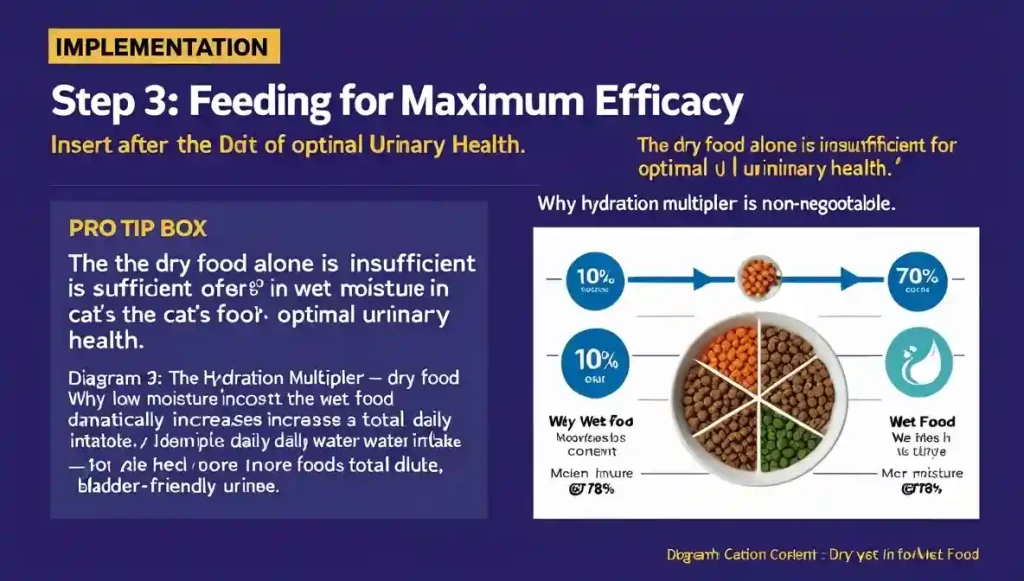
Step 3: Feeding for Maximum Efficacy
The single most important piece of advice I give owners:
You MUST incorporate the WET FOOD. The dry food alone is insufficient for optimal urinary health.
- Why? The wet food is approximately 78% moisture. This dramatically increases your cat’s total water intake, producing more dilute urine that flushes the bladder. This is critical for managing crystals and inflammation.
- Recommended Strategy: Feed the dry food as a measured, all-day allotment (if free-feeding is appropriate for weight). Then, feed one half-can of the wet food as a scheduled meal (morning or evening). If your cat will eat only wet food, that is perfectly acceptable and often ideal.
Step 4: At-Home Monitoring & Log
Be an active partner in your cat’s care. Keep a simple log for the first few weeks to track progress and provide valuable info to your vet:
| Date | Water Consumption (Note if increased) | Litter Box Trips (Frequency) | Urine Clump Size & Notes | Behavior/Observations |
|---|---|---|---|---|
| e.g., 1/22 | Seems to drink more | 5x (normal) | Large clump – good! | Appears relaxed after meal. |
| e.g., 1/25 | – | 8x (increased) | Several small clumps | Alert: Straining observed. Contact vet. |
Red Flags (Contact Your Vet Immediately):
- Straining with no urine production.
- Vocalizing in the litter box.
- Blood in urine.
- Complete loss of appetite for more than 24 hours.
Step 5: The 60-Day Recheck & Long-Term Management
The initial follow-up urinalysis is critical. It tells us:
- If the urine pH is in the target range (6.2-6.4).
- If specific gravity (concentration) has decreased (a good sign!).
- If crystals have dissolved or are absent.
Long-Term Outlook: For cats with FIC, this is often a long-term or lifelong management strategy. Success is defined as a significant reduction in flare-ups (e.g., from every few months to once a year or less) and an improved quality of life. Remember, the diet works alongside environmental enrichment—providing security, play, and reducing conflict is equally important for lasting success.
FAQs About Hills Cd Multicare Stress
Here are direct answers to the most common questions I receive from concerned cat owners about Hill’s c/d Multicare Stress, formatted for clarity and search visibility.
Can I buy Hill’s c/d Stress online without a prescription from my vet?
No, you cannot legally or ethically purchase this diet without an active veterinary prescription. Federal regulations classify it as a veterinary therapeutic diet due to its ability to treat and prevent disease. Reputable online pharmacies (like the linked Amazon page) will require you to provide your vet’s information and will verify the prescription before shipping. This safeguard ensures the diet is used appropriately for your cat’s specific medical condition.
My cat has been diagnosed with oxalate stones. Is c/d Stress the right choice?
No, c/d Stress is not formulated for oxalate stones. It is specifically designed to create a urine environment that dissolves and prevents struvite stones. Oxalate stones form under different urine conditions and require a distinct nutritional approach, often involving different mineral balances. A diet like Purina Pro Plan Veterinary Diet UR St/Ox is formulated for both struvite and oxalate management. Always follow your veterinarian’s specific dietary recommendation based on your cat’s stone type.
How long will it take to see a reduction in my cat’s anxiety or stress behaviors?
Manage your expectations for a nutritional approach. Unlike fast-acting anti-anxiety medications, the calming nutrients (L-Tryptophan, hydrolyzed milk protein) work by gradually supporting the body’s neurochemistry. Most owners report noticing a measurable difference in relaxation and stress behaviors within 4 to 6 weeks of exclusive feeding. Consistency is key—the diet must be fed as the sole nutrition to build up and maintain the beneficial nutrient levels.
Can I mix this with other urinary foods or supplements?
It is not recommended to mix this with other urinary-focused foods or supplements. The precise mineral balance and calorie content are calculated for the complete diet. Adding other items can disrupt this balance, potentially reducing its effectiveness or altering urine pH in an unwanted way. The only safe addition is water (to make a gravy) or a plain protein topper approved by your vet if needed for palatability. Never add urinary acidifiers or other supplements without explicit veterinary instruction.
What is the core difference between Hill’s c/d Stress and Hill’s c/d + Metabolic?
They are designed for two different concurrent health issues.
- c/d Multicare Stress = Urinary Health + Stress/Anxiety Management
- c/d + Metabolic = Urinary Health + Weight Loss/Metabolic Support
If your cat is overweight and stressed, you have a complex case that requires your veterinarian to prioritize the most immediate health risk. They may start with one and transition, or in some cases, use specific medications alongside a diet.
My cat is on anxiety medication (like fluoxetine or gabapentin). Can I still use this food?
Yes, absolutely, and they are often used synergistically. This diet can be an excellent foundation that may allow your veterinarian to reduce the dosage of pharmaceutical medication over time, minimizing potential side effects. Crucially: Never adjust or stop your cat’s medication on your own. Any changes must be done under direct veterinary supervision. Inform your vet you are starting this diet so they can monitor the combined effect.
Is the dry food or the wet food version more important?
The wet food is critically important for optimal urinary outcomes. While the dry food contains all the necessary nutrients, the wet food’s high moisture content (≈78%) is irreplaceable for increasing your cat’s total water intake. This produces more dilute urine, which is the single best way to flush the bladder and prevent crystal formation. The ideal protocol is to use both, with the wet food as a scheduled meal. If you must choose one, choose the wet food.
Ethical Prescription & Professional Guidance
As a veterinarian, my highest duty is to the well-being of my patients. This final section serves as a crucial safeguard—the ethical framework that must surround the use of any prescription therapeutic diet.
The Veterinarian’s Gatekeeper Role: A Safety Protocol
Prescription diets are powerful medical tools. Their designation is not a marketing ploy; it is a legal and medical requirement. Here is my non-negotiable protocol for prescribing Hill’s c/d Multicare Stress:
- Diagnostic Confirmation First: This diet is never prescribed based on symptoms alone. It requires:
- A complete urinalysis to confirm sterile inflammation (for FIC) or identify struvite crystals.
- Diagnostic imaging (X-ray or ultrasound) in recurrent cases to rule out stones, tumors, or anatomical issues.
- A thorough behavioral history to establish the stress link.
- The Follow-Up Mandate: A prescription comes with a responsibility to monitor. I require a recheck urinalysis 4-8 weeks after starting the diet to:
- Verify the urine pH has reached the therapeutic target (6.2-6.4).
- Confirm crystals have dissolved or are absent.
- Ensure the cat is responding as expected.
- Contraindications & Red Flags: I will not prescribe this diet if:
- The cat has kidney disease (requires different protein/phosphorus levels).
- The cat has a history of calcium oxalate stones.
- The primary issue is a bacterial UTI requiring antibiotics.
- The owner is unable or unwilling to commit to the necessary environmental and lifestyle changes.
Your Action Plan: A Partnership With Your Vet
If, after reading this review, you believe Hills cd Multicare Stress could help your cat, here is how to proceed ethically and effectively:
1. Schedule a Veterinary Consultation.
Bring this article, your cat’s full medical history, and a detailed log of their urinary episodes and stress triggers (e.g., “strains for two days after visitors come”).
2. Ask Your Vet These Specific Questions:
- “Based on my cat’s urinalysis and history, do you think FIC or stress is a primary component?”
- “Are there any health conditions that would make this diet unsafe for my cat?”
- “What is our specific follow-up plan to monitor its effectiveness?”
3. Commit to the Holistic Approach.
Understand that this diet is one part of the solution. Be prepared to equally commit to:
- Environmental enrichment (water fountains, multiple litter boxes, vertical space, play).
- Stress reduction (managing multi-cat conflict, using Feliway diffusers, maintaining routines).
- Long-term nutritional compliance.
Final Professional Verdict & Where to Buy
Hill’s Prescription Diet c/d Multicare Stress represents a significant advancement in the nutritional management of feline lower urinary tract disease. For its target patient—the cat suffering from stress-exacerbated urinary inflammation—it is often the most effective first-line nutritional intervention available. It moves beyond symptom management to address a root cause.
However, its power is unlocked only through professional veterinary oversight. It is a medical treatment, not a consumer product.
Where to Purchase (With a Valid Prescription):
- Your Local Veterinary Clinic: Often the best source for initial guidance and support.
- Authorized Online Pharmacies: For convenience, with prescription verification.
- → View Hill’s c/d Multicare Stress on Amazon (Prescription Required)
- Chewy.com Pharmacy: Reliable online option with vet authorization.
Return to our comprehensive resource hub: Best Cat Food for Urinary Health
Sources
- Cornell Feline Health Center: “Feline Lower Urinary Tract Disease.”
- ACVIM Consensus Statement: “Treatment and Prevention of Uroliths in Dogs and Cats.” (2016).
- WSAVA Global Nutrition Guidelines:
- Hill’s c/d Multicare Product Info
A Critical Disclaimer from Our Veterinarians: This article is for informational purposes and is reviewed by a veterinary professional. However, urinary issues can constitute a medical emergency, especially for male cats who are prone to life-threatening blockages. Always consult your veterinarian for a diagnosis and treatment plan before changing your cat’s diet. The recommendations here are intended to be used under veterinary guidance.