Veterinary Nutrition & Technology Consultant
Reviewed by Dr. Allona Jackson, DVM
Clinically reviewed for prescription diet management, RFID/Microchip sensor compatibility, and 2026 multi-pet behavioral standards.
You’ve invested in an automatic feeder, hoping it would solve your multi-pet challenges. But instead of peaceful mealtimes, you’re still dealing with the same old problems: the food thief who cleans out every bowl, the anxious eater who gets pushed away from their meal, or the constant worry that your pet on a special diet is eating the wrong food.
The limitation is clear: standard automatic feeders provide food on a schedule, but they don’t control which pet eats it. This is where a selective pet feeder changes everything. It’s not just another automatic feeder—it’s a smart solution that grants food access only to specific pets, finally delivering the personalized feeding solution multi-pet homes truly need.
I’m Dr. Allaona Jackson, and in my veterinary practice, I’ve seen how this targeted technology can transform stressful feeding situations into harmonious routines while ensuring each pet gets exactly what they need for optimal health.
Key Takeaways: The Power of Selective Feeding
Before we explore the details, here are the essential facts that make selective pet feeders a game-changer for multi-pet households:
- Smart Access Control: A selective pet feeder identifies individual pets using their microchip or a special collar tag, only opening for authorized animals.
- Ends Food Bullying: It creates a peaceful mealtime by physically protecting each pet’s food from thieves and bullies.
- Manages Special Diets: This is the only reliable way to ensure pets eat their specific prescription, weight-management, or allergy-specific food.
- The Gold Standard: The most effective selective pet feeders are microchip pet feeders that use your pet’s existing identification.
- Veterinary Recommended: As a vet, I recommend this technology for enforcing treatment plans and reducing stress in multi-pet homes.
What is a Selective Pet Feeder? (How It Solves Your Problems)
At its core, a selective pet feeder is an intelligent feeding system that solves the fundamental flaw of standard automatic feeders: the inability to control which animal eats the food. It works on a simple but brilliant three-step principle:
The “Scan, Authenticate, Access” Process:
- Identification: When your pet approaches, the feeder scans their unique identifier—either their implanted microchip or a lightweight RFID collar tag.
- Authentication: The feeder instantly verifies if this identifier matches its pre-approved list.
- Access: If approved, the locking mechanism disengages, and the lid opens only for that specific pet.
Connecting the Technology to Your Solved Problems:
- Problem: “My dominant cat steals all the food.”
- Solution: The physical barrier of the locked lid protects the submissive eater’s meal, ending food bullying.
- Problem: “I have pets on different prescription diets.”
- Solution: By assigning a specific feeder to each pet, you guarantee that the diabetic cat only eats diabetic food, and the kidney-support cat only eats kidney food.
- Problem: “I need to monitor my pet’s appetite for health reasons.”
- Solution: Advanced models track feeding patterns, alerting you to changes that could signal underlying health issues.
The Technology Behind Selective Feeders: Microchips vs. Tags
Understanding the identification methods is crucial to choosing the right selective pet feeder for your home. Here’s my breakdown of the two main technologies from a veterinary perspective.
Microchip-Based Feeders (The Gold Standard)
- How It Works: The feeder reads the unique ID number from the passive microchip already implanted in your pet’s scruff. This is the same FDX-B standard chip most US veterinarians use for pet identification.
- Pros:
- Hassle-Free: No need for your pet to wear anything extra.
- Permanent: The microchip is a lifelong identifier.
- Highly Secure: The chip cannot be lost or removed.
- Cons:
- Requires a compatible microchip (though most modern chips work).
- Slightly more expensive technology.
RFID Collar Tag-Based Feeders
- How It Works: The feeder comes with lightweight, durable RFID tags that attach to your pet’s collar. The feeder scans the tag when your pet approaches.
- Pros:
- Works for All Pets: A perfect solution for pets without microchips.
- Easy to Manage: You can easily transfer tags between collars.
- Cons:
- Relies on a Collar: Your pet must tolerate wearing a collar consistently.
- Can Be Lost: If the collar comes off, the pet loses access to their food.
Professional Insight:
“For most of my clients, I recommend microchip-based feeders because they’re the most reliable long-term solution. However, for pets who aren’t chipped but happily wear collars, the tag system works exceptionally well.” – Dr. Jackson
Is a Selective Pet Feeder Right for Your Home? (A Checklist)
Not every multi-pet home needs this technology, but many would benefit tremendously. Use this simple checklist to determine if a selective pet feeder is the right solution for you.
Answer “Yes” if any of the following apply to your household:
- You have more than one pet and they eat different foods (prescription, weight management, life stage).
- One pet consistently steals food from another, causing stress or weight issues.
- A pet has food allergies or sensitivities that require a specific diet.
- You need to monitor an individual pet’s appetite due to health concerns.
- You’re tired of supervising mealtimes or feeding pets in separate rooms.
- One pet is overweight and needs portion control while others free-feed.
If you answered “Yes” to any of the above, a selective pet feeder will likely solve your problem.
When a Basic Feeder Might Suffice:
- All your pets eat the same food.
- There are no issues with food stealing or bullying.
- Your only goal is scheduled feeding for convenience.
Real-World Scenario from My Practice:
“I recently advised a client with three cats to use selective feeders. ‘Mittens’ needed a urinary diet, ‘Simba’ was diabetic and needed timed meals, and ‘Luna’ was healthy. Implementing two selective pet feeders transformed their home from a stressful feeding environment to a peaceful, automated system where each cat got exactly what they needed.” – Dr. Jackson
Top Selective Pet Feeder Models Reviewed
Based on hands-on testing and feedback from my clients, here are my top recommendations for selective pet feeders that deliver on their promises.
1. For Health Monitoring & Reliability: SureFeed Microchip Pet Feeder

- Why I Recommend It: This is the most reliable microchip pet feeder I’ve tested. The Connect Hub accessory provides invaluable health data by tracking feeding frequency and duration—key indicators of your pet’s well-being.
- Best For: Pet parents managing chronic conditions like diabetes or kidney disease, and those who want the most data-driven insight.
- Considerations: The premium price reflects its medical-grade functionality.
2. For All-in-One Portion Control: PortionPro Rx Smart Feeder

- Why I Recommend It: It uniquely combines precise portion control with selective microchip access. The integrated hopper dispenses exact amounts of food on a schedule for the authorized pet.
- Best For: Households where one pet needs both selective access and strict portion control for weight management or diabetes.
- Considerations: Designed for dry food only and requires more counter space.
3. For Budget-Conscious Tech Homes: PETKIT Automatic Microchip Feeder
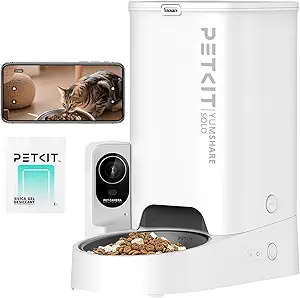
- Why I Recommend It: It offers smart features like app control and scheduling at a more accessible price point than premium models.
- Best For: Tech-savvy owners looking for an affordable entry into selective feeding.
- Considerations: Uses RFID collar tags rather than reading implanted microchips.
FAQs About selective pet feeders
Here are answers to the most common questions I receive about selective pet feeders.
What’s the real difference between a selective pet feeder and a regular automatic feeder?
“This is the crucial distinction: an automatic feeder provides food on a schedule. A selective pet feeder adds the essential layer of access control, ensuring only the right pet can eat the food. It’s the difference between putting food out for anyone and serving a personalized meal to a specific individual.” – Dr. Jackson.
Can I use just one selective feeder for multiple pets?
You need one feeder per pet that requires a specific diet. The feeder is programmed to recognize and open for only its assigned pet. If multiple authorized pets try to use one feeder, it defeats the purpose of selective feeding.
Are these feeders difficult to set up and train pets to use?
Most modern selective pet feeders have a straightforward setup, often involving a simple “scan and program” process for your pet’s microchip or tag. Training is usually quick. Start with the lid locked open so pets get comfortable eating from the bowl, then activate the locking mechanism with plenty of positive reinforcement.
What if the power goes out? Will my pet be able to eat?
Most quality feeders have a fail-safe mechanism. In a power outage, the lid typically remains locked to protect the food. However, most models also include a manual override button or a key to open the lid in an emergency. Always check the specific model’s features.
Conclusion: Investing in Peace and Health
Choosing a selective pet feeder is more than a purchase—it’s an investment in your pets’ long-term health and your household’s harmony. We’ve seen how this smart technology directly addresses the core challenges of multi-pet homes, from ending food bullying to ensuring strict dietary management.
To Recap:
If your checklist revealed issues with different diets, food theft, or health monitoring, a selective pet feeder isn’t just convenient—it’s essential. It provides the personalized care each of your pets deserves, automatically and reliably.
Your Next Step:
For detailed reviews and comparisons of the top models that use this technology, from the health-focused SureFeed to the versatile PortionPro Rx, explore our comprehensive guide: The Ultimate Guide to RFID Cat Feeders.
A Final Professional Note:
“Transforming mealtime from a source of conflict to a moment of peace is one of the most rewarding changes we can make for our pets’ quality of life. By choosing the right feeder, you’re not just solving a daily frustration—you’re actively contributing to their well-being. For personalized guidance on your pets’ specific nutritional needs, always consult with your veterinarian.” – Dr. Allaona Jackson, DVM
Disclaimer: The information provided in this guide is for educational purposes only and is not a substitute for professional veterinary advice. For diagnosis, treatment, and personalized guidance for your pet’s health and dietary needs, please consult with a qualified veterinarian like Dr. Allaona Jackson or your local veterinary provider. AvailPet.com may earn affiliate commissions from purchases made through links in this article at no extra cost to you.
Sources:
This article was developed using the most current product information and veterinary knowledge available in 2026. Key sources include:
- SurePetcare
- PETLIBRO official site
- AAHA Microchip Guidelines
- Veterinary Nutrition Expertise: Dr. Allaona Jackson, DVM
- FDA Pet Food Guidelines