Feline Behavioral & Nutritional Specialist
Reviewed by Dr. Allona Jackson, DVM
Clinically reviewed for resource-guarding mitigation, prescription diet lock-protocols, and 2026 automated hygiene standards.
Picture this: it’s feeding time in your multi-cat household, and what should be a simple routine turns into a scene of chaos. One cat devours their food, then immediately pushes their sibling away to steal what’s left. Another cat, anxious and stressed, gives up and walks away hungry. Meanwhile, you’re trying to manage different diets—one cat needs weight management food, another requires a special prescription diet. If this sounds familiar, you’re not alone, and there is a solution.
Finding the right automatic cat feeder for multiple cats isn’t just about convenience; it’s about ensuring each of your feline friends gets the right nutrition in a peaceful, stress-free environment. The right feeder can transform mealtime from a battle into a harmonious routine.
I’m Dr. Allaona Jackson, and in my veterinary practice, I’ve helped countless families navigate these exact challenges. This guide will walk you through the different types of feeders available, helping you find the perfect solution to restore peace and proper nutrition to your multi-cat home.
Key Takeaways: Finding Your Solution at a Glance
Before we explore the details, here are the essential insights to guide your decision:
- Not All Feeders Are Equal: A standard automatic cat feeder feeds any animal that approaches. For multiple cats, you need a strategy to control which cat eats which food.
- The Solution Spectrum: Your options range from simple multiple-bowl timer feeders (affordable but not selective) to advanced microchip pet feeders (the only way to guarantee a specific cat eats from a specific bowl).
- The Gold Standard for Separation: If your cats have different dietary needs, a selective pet feeder like an RFID cat feeder is the only reliable solution to prevent food theft.
- The Core Goal: The right automatic cat feeder for multiple cats should reduce stress, prevent food bullying, and ensure each cat’s nutritional needs are met automatically.
Understanding Your Multi-Cat Feeding Challenges
To choose the right feeder, you must first identify your specific challenges. In my practice, I categorize multi-cat feeding issues into three main types:
The Food Bully vs. The Submissive Eater
This is the most common dynamic. A dominant cat quickly finishes its food and then intimidates or physically pushes a more timid cat away from their bowl. This leaves the submissive cat undernourished and stressed, while the bully becomes overweight. A basic timer feeder won’t solve this; you need a feeder that provides physical separation and selective access.
Managing Different Dietary Needs
This is a critical health management issue. Common scenarios include:
- One cat needing a prescription diet for conditions like kidney disease, diabetes, or urinary issues.
- An overweight cat requiring weight management food while others maintain regular diets.
- A cat with food allergies needing a specific protein source.
In these cases, it’s not just about peace—it’s about health. Cross-feeding can undermine treatment plans and, in the case of allergies, cause harmful reactions.
The Convenience and Consistency Factor
Even if your cats get along, manually feeding multiple cats on a consistent schedule can be challenging. An automatic cat feeder for multiple cats ensures meals are served on time, every time, which is especially helpful for busy households or when you’re away from home.
Types of Automatic Feeders for Multi-Cat Homes: A Breakdown
Understanding the different technologies available is key to solving your specific feeding challenge. Here’s my veterinary breakdown of the main types of automatic cat feeders for multiple-cat households.
1. The Basic Multi-Bowl Timer Feeder
- How It Works: This is a single unit with multiple food compartments, each with its own lid. The lids open on a pre-set schedule, revealing the food in each bowl simultaneously or in sequence.
- Best For: Households where all cats eat the same food and there are no issues with food stealing.
- Pros:
- Cost-effective solution for scheduled feeding.
- Good for establishing consistent mealtime routines.
- Cons:
- The Critical Flaw: It does NOT prevent food stealing. A fast eater can easily move from their own bowl to another cat’s bowl once the lids are open.
- Not suitable for different diets.
2. The Selective Feeder (RFID/Microchip Feeder)
- How It Works: This is the most advanced solution. Each cat is assigned their own feeder, which is programmed to recognize them via their implanted microchip or an provided RFID collar tag. The lid only opens for the authorized pet.
- Best For: The ultimate solution for multi-cat homes with different dietary needs or significant food bullying.
- Pros:
- Solves food theft completely.
- Perfect for managing prescription diets, weight control, and allergies.
- Some models, like the SureFeed, offer health monitoring via an app.
- Cons:
- Higher initial cost, as you typically need one unit per cat on a special diet.
- Requires a brief training period for cats to adapt.
3. The GPS/App-Enabled Smart Feeder
- How It Works: This system uses a smart collar on your cat and a feeder that communicates with it. When the cat with the correct collar approaches, the feeder dispenses food.
- Best For: Tech-savvy owners with large homes where cats may be fed in different locations.
- Pros:
- Can be very precise in a multi-pet, multi-room environment.
- Cons:
- Requires a cat to tolerate a collar.
- Often the most expensive system.
- Can be overly complex for solving basic food-bullying issues in a standard home.
How to Choose: A Step-by-Step Decision Guide
Use this practical guide, based on common scenarios I see in my veterinary practice, to select the perfect automatic cat feeder for multiple cats.
Step 1: Assess Your Cats’ Behavior
- “Do you have a food thief?”
- YES: Skip basic timer feeders. You need a selective feeder.
- NO: A multi-bowl timer feeder might be sufficient if all cats eat the same food.
Step 2: Identify Dietary Needs
- “Are your cats on different foods?”
- YES (Prescription, Weight Management, Allergies): Your only effective option is a microchip pet feeder for each cat on a special diet.
- NO (All cats eat the same food): You have more flexibility with timer or smart feeders.
Step 3: Set Your Budget
- Budget-Friendly ($50 – $150): Multi-bowl timer feeders.
- Mid-Range Investment ($150 – $300): A single RFID cat feeder for one cat on a special diet.
- Premium Solution ($300+): Multiple selective pet feeders for a complete multi-cat solution.
Step 4: Consider Your Tech Comfort
- “Do you prefer simple setup or advanced features?”
- Simple: Choose a basic timer feeder.
- Tech-Savvy: A microchip pet feeder with app connectivity offers valuable health monitoring.
Quick Decision Flowchart:
- Different Diets or Food Bullying? → YES → Choose a Microchip Pet Feeder.
- Same Food, No Bullying? → YES → Choose a Multi-Bowl Timer Feeder.
- Large Home, Tech-Focused? → YES → Consider a GPS Smart Feeder.
Top Product Recommendations for Different Scenarios
Based on extensive testing and real-world results from my clients, here are my top recommendations for an automatic cat feeder for multiple cats in common situations.
Best for Special Diets & Food Bullies: SureFeed Microchip Pet Feeder

- Why It Works: This selective pet feeder is the most reliable solution I’ve tested for keeping cats out of each other’s food. The microchip recognition is precise, and the airtight seal keeps prescription diets fresh.
- Ideal For: Households where one cat needs a specific food that others must not access.
- Pro Tip: “For multi-cat homes, start with one SureFeed for the cat on the special diet, and use standard bowls for the others. This is often the most cost-effective way to solve the problem.” – Dr. Jackson
Best Basic Multi-Bowl Timer: PETLIBRO Automatic Cat Feeder
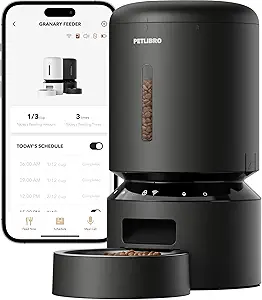
- Why It Works: It provides reliable scheduled feeding with multiple compartments, allowing you to serve several cats at once. The portion control is accurate for dry food.
- Ideal For: Families with multiple cats who all eat the same food and don’t have issues with food stealing.
- Consideration: Remember, this will NOT stop a determined food thief.
Best All-in-One Selective System: PortionPro Rx Smart Feeder

- Why It Works: It combines portion-controlled dispensing with selective microchip access, making it a true all-in-one solution for complex feeding needs.
- Ideal For: Managing both portion control and selective feeding for multiple cats in one system.
- Veterinary Note: “This is particularly valuable for diabetic cats who need timed, measured meals of a specific diet.”
FAQs About Automatic Cat Feeder for Multiple Cats
Here are answers to the most common questions I receive from multi-cat owners about automatic cat feeders.
Can I use just one automatic feeder for multiple cats?
You can use one unit with multiple bowls for cats that eat the same food and don’t steal. However, if you need to feed different foods or stop food bullying, you’ll need multiple specialized feeders, like microchip pet feeders, to truly separate them.
What is the absolute best way to feed multiple cats different foods?
“From a veterinary perspective, the only guaranteed method is using a selective pet feeder like a microchip-enabled model. This ensures the right cat gets the right food every time, which is crucial for managing medical conditions.” – Dr. Jackson.
How many automatic feeders do I actually need for two cats?
It depends entirely on their diets:
- Same Food: One multi-bowl timer feeder may work.
- Different Foods: You will need two separate feeders, ideally with selective access like RFID cat feeders.
My cat is scared of the automatic feeder. What should I do?
This is common. Introduce it slowly:
- Unplug it and place their favorite food/treats near it.
- Let them eat with the feeder inactive for several days.
- Gradually activate the mechanism while they eat.
Use positive reinforcement with treats to build positive associations.
Are these feeders safe for wet food?
Most basic timer feeders are for dry food only. However, selective feeders like the SureFeed Microchip Pet Feeder have an airtight seal designed specifically to keep wet food fresh. Always check manufacturer specifications.
Conclusion: Restoring Peace to Your Home
Navigating the world of automatic cat feeders for multiple cats can feel overwhelming, but the path to peaceful mealtimes becomes clear once you identify your specific challenge. Remember, the “best” feeder isn’t a one-size-fits-all product; it’s the one that effectively solves your cats’ unique dynamics and dietary needs.
To Recap Your Journey:
If your primary issue is food bullying or different diets, the investment in a selective microchip pet feeder is non-negotiable for your pets’ health and well-being. If your cats harmoniously share the same food, a multi-bowl timer feeder can add convenience to your routine.
Your Next Step:
For a deep dive into the technology that makes selective feeding possible, I invite you to read our comprehensive guide: The Ultimate Guide to RFID Cat Feeders.
A Final Note from Dr. Jackson:
“Transforming mealtime from a source of stress to a moment of peace is one of the most rewarding changes you can make for your feline family. By choosing the right feeder, you’re not just buying a gadget—you’re investing in their long-term health and happiness. For personalized advice on your cats’ specific nutritional needs, please consult with your veterinarian.”
Disclaimer: The information provided in this guide is for educational and informational purposes only. It is not intended as veterinary medical advice. For diagnosis, treatment, and personalized guidance for your pet’s health and dietary needs, please consult with a qualified veterinarian like Dr. Allaona Jackson or your local veterinary provider. AvailPet.com may earn affiliate commissions from purchases made through links in this article at no extra cost to you.
Sources:
This article was developed using the most current product information and veterinary knowledge available in 2026. Key sources include:
- SurePetcare
- PETLIBRO official site
- AAHA Microchip Guidelines
- Veterinary Nutrition Expertise: Dr. Allaona Jackson, DVM
- FDA Pet Food Guidelines