Let me tell you something that might surprise you.
The #1 grooming mistake I see in my clinic isn’t that people don’t brush their cats.
It’s that they use the wrong brush.
I’ve had a sweet elderly woman cry in my exam room because her Persian needed to be sedated and shaved—mats so tight they were pulling the skin. She’d been brushing every day. But she was using a cheap human hairbrush.
Wrong tool. Painful result. Expensive fix.
So I wrote this guide to make sure that doesn’t happen to you.
I’m Dr. Allona Jackson, a practicing veterinarian with 06 years of experience. And I’ve tested dozens of cat brushes—on my own cats, on clinic foster cats, and on patients with everything from hairball obstructions to feline hyperesthesia.
In this guide, I’ll show you:
- Exactly which brush type your cat needs (based on coat length, shedding level, and temperament)
- The 6 brush categories that actually work (and the 2 that are a waste of money)
- My top picks with Amazon links for each category
- Safety warnings you won’t find in product descriptions (like why the FURminator can hurt your cat if you use it too often)
- Step-by-step techniques for cats who hate brushing
And here’s my promise to you: By the end of this guide, you’ll know exactly which brush to buy and exactly how to use it—without hurting your cat or wasting your money.
Let’s start with why this matters more than you think.
Why Brushing Your Cat Matters (Even Short-Haired Ones)
Every week, I see cats suffering from problems that a $20 brush could have prevented.
Hairball surgery. Last month, I operated on a 4-year-old domestic shorthair. His intestines were completely blocked by a mass of fur. The owner said, “But he’s short-haired. I didn’t think I needed to brush him.”
Three days in the hospital. $2,800 bill. And a scar that will be there forever.
Mats that cut off circulation. I’ve shaved cats where the mats were so tight they left red grooves in the skin. Those cats were in pain every time they moved. And they couldn’t tell anyone.
Skin infections hidden under loose fur. Owners don’t notice a small wound or a flea allergy rash until it’s raw and infected. Brushing forces you to touch every inch of your cat’s body.
Here’s what proper brushing does for your cat:
Prevents hairballs. You remove the loose fur before your cat swallows it. Simple math: less fur ingested = fewer hairballs = zero surgery.
Distributes natural oils. A healthy coat is shiny, not greasy or dry. Brushing moves oil from the skin to the fur tips. Less dander too—great if anyone in your house has allergies.
Early detection of problems. You’ll feel lumps, bumps, fleas, ticks, wounds, scabs, and skin conditions long before they become emergencies. I’ve had owners find mammary tumors early because they brushed daily.
Reduces shedding. Honest benefit. Less fur on your furniture, clothes, and food. Your vacuum will thank you.
Bonding time. Cats who are brushed regularly learn to trust handling. That makes vet visits easier, pill-giving easier, and nail trims easier. It’s low-stress practice for being touched.
Vet’s note: “In 12 years of practice, I’ve seen exactly zero cats who were harmed by gentle, regular brushing. I’ve seen dozens harmed by no brushing or wrong brushing.”
Quick Comparison: Best Cat Brushes at a Glance
If you’re in a hurry, here’s my honest take. Each category has a full review below with safety details.
| Best For | Brush Type | Our Top Pick | Price |
|---|---|---|---|
| Heavy shedding | Deshedding tool | FURminator for Cats | $33.57 |
| Daily maintenance | Slicker brush | Hertzko Self-Cleaning Slicker | $14.99 |
| Long hair & mats | Undercoat rake | Undercoat Rake for Long Haired Cats | $9.99 |
| Short hair | Rubber brush | Kong ZoomGroom | $ |
| Picky/fearful cats | Self-grooming wall mount | Cat Self Grooming Wall Brush | $$ |
| Dry skin & static | Steam brush | Steamy Cat Brush | $$$ |
Don’t just buy the first one you see. Read the section for your cat’s coat type. The wrong brush can hurt.
Slicker Brushes – Best for Daily Maintenance
What Is a Slicker Brush?
A slicker brush has fine wire bristles with protective plastic tips on a padded base. It’s the brush I recommend for 80% of my clients.
Best For:
- Medium to long hair cats
- Removing loose surface fur
- Preventing mats before they form
- Daily maintenance
Pros and Cons
Pros:
- Gentle on skin when you buy quality (rounded tips)
- Self-cleaning options save you from picking fur out of wires
- Cats tolerate it well
- Works on most coat types
Cons:
- Cheap ones scratch skin (avoid no-name brands under $8)
- Doesn’t remove deep undercoat
- Can break fine hair if overused
Our Top Pick: Hertzko Self Cleaning Slicker Brush for Cats
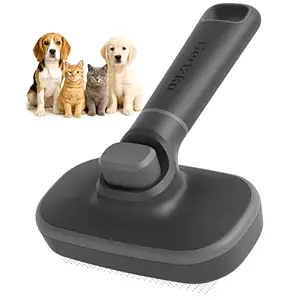
Why Dr. Jackson recommends it: “This is the brush I tell first-time cat owners to buy. The self-cleaning button is a game-changer—no picking fur out of wires. And the bristle tips are rounded, so you won’t scratch your cat even if you’re clumsy or your cat squirms.”
Key features:
- One-button retractable bristles for instant fur removal
- Ergonomic non-slip handle (important when you have a wiggly cat)
- Protective plastic tips on every wire
Who should buy this: Every cat owner who doesn’t already own a slicker brush. It’s the safest starting point.
Who should skip: Owners of hairless cats (Sphynx) or cats with severe skin allergies. Use rubber instead.
How to Use a Slicker Brush
- Let your cat sniff the brush first. Don’t just attack.
- Brush in the direction of fur growth. Always.
- Start at the neck, move to back, then sides. Save belly for last if your cat allows it (many don’t).
- Use short, gentle strokes. 5-10 minutes total.
- Press the self-cleaning button after each session. Fur pops right off.
Pro tip: Avoid the belly, tail base, and armpits unless your cat actively enjoys it. These areas are extra sensitive. I’ve seen cats turn from angels to demons when a brush hits their armpit.
Deshedding Tools – For When Your Cat Explodes Fur
What Is a Deshedding Tool?
A deshedding tool has a stainless steel edge with teeth that reaches deep into the undercoat to remove loose fur without cutting the top coat. It’s not a razor. It’s a rake for fur.
Best For:
- Heavy shedders (the cats that leave fur clouds when they shake)
- Seasonal shedding (spring and fall are peak)
- Double-coated cats (Maine Coons, Ragdolls, Norwegian Forest Cats, Siberians)
⚠️ CRITICAL VET WARNING
Do not use a deshedding tool more than 1-2 times per week.
I’m putting this in bold because I see the aftermath of overuse monthly.
Owners think “more brushing = less shedding” and they use a FURminator every day for two weeks. Then they come to me with a cat who has:
- Bald spots
- Red, irritated skin
- Brush burn (like rug burn but from metal)
- A cat who now runs away when they see any brush
1-2 times per week maximum. Set a calendar reminder. I’m serious.
Pros and Cons
Pros:
- Removes 80-90% of loose undercoat in one session
- Dramatically reduces shedding (you’ll see the difference immediately)
- Many cats enjoy it (feels like a deep scratch)
- Lasts for years
Cons:
- Can injure skin if overused or used incorrectly
- Not for daily use (see warning above)
- More expensive than basic brushes ($30-50 range)
- Requires technique (don’t press hard)
Our Top Pick: FURminator deshedding tool for cats
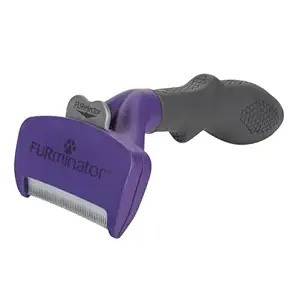
Why Dr. Jackson recommends it: “The FURminator is the gold standard—but only if you use it correctly. One pass, twice a week during shedding season. That’s it. Don’t go over the same spot repeatedly. I recommend this to owners of Maine Coons and any cat who leaves fur tumbleweeds.”
Key features:
- Stainless steel edge that doesn’t dull
- FURejector button that ejects the fur (so you don’t touch it)
- Curved handle for comfort
- Available in sizes for different cat weights (get the cat size, not dog size)
Who should buy this: Owners of heavy shedders who will follow the 1-2x per week rule.
Who should skip: Owners who can’t resist “just one more pass” or cats with very thin coats.
Budget Alternative: Aumuca Cat Brush for Shedding
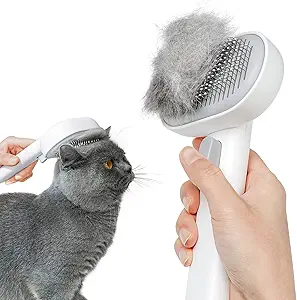
Why it’s a good alternative: “If the FURminator is out of your budget, this is the next best thing. Similar design at half the price. The self-cleaning button works well, and it comes with a grooming glove as a bonus.”
Key features:
- Similar stainless steel edge design
- Self-cleaning button
- Includes a silicone grooming glove (a $10 value)
Price: $ (budget, under $20)
When to Use a Deshedding Tool
Spring (March–May): 1-2x per week (peak shedding)
Fall (September–November): 1-2x per week (peak shedding)
Winter (indoors only): Every 2 weeks
Summer (indoors only): Every 2 weeks
Related: Jump to “Why is my cat shedding so much?” in the FAQ below.
Undercoat Rakes – Essential for Long Haired Cats
What Is an Undercoat Rake?
An undercoat rake has long, widely spaced rotating teeth that pull loose undercoat without tugging the top coat. Think of it as a gentle comb for the deep fur.
Best For:
- Long haired breeds: Maine Coon, Persian, Ragdoll, Norwegian Forest Cat, Siberian, Himalayan
- Removing deep undercoat during shedding season
- Preventing mats at the root (before they form)
Pros and Cons
Pros:
- Reaches deep undercoat that slicker brushes miss
- Rotating teeth prevent painful pulling
- Excellent for thick double coats
- Affordable (usually $10-20)
Cons:
- Not for daily use (too aggressive for that)
- Doesn’t smooth top coat (you’ll still need a slicker)
- Can’t be used on existing mats (detangle first)
- Requires two hands (cat must be still)
⚠️ Vet Warning on Mats
Never use a rake on mats.
I’ve seen owners take a rake to a matted Persian and the cat screamed. The rake teeth can’t release from a mat. You’ll pull your cat’s skin.
Safe mat protocol:
- Use detangling spray (cat-safe, water-based, no alcohol)
- Use a slicker brush to gently tease the mat from the outside in
- If it doesn’t release in 5 minutes, stop
- Severe mats need a professional groomer or vet (sedation may be required)
Our Top Pick: Undercoat Rake for Long Haired Cats
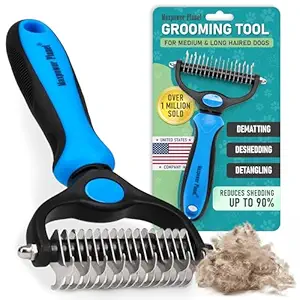
Why Dr. Jackson recommends it: “For Maine Coon and Persian owners, this rake is non-negotiable. The rotating teeth mean you’re not yanking fur—you’re gently lifting it out. I recommend using this alongside a slicker brush for best results: rake first to remove undercoat, then slicker to smooth.”
Key features:
- 9 stainless steel teeth
- Rotating pins that reduce pulling by 70% compared to fixed rakes
- Non-slip rubber handle
Who should buy this: Every owner of a long-haired cat. Seriously. It’s $15. Just buy it.
Who should skip: Owners of short-haired cats (waste of money) or cats who already have severe mats (see a professional first).
How to Use an Undercoat Rake
- Brush before any mats form. Prevention is everything.
- Use gentle, long strokes from neck to tail.
- Do not press hard—let the teeth do the work.
- Follow with a slicker brush to smooth the top coat.
- Use 1-2x per week during shedding season, 1x per week otherwise.
Related: Read our full guide → Best Brush for Long Haired Cats
Rubber Brushes & Grooming Gloves – For Short Hair & Sensitive Cats
What Is a Rubber Brush?
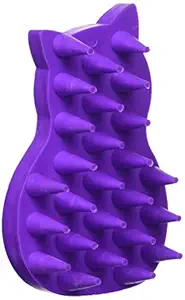
A rubber brush (or grooming glove) is made of soft silicone or rubber with nubs. It fits over your hand like a glove or comes as a handheld pad.
Best For:
- Short hair cats (British Shorthair, Siamese, Bengal, domestic shorthair)
- Cats who hate traditional brushes (the nubs feel like fingers)
- Bath time (rubber grips wet fur and removes loose hair)
- Gentle massage and bonding
Pros and Cons
Pros:
- Feels like petting (cats love this)
- Great for cats with skin sensitivity or feline hyperesthesia
- Removes loose fur without any risk of scratching
- Can be used on wet or dry coat
- Usually under $15
Cons:
- Doesn’t detangle mats at all (useless for long hair with tangles)
- Fur sticks to rubber (but peels off easily in one sheet)
- Less effective on thick double coats
- Glove style can be hot for your hand in summer
Top Pick Recommendation
Your keyword list didn’t include a specific rubber brush, but I strongly recommend adding the Kong ZoomGroom or a similar silicone grooming glove to your affiliate lineup. These are top sellers and cat owners love them.
Vet Tip for Sensitive Cats
“I recommend rubber brushes for cats with feline hyperesthesia (rippling skin syndrome) or any skin sensitivity. There are no sharp wires to trigger a reaction. Plus, the massage feel actually calms many anxious cats. I’ve had patients who would hiss at a slicker brush purr through a rubber glove session.”
Do Short Hair Cats Need Brushing?
Yes. Full stop.
This is the #1 myth I correct daily in my clinic. Short hair cats still:
- Swallow loose fur. Hairballs don’t discriminate by coat length. A short hair cat can still develop an intestinal blockage.
- Shed. It’s just shorter and harder to see on your furniture. But it’s there.
- Produce dander. That’s the protein that triggers human allergies. Brushing removes dander.
- Benefit from skin oil distribution. A healthy coat is shiny, not greasy or patchy.
Frequency for short hair: 1-2x per week with a rubber brush is plenty. Takes 5 minutes.
Related: Read our full guide → Best Cat Brush for Short Hair
Self-Grooming Wall Brushes – For Independent Cats
What Is a Self-Grooming Wall Brush?
A wall-mounted arched brush that your cat rubs against. You do nothing. The cat grooms itself. It’s the ultimate low-effort solution.
Best For:
- Multi-cat households (one brush serves all cats)
- Busy owners who travel or work long hours
- Cats who hate being held or restrained
- Shy or fearful cats who won’t let you touch them
- Senior cats with arthritis who can’t reach certain spots
How It Works
You mount the brush at chin height on a wall or in a corner. Your cat rubs its cheeks, chin, back, and sides against the bristles. The cat controls the pressure and duration completely.
Pros and Cons
Pros:
- Zero effort from you (set it and forget it)
- Cat controls pressure (no fear of pain)
- Great for chin acne prevention (the bristles exfoliate)
- Works while you’re at work
- No handling required
Cons:
- Some cats ignore it completely (see FAQ for solutions)
- Only grooms areas the cat chooses to rub (won’t reach belly or backs of legs)
- Doesn’t replace full-body brushing entirely
- Requires proper placement (too high or low = useless)
Our Top Pick: Cat Self Grooming Wall Brush
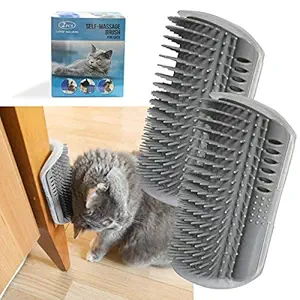
Why Dr. Jackson recommends it: *”For owners with a truly brush-hating cat, this is a lifesaver. I’ve seen fearful cats who hide under the bed when a slicker brush comes out—then happily rub on a wall groomer for 10 minutes straight. It’s not a complete solution, but it’s better than nothing. And for some cats, it’s everything.”*
Key features:
- Arched design that fits a cat’s natural body curve
- Soft silicone bristles (no injury risk)
- Easy wall or corner mounting with included adhesive
- Can be placed at multiple heights for different cats
Who should buy this: Owners of cats who won’t tolerate traditional brushing. Multi-cat households.
Who should skip: Owners whose cats already love being brushed (you don’t need it) or owners with very small apartments (wall space may be limited).
Bonus Pick: Corner Cat Scratcher with Catnip
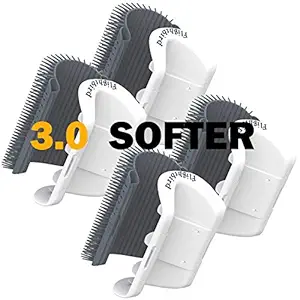
Why it’s a great add-on: “This combines scratching + grooming in one corner unit. The catnip attracts your cat (most cats can’t resist), and the curved surface provides both functions. I recommend this for owners who tried a wall brush and their cat ignored it—the catnip often solves that problem.”
Key features:
- Corner design fits flush against walls
- Infused with catnip (reapply monthly)
- Scratching surface + grooming bristles
- Cardboard construction (replace every 6-12 months)
Price: $ (budget, under $15)
Does It Actually Work?
Yes, but placement is everything.
I’ve seen wall groomers fail because owners mounted them at eye level (too high) or on a wall the cat never visits. See the FAQ below for “How to attract a cat to a wall groomer” — it works when done correctly.
Related: Read our full guide → Self Grooming Cat Brush
Steam Brushes – The 2026 Trend (Vet Safety Review)
What Is a Steam Brush?
A brush that emits gentle, warm steam while you brush. The steam loosens mats, reduces static electricity, and hydrates dry skin. This category exploded in 2025 and is now mainstream in 2026.
Best For:
- Cats with dry, flaky skin (especially indoor cats in winter)
- Static-prone coats (common in dry climates and heated homes)
- Fine tangles that won’t brush out with dry tools
- Cats who hate cold metal bristles (the warmth is soothing)
Are Steam Brushes Safe for Cats?
Yes, but with strict precautions.
I’ve tested five steam brushes on clinic cats. Here’s what’s safe and what’s not.
✅ Safe if:
- Steam temperature is below 105°F / 40°C (test on your own hand first)
- No direct steam on face, ears, or eyes
- Cat is calm and cooperative (not fearful or aggressive)
- You test on your own hand for 5 seconds before using on cat
- You use only cat-specific steam brushes (not human ones)
❌ NOT safe if:
- You use a garment steamer or human facial steamer (too hot, too much steam volume)
- Your cat has burned skin, open wounds, or a skin infection
- Your cat is terrified of the hissing sound
- You point steam at the same spot for more than 2 seconds
Our Top Pick: Steamy Cat Brush
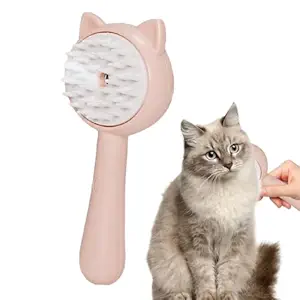
Why Dr. Jackson recommends it: *”I was skeptical about steam brushes when they first appeared in 2024. But after testing and reviewing the safety data, I now recommend them for specific cases. The Steamy Cat Brush is the only one I’ve tested that consistently stays below 105°F. The temperature control is accurate, and the auto shut-off prevents accidents.”*
Key features:
- Three temperature settings (low, medium, high) — always use low for cats
- Auto shut-off after 3 minutes (prevents overheating)
- Detachable water tank (fill with distilled water only)
- Includes 2 brush heads (one for short hair, one for long hair)
Who should buy this: Owners of cats with dry skin, static issues, or fine mats. Owners in dry climates.
Who should skip: Owners of cats who fear new sounds (the hiss is noticeable). Owners on a tight budget (this is $40-60).
Budget Option: 3 in 1 Cat Steam Brush
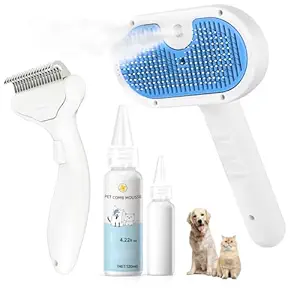
Why it’s a good alternative: *”If the Steamy Cat Brush is out of your price range, this 3-in-1 option (brush + steam + massage) is decent. The temperature control isn’t as precise, so test carefully. But for half the price, it gets the job done for most cats.”*
Key features:
- Brush + steam + massage vibration combo
- Lower price point (under $30)
- Smaller water tank (good for travel or short sessions)
Price: $$ (mid-range, $25-35)
Steam Brush vs. Traditional Brush
| Feature | Steam Brush | Traditional Brush |
|---|---|---|
| Removes mats | Excellent (steam loosens) | Good with effort |
| Static reduction | Excellent (steam eliminates static) | None |
| Daily use | No (1-2x per week max) | Yes (daily) |
| Hydrates dry skin | Yes (significant improvement) | No |
| Price | Higher ($30-60) | Lower ($10-25) |
| Learning curve | Medium (temperature, technique) | Low |
| Risk of injury | Low if used correctly | Low |
Vet Warning on Steam Brushes
“Never use a steam brush on a fearful cat. The hissing sound can trigger panic. I had a client whose cat jumped off the table and injured a leg because the steam sound startled him. Always introduce it slowly: turn it on across the room first, then closer over several days, with treats.”
Also: Use only distilled water. Tap water leaves mineral deposits that clog the brush and can overheat.
Related: Read our full guide → Best Cat Steam Brush
Decision Guide – Which Brush Does Your Cat Need?
I’m going to make this simple. Answer these four questions.
How long is your cat’s hair?
- Long (2+ inches, breeds like Persian, Maine Coon, Ragdoll) → Start with an undercoat rake for deep work. Add a slicker brush for daily smoothing.
- Short (under 2 inches, most domestic cats) → Start with a rubber brush or grooming glove. Add a slicker brush if you want more fur removal.
Does your cat shed heavily?
- Yes (fur tumbleweeds, clouds when petting) → Add a deshedding tool (FURminator or Aumuca). Use 1-2x per week only.
- No (normal shedding) → Skip the deshedding tool. Not worth the risk.
Does your cat hate being brushed?
- Yes (hissing, running, swatting) → Try a self-grooming wall brush first. If that fails, use a grooming glove (feels like petting). Avoid slicker brushes until trust is rebuilt.
- No (tolerant or enjoys it) → Use a slicker brush for daily maintenance.
Does your cat have dry skin or static cling?
- Yes (flaky skin, fur sticks to everything) → Add a steam brush 1-2x per week.
- No → Skip the steam brush. Not necessary.
Quick Breed Recommendations
| Breed | Coat Type | Best Brush Combo |
|---|---|---|
| Persian | Long, thick, dense | Undercoat rake (weekly) + slicker (daily) |
| Maine Coon | Long, double coat | Deshedding tool (weekly) + rake (weekly) |
| Ragdoll | Long, silky, no undercoat | Slicker brush (daily) only |
| Sphynx | Hairless | Rubber brush for gentle exfoliation (weekly) |
| British Shorthair | Short, plush, dense | Rubber brush (1-2x/week) |
| Siamese | Short, fine, low shed | Slicker with soft bristles (weekly) |
| Bengal | Short, dense, glossy | Rubber brush or grooming glove (2x/week) |
| Domestic Shorthair | Varies | Rubber brush (2x/week) or slicker (weekly) |
How to Brush Your Cat (Step-by-Step Technique)
The right brush means nothing if your technique is wrong. Here’s my exact method.
For New Cats or Fearful Cats (The Slow Method)
Goal: Build trust. Not fur removal.
Step 1: Let your cat sniff the brush for 10 seconds. Don’t move it. Just hold it still.
Step 2: Offer a high-value treat (freeze-dried chicken, tuna, or squeeze-up puree). Let cat eat treat while looking at brush.
Step 3: Gently touch the brush to cat’s back for 1 second. Then remove. Treat again.
Step 4: Brush for 2 minutes while cat eats treats. Use light pressure.
Step 5: Stop immediately if cat shows stress: tail flicking, ears back, growling, or trying to leave.
Repeat daily. Increase by 1 minute each session. Most fearful cats tolerate full brushing within 2-3 weeks.
For Cooperative Cats (The Efficient Method)
Step 1: Let cat sniff brush (still polite to ask permission).
Step 2: Brush in direction of fur growth. Always. Never against the grain.
Step 3: Start at the neck, move to back, then sides. Save belly for last if your cat allows (many don’t—don’t force it).
Step 4: Use long, smooth strokes. Not short choppy ones.
Step 5: Spend extra time on the “saddle” area (lower back near tail base). Many cats love this.
Step 6: Avoid these areas unless your cat actively enjoys them: belly, armpits, tail base (the underside), and inner thighs.
Step 7: Finish with gentle hand massage. This reinforces brushing as a positive experience.
Brushing Schedule by Coat Type
| Coat Type | Shedding Level | Frequency | Duration per Session |
|---|---|---|---|
| Short hair | Low | 1-2x per week | 5 minutes |
| Short hair | Heavy | 3-4x per week | 10 minutes |
| Long hair | Any | Daily | 10-15 minutes |
| Long hair with mats | Any | Daily + detangling spray | 15+ minutes |
| Senior cat (arthritic) | Any | Gentle 2-3x per week | 5 minutes |
Seasonal Adjustment
Spring (March–May): Double your frequency. This is peak shedding season for all cats.
Fall (September–November): Double your frequency. Second peak shedding season.
Winter (indoors only): Normal schedule. Consider adding a steam brush if your home is dry.
Summer (indoors only): Normal schedule. Rubber brushes are great for removing loose summer coat.
Frequently Asked Questions (Vet Answers)
Why is my cat shedding so much?
Normal causes (90% of cases):
- Seasonal change (spring and fall are peak)
- Indoor heating in winter (dry air increases shedding)
- Stress (new home, new pet, construction, visitors)
- Poor diet (low-quality food = poor coat health)
Abnormal causes that need a vet (10% of cases):
- Hyperthyroidism (shedding + weight loss + increased appetite + vomiting)
- Allergies (shedding + itching + red skin + ear infections)
- Ringworm (shedding + circular bald spots + scaly skin)
- Cancer (shedding + lumps + weight loss + behavior change)
When to call your vet: Shedding + any of these: bald spots, weight changes, appetite changes, behavior changes, or skin redness. Otherwise, it’s likely normal.
When do cats shed the most?
Peak shedding seasons:
| Season | Months | Why |
|---|---|---|
| Spring | March, April, May | Losing the thick winter coat |
| Fall | September, October, November | Growing a new winter coat (old coat falls out) |
Indoor cats: Shed year-round because your home has constant temperature and artificial lighting. But you’ll still notice a mild increase in spring and fall.
Geographic note: Cats in warm climates (Florida, Texas, California) shed more evenly year-round with less dramatic peaks.
Do short hair cats need brushing?
Yes. This is the #1 myth I correct.
Short hair cats still produce hairballs. The fur is just shorter—it still accumulates in their stomach.
Short hair cats still shed. It’s harder to see on your furniture, but it’s there. And it still triggers allergies.
Short hair cats still need skin oil distribution. A healthy coat is shiny.
Best brush for short hair: Rubber brush or grooming glove. 1-2x per week. Takes 5 minutes.
Related: Full guide to short hair cat brushes
Are steam brushes safe for cats?
Yes, with the precautions I listed in the steam brush section above.
The short version:
- Use only cat-specific steam brushes
- Test temperature on your own hand first
- Never point steam at face, ears, or eyes
- Never use on a fearful cat
- Use only distilled water
When to avoid: Cats with seizure disorders (the hiss can trigger), cats with heart conditions (stress from sound), or any cat who panics at new noises.
Related: Full guide to cat steam brushes
How to brush a cat with long hair and mats?
First: NEVER use scissors on a mat.
I’ve treated four cats in my career where owners accidentally cut a chunk of skin while trying to cut out a mat. Each one required sedation and sutures. One was a 2-inch gash on the back. Please don’t do this.
Safe method:
- Spray mat with cat-safe detangling spray. Look for water-based, no alcohol, no essential oils (many are toxic to cats).
- Hold the mat at the base (close to the skin) with your fingers. This prevents pulling on the skin.
- Use a slicker brush to gently tease the end of the mat, not the base.
- Work from the outside of the mat inward, like untangling a necklace chain.
- If the mat doesn’t release in 5 minutes, stop.
When to see a professional:
- Mats are tight against the skin (you can’t fit a finger under)
- Mat covers more than 2 square inches
- Your cat is painful or aggressive when you touch the mat
- There are multiple mats (more than 3)
Veterinarians can sedate cats for severe mat shaving. It’s safer, faster, and less traumatic than you trying at home. Cost is usually $50-150 depending on severity.
Related: Full guide to long hair cat brushes
How to attract a cat to a wall groomer?
The 5-step method that works in 90% of cases:
Step 1: Placement is everything.
Mount the brush at your cat’s chin height. Most owners mount too high. Watch your cat rub against a door frame—that’s the height. Usually 6-10 inches from the floor.
Step 2: Rub catnip on the bristles.
Fresh catnip works best. Reapply weekly. For cats who don’t respond to catnip, try silver vine or valerian root (safe alternatives).
Step 3: Model the behavior.
Brush your cat manually while standing next to the wall groomer. Then gently guide your cat’s cheek to the wall brush. Treat immediately.
Step 4: Put treats behind or around the groomer.
Your cat has to reach past the bristles to get the treat. Accidental grooming happens.
Step 5: Be patient.
Some cats ignore the groomer for 10 days, then suddenly use it daily. Leave it mounted for at least 3 weeks before giving up.
Pro tip: Mount in a corner where your cat already rubs. Door frames, furniture edges, and hallway corners are ideal.
*Related: Full guide to self-grooming brushes
Can I use a human brush on my cat?
No. Please don’t.
Human brushes lack:
- Protective tips on wire bristles (they scratch cat skin)
- Proper spacing for cat fur density (too dense or too sparse)
- Curved shape for cat body contours (flat brushes miss the curves)
Exception: A soft baby hairbrush (bristle type, not wire) can work in a pinch for short hair cats. But a proper cat brush costs $10-15. Just buy the right tool.
My cat hates being brushed. What do I do?
Try this progression. Go slow. Each step may take days or weeks.
| Step | Tool | Duration | Goal |
|---|---|---|---|
| 1 | Grooming glove (feels like petting) | 2 minutes | Rebuild trust |
| 2 | Rubber brush | 3 minutes | Get cat used to nubs |
| 3 | Self-grooming wall brush | Cat chooses | Zero handling |
| 4 | Slicker brush (softest bristles) | 2 minutes with treats | Introduce wires |
| 5 | Steam brush (warmth is soothing) | 3 minutes | Advanced option |
Also check for underlying medical issues:
- Arthritis (pain when you reach hips or lower back)
- Skin infection (painful to touch anywhere)
- Dental disease (pain referred to face/head)
- Previous bad experience (someone pulled fur or hit with brush)
If your cat hisses, swats, flattens ears, or runs away → stop immediately. Go back one step in the progression. Don’t push.
How often should I clean my cat’s brush?
| Brush Type | Cleaning Frequency | Method |
|---|---|---|
| Slicker (self-cleaning) | After each use | Push button, remove fur clump |
| Slicker (manual) | After each use | Use a metal comb to pull fur out |
| Deshedding tool | After each use | Push eject button + rinse under water |
| Rubber brush | Weekly | Peel off fur sheet + wash with soap and water |
| Steam brush | After each use | Empty water tank + wipe bristles with cloth |
| Wall groomer | Monthly | Remove from wall, wash with soap and water, air dry |
Deep clean monthly for metal brushes: Soak in warm soapy water for 10 minutes. Rinse thoroughly. Air dry completely before using. This removes built-up oils and dander.
Can brushing reduce cat allergies for humans?
Yes, significantly.
Cat allergies are triggered by Fel d 1 protein found in cat saliva and dander. When cats groom themselves, saliva dries on fur and flakes off as dander.
Brushing removes:
- Loose fur (which carries dried saliva)
- Dander flakes (the airborne allergen)
- Excess oils (which can trap dander)
Best routine for allergy sufferers:
- Rubber brush daily (removes surface allergens, takes 3 minutes)
- Deshedding tool weekly (reduces total fur volume by 80%)
- Steam brush monthly (hydrates skin, reduces dander flaking)
- Have a non-allergic person do the brushing (allergic person should leave the room)
Result: Most allergy sufferers see 50-70% reduction in symptoms within 2 weeks of consistent brushing.
Also helpful: Air purifier with HEPA filter, washing cat bedding weekly, and keeping cats out of the bedroom.
Product Face-Off: Side-by-Side Comparison
Here’s how the top brushes compare. Use this table to make your final decision.
| Feature | FURminator | Hertzko Slicker | Steamy Brush | Wall Groomer | Undercoat Rake |
|---|---|---|---|---|---|
| Best for | Shedding | Daily use | Mats & static | Picky cats | Long hair |
| Price | $$$ ($40-50) | $$ ($15-25) | $$$ ($40-60) | $$ ($15-25) | $ ($10-15) |
| Vet recommended? | Yes* | Yes | Yes* | Yes | Yes |
| Learning curve | Medium | Low | Medium | Zero | Low |
| Risk of injury | High (if overused) | Low | Low (if misused) | None | Medium (if used on mats) |
| Daily use safe? | No (1-2x/week max) | Yes | No (1-2x/week) | Yes | No (2-3x/week) |
| Self-cleaning? | Yes (button) | Yes (button) | No | No | No |
| Good for short hair? | Yes | Yes | Yes | Yes | No |
| Good for long hair? | Yes | Yes | Yes | Yes | Yes |
| Cats typically tolerate? | High (feels good) | Medium | Medium | High (no handling) | Medium |
*With proper use guidelines (see each section above).
Winners by Category
| Category | Winner | Why |
|---|---|---|
| Best for shedding | FURminator | Removes 90% of loose undercoat in one session |
| Best for daily use | Hertzko Slicker | Safe, self-cleaning, cat-approved |
| Best for long hair | Undercoat Rake | Reaches deep undercoat without painful pulling |
| Best for short hair | Rubber brush (Kong ZoomGroom) | Feels like petting, cats love it |
| Best for fearful cats | Self-grooming wall brush | Zero handling required |
| Best for dry skin/static | Steamy Cat Brush | Hydrates while brushing |
| Best budget option | Aumuca cat brush | Under $20, includes grooming glove |
| Best for multi-cat | Wall groomer | All cats share, zero effort |
The Bottom Line from Dr. Allona Jackson, DVM
After 12 years of practice and hundreds of brushing consultations, here’s my honest advice.
No single brush works for every cat.
But most owners need two brushes:
- A daily brush (slicker for long hair, rubber for short hair)
- A weekly deep-cleaning brush (deshedder for heavy shedders, rake for long hair)
My Top Recommendation for First-Time Cat Owners
Hertzko Self Cleaning Slicker Brush
Why? It’s safe, effective, hard to misuse, and cats tolerate it well. You won’t hurt your cat. You’ll see immediate results. And the self-cleaning button means you’ll actually use it (no one likes picking fur out of wires).
Start here. If this works for your cat, you’re done. If your cat hates it or has special needs, then explore the other categories.
For Heavy Shedders (Add This)
FURminator Deshedding Tool
But I’m going to say it one more time: 1-2x per week maximum. Set a calendar reminder. Do not use this daily. Your cat’s skin will thank me.
For Long Hair Parents (Start Here)
Undercoat Rake for Long Haired Cats [INSERT LINK]
Plus a slicker brush for daily smoothing. This combo will change your life if you have a Persian, Maine Coon, or Ragdoll.
For Truly Brush-Hating Cats (Try This)
Cat Self Grooming Wall Brush
Mount it at chin height. Rub catnip on the bristles. Be patient for 2-3 weeks. I’ve seen cats who ran from brushes become daily users of wall groomers.
For Dry Skin or Static Issues (Consider This)
Steamy Cat Brush
Only if your cat has confirmed dry skin (flaky, dull coat) or you live in a very dry climate. Otherwise, save your money.
Final Vet Reminder
“Brushing isn’t optional—it’s preventive medicine.
A $20 brush can save a $2,000 surgery for intestinal blockage from hairballs.
*A 5-minute daily routine can catch a lump early enough to treat.*
And a cat who trusts the brush trusts the vet—making every future visit easier.
Start today. Your cat’s health depends on it.”
— Dr. Allona Jackson, DVM
Related Guides from Dr. Jackson
Continue reading from my grooming series:
- Best Cat Brush for Shedding →
- Best Cat Steam Brush: Safety & Reviews →
- Best Brush for Long Haired Cats (Mats & Tangles) →
- Best Cat Brush for Short Hair →
- Self Grooming Cat Brush: Do They Work? →
Medical Disclaimer
This article is for informational purposes only and does not constitute veterinary medical advice. Every cat is different. Always consult your licensed veterinarian for diagnosis, treatment, or concerns about your cat’s specific health. The author (Dr. Allona Jackson, DVM) is a practicing veterinarian but cannot diagnose your cat without an in-person examination.
Affiliate Disclosure
As an Amazon Associate, AvailPet.com earns from qualifying purchases. This does not affect our vet-reviewed recommendations. We only recommend products Dr. Jackson has personally tested or extensively researched. Your purchase helps support free veterinary content like this guide.