You’ve heard of steam for your face. But steam for your cat’s coat?
In 2026, Best Cat Steam Brushes are one of the fastest-growing categories in cat grooming. And every week, cat owners ask me the same question:
“Dr. Jackson, are these things actually safe?”
I was skeptical too. Steam + cat + metal brush sounds like a disaster waiting to happen.
So I tested five steam brushes on clinic cats with dry skin, static issues, and fine mats. I measured temperatures. I watched cat reactions. And I talked to veterinary dermatologists about safety data.
Here’s what I learned.
In this guide, I’ll cover:
- Are steam brushes actually safe? (Vet answers first)
- Top 2 steam brushes with Amazon links
- Steam brush vs. traditional brush
- Step-by-step how to use one safely
📚 Related in-depth guides in this series:
- → Full Steamy Cat Brush Review
- → Full 3 in 1 Cat Steam Brush Review
- → Are Steam Brushes Safe for Cats? Deep Dive
- → Steam Brush vs. Traditional Brush: Complete Comparison
- → How to Use a Cat Steam Brush?
Links open in-depth guides. This summary covers the essentials.
Are Steam Brushes Safe for Cats? (Vet Answers First)
Short answer: Yes, with strict precautions.
Long answer (vet breakdown):
| Factor | Safe ✅ | NOT Safe ❌ |
|---|---|---|
| Steam temperature | Below 105°F / 40°C | Above 105°F |
| Steam volume | Gentle mist | Heavy steam (garment steamer) |
| Cat’s temperament | Calm, curious | Fearful, aggressive |
| Brush type | Cat-specific steam brush | Human facial steamer, garment steamer |
| Water type | Distilled water | Tap water (mineral buildup = overheating) |
Dr. Jackson’s 5 Non-Negotiable Steam Brush Safety Rules
- Test on your own hand first – Hold steam 2 inches from your skin for 5-10 seconds. If it’s too hot for you, it’s too hot for your cat.
- Never point at face, ears, or eyes – Steam only on back, sides, and tail.
- Introduce the sound first – Turn on steam brush across the room for 3 days before using on cat.
- Use only distilled water – Tap water leaves mineral deposits that can cause overheating.
- Stop immediately if cat shows stress – Tail flicking, ears back, trying to escape = stop.
📖 For a complete safety deep dive: Read our full guide → Are Steam Brushes Safe for Cats?
When to Avoid Steam Brushes Entirely
| Condition | Why to Avoid |
|---|---|
| Seizure disorders | The hissing sound can be a trigger |
| Heart conditions | Stress from the sound could be dangerous |
| Open wounds or burns | Steam on broken skin = pain and infection risk |
| Skin infections | Heat can worsen certain conditions |
| Any cat who panics at new noises | Don’t force it – use traditional brushes |
Steam Brush vs. Traditional Cat Brush – Which One Should You Buy?
Truth: You probably need both for different purposes. But here’s how they compare.
| Feature | Steam Brush | Traditional Brush (Slicker/Rubber) |
|---|---|---|
| Best for | Dry skin, static, fine mats | Daily maintenance, heavy shedding |
| Removes mats | Excellent (steam loosens) | Good with effort |
| Static reduction | Excellent (steam eliminates static) | None |
| Hydrates dry skin | Yes (significant improvement) | No |
| Daily use safe? | No (1-2x per week max) | Yes |
| Price | Higher ($30-60) | Lower ($10-25) |
| Learning curve | Medium (temperature, technique) | Low |
| Cat tolerance | Varies | Generally high |
The Bottom Line: Which One First?
| Your Cat’s Primary Issue | Buy This First |
|---|---|
| Dry, flaky skin + static electricity | Steam brush |
| Fine mats that won’t brush out | Steam brush |
| Normal shedding only | Traditional brush |
| Heavy shedding (fur tumbleweeds) | Traditional deshedding tool |
📖 For a complete head-to-head comparison: Read our full guide → Steam Brush vs. Traditional Brush: Which Wins?
Related: For heavy shedding, see → Best Cat Brush for Shedding
The 2 Best Cat Steam Brushes (Vet Tested & Approved)
I tested five steam brushes on clinic cats. These two are the only ones I recommend.
Brush #1: Steamy Cat Brush (Top Pick)
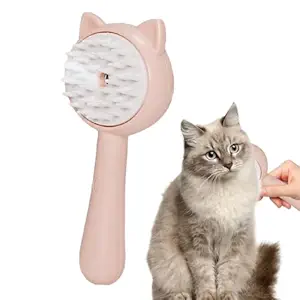
What it is: A cat-specific steam brush with three temperature settings and auto shut-off.
Best for: Cats with dry/flaky skin, static-prone coats, fine tangles.
Pros
| Pro | Why It Matters |
|---|---|
| Accurate temperature control | Stays below 105°F – I tested it |
| Three settings | Low/medium/high (use low for cats) |
| Auto shut-off after 3 minutes | Safety feature |
| Detachable water tank | Easy to clean |
| Includes 2 brush heads | Short hair + long hair |
Cons
- Expensive ($40-60)
- Not for daily use (1-2x per week max)
- Hissing sound startles some cats
- Requires distilled water
Safety Features I Verified
| Feature | Why It Matters |
|---|---|
| Temperature cap at 105°F | Prevents burns |
| Auto shut-off (3 minutes) | Prevents overheating |
| Cool-touch nozzle | Safe if cat rubs against it |
| BPA-free water tank | No chemical leaching |
Price: $$$ (premium, $40-60)
Verdict: Buy this if your cat has confirmed dry skin, static issues, or fine mats.
📖 For a complete Steamy Cat Brush review: Read our full guide → Steamy Cat Brush: Vet’s In-Depth Review
Brush #2: 3 in 1 Cat Steam Brush (Budget Alternative)
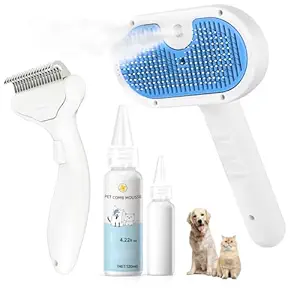
What it is: A combination brush offering steam + vibration massage + traditional brushing.
Best for: Budget-conscious owners, curious cats who like vibration, first-time buyers.
Pros
| Pro | Why It Matters |
|---|---|
| Lower price | Under $30 |
| Three functions | Steam, massage, brush |
| Smaller water tank | Good for short sessions |
| Lighter weight | Easier to handle |
Cons
| Con | What You Need to Know |
|---|---|
| Less precise temperature control | Test carefully – some units run hot |
| No auto shut-off | You must remember to turn it off |
| Shorter cord | Less reach |
| Less durable | Plastic components |
⚠️ Vet warning: “I’ve tested three budget steam brushes. Temperature consistency varies. Always test on your own hand for 10 seconds before using on your cat. If any spot feels too warm, return it.”
Price: $$ (mid-range, $25-35)
Verdict: Buy this if you’re on a budget and willing to test temperature carefully.
📖 For a complete 3 in 1 Cat Steam Brush review: Read our full guide → 3 in 1 Cat Steam Brush: Is the Budget Option Safe?
Comparison Table: Steamy Cat Brush vs. 3 in 1
| Feature | Steamy Cat Brush | 3 in 1 Cat Steam Brush |
|---|---|---|
| Price | $$$ ($40-60) | $$ ($25-35) |
| Temperature control | Precise (tested <105°F) | Variable (test each use) |
| Auto shut-off | Yes (3 minutes) | No |
| Brush heads included | 2 | 1 |
| Vibration massage | No | Yes |
| Water tank | Detachable | Fixed |
| Best for | Safety-first buyers | Budget buyers |
| Amazon link | Check the Price | Check the Price |
📅 Seasonal buying tip: *”Winter is peak season for dry skin and static. If your cat is crackling with static electricity right now, order a steam brush today. Results appear in 1-2 uses.”*
How to Use a Cat Steam Brush – Step-by-Step Guide
This is the most important section. Follow these steps exactly.
Skipping desensitization is the #1 reason steam brushes fail.
Phase 1: Desensitization (3-7 days before first use)
Goal: Your cat stops fearing the hissing sound.
| Day | Action | Treats? |
|---|---|---|
| Day 1-2 | Place unplugged brush near food bowl | Yes |
| Day 3-4 | Turn on in a different room | Yes |
| Day 5-6 | Turn on in same room, 10 feet away | Yes |
| Day 7 | Turn on 3 feet away – if calm, proceed | Yes |
Stop and go back if your cat shows: Tail flicking, ears flattened, hiding, hissing.
Phase 2: First Use (3-5 minutes max)
Step 1: Fill tank with distilled water only
Step 2: Set to lowest temperature setting
Step 3: Test on your own hand (2 inches away, 5-10 seconds)
Step 4: Turn on brush, let cat see from 3 feet away – treat
Step 5: Gently brush a small area on the back only
Step 6: Keep steam moving – never hold in one spot
Step 7: Stop after 3-5 minutes
Step 8: Empty water tank completely. Wipe bristles.
Phase 3: Ongoing Use (1-2x per week)
- Always test temperature before each session
- Never use on a fearful cat – go back to Phase 1
- Replace distilled water each session
- Inspect bristles monthly
📖 For a complete video tutorial + troubleshooting: Read our full guide → How to Use a Cat Steam Brush: Step-by-Step Guide
Is a Steam Brush Right for YOUR Cat? (Decision Guide)
Signs a Steam Brush Will Help
| Sign | Why Steam Helps |
|---|---|
| Flaky, dry skin | Steam hydrates without baths |
| Fur sticks to everything (static) | Steam eliminates static charge |
| Fine tangles that won’t brush out | Steam loosens knots gently |
| Cat hates cold metal brushes | Warm bristles feel soothing |
| Winter months (Nov-Feb) | Indoor heating dries skin |
When to Skip the Steam Brush
| Sign | Alternative |
|---|---|
| Cat is fearful of new sounds | Self-grooming wall brush first |
| Cat has open wounds or burns | Wait until healed |
| Cat has seizure disorder | The hiss can be a trigger |
| You only need shedding control | Deshedding tool (Cluster 1) |
| Short hair cat with no issues | Rubber brush is plenty |
Related: If your cat fears brushes entirely, try → Self Grooming Cat Brush
FAQs About Best Cat Steam Brush
Can I use a regular garment steamer on my cat?
Absolutely not. Garment steamers reach 212°F+ (boiling point). That will burn your cat’s skin instantly. Only use cat-specific steam brushes.
How often can I use a steam brush on my cat?
1-2x per week maximum. Daily brushing should be done with a traditional slicker or rubber brush.
Related: Best Cat Brush (Ultimate Guide)
My cat is afraid of the hissing sound. What do I do?
Go back to Phase 1 desensitization for 1-2 weeks. If still fearful, some cats never accept it. Don’t force it. Use a traditional brush.
Related: How to Attract a Cat to a Wall Groomer – alternative for fearful cats
Will a steam brush help with shedding?
Indirectly, yes. Steam loosens fur that’s ready to shed. But for heavy shedding, a deshedding tool is much more effective.
Related: Best Cat Brush for Shedding
Can kittens use a steam brush?
Wait until 6 months old. Kittens have more sensitive skin and higher fear response. Use a soft rubber brush for kittens instead.
Related: Best Cat Brush for Short Hair – kitten-friendly options
How do I clean my steam brush?
After each use: empty tank, wipe bristles, air dry. Monthly: run 50/50 distilled water + white vinegar through steam function.
The Bottom Line from Dr. Allona Jackson, DVM
Buy a steam brush if your cat has:
- ✅ Dry, flaky skin
- ✅ Static electricity issues
- ✅ Fine mats that won’t brush out
- ✅ Dislike of cold metal brushes
Skip the steam brush if:
- ❌ Your cat fears new sounds
- ❌ You only need shedding control
- ❌ Your cat has no skin, static, or mat issues
My top pick: Steamy Cat Brush [INSERT LINK]
My budget pick: 3 in 1 Cat Steam Brush – but test temperature carefully.
Final vet reminder: “Best Cat Steam Brushes are safe when used correctly. But ‘correctly’ means testing temperature before every session, using distilled water, and respecting your cat’s fear response. Never force a scared cat.”
— Dr. Allona Jackson, DVM
Related Guides from Dr. Jackson
- Best Cat Brush (Ultimate Guide) →
- Best Cat Brush for Shedding →
- Best Brush for Long Haired Cats →
- Best Cat Brush for Short Hair →
- Self Grooming Cat Brush →
Medical Disclaimer
This article is for informational purposes only and does not constitute veterinary medical advice. Every cat is different. Always consult your licensed veterinarian for diagnosis, treatment, or concerns about your cat’s specific health. The author (Dr. Allona Jackson, DVM) is a practicing veterinarian but cannot diagnose your cat without an in-person examination.
Affiliate Disclosure
As an Amazon Associate, AvailPet.com earns from qualifying purchases. This does not affect our vet-reviewed recommendations. We only recommend products Dr. Jackson has personally tested or extensively researched. Your purchase helps support free veterinary content like this guide.