Clinical Pet Technology Expert
Reviewed by Dr. Allona Jackson, DVM
Clinically reviewed for bio-metric identification accuracy, nutritional security protocols, and 2026 behavioral stress-reduction metrics.
Does mealtime in your multi-pet home feel more like a wrestling match than a peaceful feeding? If you’re constantly shooing away a greedy cat from your other pet’s special diet food, or worrying about one pet eating everything while the other goes hungry, you’re not alone. This common frustration is exactly why microchip pet feeder technology was developed.
A microchip pet feeder is an intelligent feeding system that reads your pet’s unique microchip—the same one implanted by your veterinarian—and only opens for that specific animal. Think of it as a personalized food vault that provides true selective feeding in multi-pet households.
As part of the broader RFID cat feeder category, these devices represent a significant advancement in pet care technology. I’m Dr. Allaona Jackson, and in this guide, I’ll draw on my veterinary experience to help you understand exactly how this technology works, who it benefits most, and whether it’s the right solution for your furry family members.
Key Takeaways: At a Glance
Before we dive deep into the technology, here are the essential facts every pet owner should know about microchip pet feeders:
- Smart Access Control: The feeder scans your pet’s existing implanted microchip—the same one your vet uses for identification—to verify identity before the lid unlocks.
- Solves Multi-Pet Chaos: It’s the most reliable way to implement selective feeding, stopping food theft and ensuring each pet eats only their designated food.
- Ideal for Special Diets: Perfect for households where pets need different foods for weight control, prescription diets, allergies, or medication.
- No Chip? No Problem: If your pet isn’t microchipped, these feeders include lightweight RFID collar tags that work as an effective alternative.
- Veterinarian-Recommended: As a vet, I often recommend these feeders as a trustworthy tool for managing pet health and eliminating mealtime stress in multi-pet homes.
Demystifying the Technology: How a Microchip Pet Feeder Works
At its core, a microchip pet feeder operates on a simple but brilliant “scan, authenticate, access” principle. Let me break down this process from a veterinarian’s perspective:
The Three-Step Feeding Process:
- The Scan: When your pet approaches the feeder, it activates a low-power radio frequency (RFID) scanner. This scanner is designed to detect the unique ID number of your pet’s implanted microchip—the same passive FDX-B chip most vets use.
- The Authentication: The feeder instantly compares the scanned microchip number against its pre-programmed list of authorized IDs. This is the crucial step that makes it a true selective pet feeder.
- The Access: If the microchip is approved, the locking mechanism disengages, and the lid opens quietly, allowing only that specific pet to eat. Once your pet walks away, the lid closes and relocks automatically.
Key Components Working Together:
- The Scanner: Located in the hood of the feeder, it creates a secure reading field just around the bowl.
- The Microchip: This is not a GPS tracker or battery-powered device. It’s a passive transponder that only activates when scanned by the feeder’s specific radio waves.
- The Locking Lid: This physical barrier is what makes the system work, protecting the food from unauthorized pets.
Visualizing the Technology:
[Image Suggestion: A simple diagram showing a cat approaching the feeder, with arrows indicating the radio waves scanning the microchip in its neck, leading to the lid opening.]
This seamless interaction between your pet’s existing identification and smart technology is what makes the microchip pet feeder such an elegant solution for modern pet care challenges.
Microchip Pet Feeder vs. Other Automatic Feeders: Why It’s Unique
Understanding the difference between a microchip pet feeder and a standard automatic feeder is crucial. While both are technological solutions, they solve fundamentally different problems.
The Core Difference: Selective vs. Scheduled Feeding
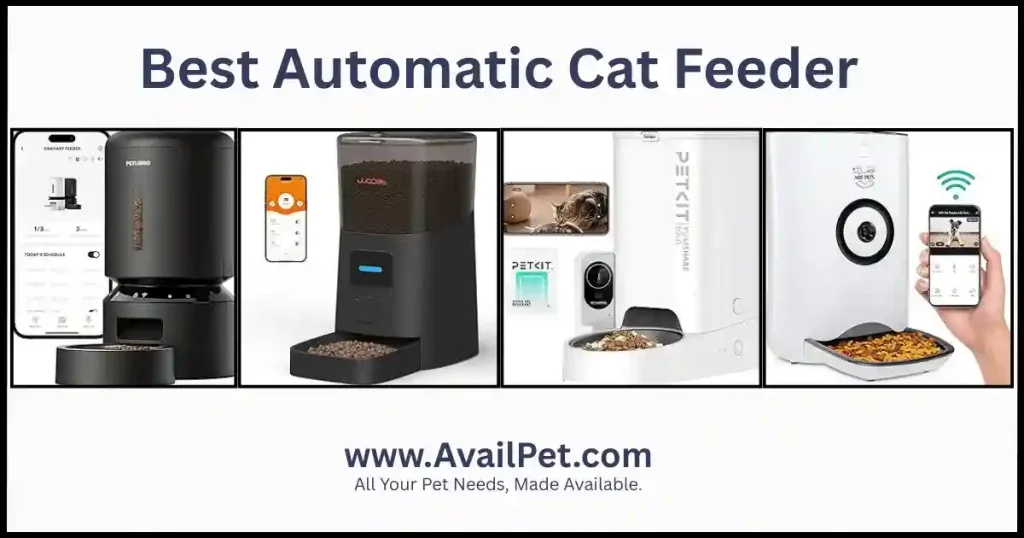
A basic automatic cat feeder is designed for scheduled portion control. It dispenses food at set times, but any pet (or even pests) can eat it. It doesn’t care which animal accesses the food.
A microchip pet feeder, however, is designed for selective access control. Its primary job is to ensure only one specific pet can eat the food, making it part of the specialized RFID cat feeder category.
Comparison at a Glance:
| Feature | Microchip Pet Feeder | Basic Automatic Feeder |
|---|---|---|
| Primary Function | Selective Feeding – only opens for authorized pets | Scheduled Feeding – dispenses food at set times for any animal |
| Best For | Multi-pet households, special diets, food allergies, weight management | Single-pet households, portion control, convenience for busy owners |
| Pet Identification | Yes – uses microchip or RFID tag | No – feeds any animal that approaches |
| Food Security | High – locked lid protects food from other pets | Low – food is exposed to any animal |
| Ideal Scenario | One cat on prescription diet, another on weight management | Maintaining regular meal times for a single cat |
Why This Matters in Practice:
From my veterinary experience, this distinction is critical. I’ve seen many owners purchase a standard automatic feeder hoping to solve multi-pat dietary issues, only to find the wrong pet still eats everything. The microchip pet feeder is specifically engineered to solve this exact problem by adding the crucial layer of selective access that basic feeders lack.
The Top 3 Benefits: More Than Just a Smart Bowl
As a veterinarian, I’ve seen firsthand how microchip pet feeders transform not just mealtime dynamics, but overall pet health and household harmony. Here are the three most significant benefits I consistently observe:
1. Eliminates Food Bullying and Reduces Stress
This is the most immediate and noticeable benefit. In multi-pet homes, mealtime often creates a hierarchy where dominant animals intimidate more submissive ones. A microchip pet feeder creates a fair and stress-free environment where each pet can eat in peace, knowing their food is protected. This is particularly valuable for anxious or elderly pets who need uninterrupted access to their meals.
2. Enables Precise Health and Diet Management
This is where the microchip pet feeder becomes an essential healthcare tool. It allows you to:
- Manage Weight Effectively: Provide controlled portions to an overweight cat while their slimmer sibling maintains their normal diet.
- Administer Prescription Diets: Ensure only the cat with a medical condition (kidney disease, diabetes, urinary issues) eats the specific—and often expensive—prescription food.
- Prevent Allergic Reactions: Stop a cat with food allergies from accessing food that could trigger skin or digestive issues.
- Medicate Safely: Mix medication with food for one pet without worrying about another pet consuming it.
3. Provides Valuable Health Monitoring Insights
Advanced models, particularly the SureFeed Microchip Pet Feeder Connect, offer connectivity that turns the feeder into a health monitoring device. The accompanying app tracks:
- Feeding Frequency: How often each pet eats.
- Duration of Meals: How long they spend at the feeder.
- Pattern Changes: Any deviations from normal eating behavior.
As a veterinarian, I cannot overstate the value of this data. Changes in appetite and eating patterns are often the first sign of underlying health issues. With this information, pet owners can seek veterinary care proactively, often leading to earlier diagnosis and more effective treatment.
Is a Microchip Pet Feeder Right for You? (The Ideal User Profile)
Based on my veterinary practice, microchip pet feeders are transformative for specific situations, but they aren’t a necessity for every household. Here’s a clear guide to help you determine if you’re the ideal candidate.
You Are a Perfect Candidate for a Microchip Pet Feeder If:
- You Have Multiple Cats with Different Dietary Needs: This is the most common and compelling reason. If one cat needs a prescription diet for kidney disease while another maintains regular food, this feeder is essential.
- One Pet Requires Weight Management: You can provide controlled portions to an overweight pet while allowing others to free-feed or eat their own meals without restriction.
- You Deal with Food Aggression or Theft: If mealtimes involve one pet consistently stealing food or bullying others, this feeder restores peace and ensures every animal gets their fair share.
- A Pet Has Food Allergies or Sensitivities: It prevents cross-contamination and ensures the allergic pet only eats their safe, designated food.
- Your Pet is Microchipped or Tolerates a Collar: The system relies on identification, so your pet must have a microchip or be willing to wear the provided RFID collar tag.
You Might Not Need This Investment If:
- You have a single pet with no special dietary requirements.
- All your pets eat the same food and maintain healthy weights without issues.
- Your only goal is scheduled feeding for convenience, not selective access.
A Real-World Example from My Practice:
I recently advised a client with three cats to use a microchip pet feeder. One cat, “Whiskers,” needed a urinary health diet, while “Mittens” was overweight and required portion control. The third cat had no issues. Implementing two microchip pet feeders solved their constant mealtime supervision and ensured each cat received the appropriate nutrition for their health needs.
FAQs About Microchip Pet Feeder
Here are answers to the most common questions I receive from pet owners about microchip pet feeders.
Will a microchip pet feeder work with my pet’s specific microchip?
In the vast majority of cases, yes. Most microchip pet feeders, including the popular SureFeed model, are designed to read the international FDX-B microchip standard, which is what most US veterinarians use. It’s always a good practice to confirm your chip type with your vet, but compatibility is very high.
What if my pet isn’t microchipped?
This is not a problem. Virtually all microchip pet feeders come with lightweight, safe RFID collar tags as an alternative identification method. If your pet will wear a breakaway collar, this is a perfect solution. It makes these feeders accessible to almost every pet owner.
Are these feeders only for cats?
While they are primarily marketed for and used by cat owners, they can be equally effective for small dogs in multi-pet households. The important factors are the pet’s size (they must be large enough to activate the scanner) and whether they will use the bowl appropriately.
From a veterinary perspective, is this technology safe and stress-free for pets?
Dr. Jackson’s, This is one of my most frequently asked questions. In my professional experience, the vast majority of cats and dogs adapt to these feeders remarkably well. The lid opens quietly and slowly, which prevents startling them. The significant benefit of eliminating mealtime stress and ensuring each pet gets their specific nutrition far outweighs the brief adjustment period. I consistently see improved well-being and reduced anxiety in multi-pet homes after introducing a microchip pet feeder.”
Can I use one feeder for multiple pets if they all eat the same food?
Technically yes, but it defeats the primary purpose. The feeder would open for any authorized pet, so you wouldn’t be able to monitor individual intake or prevent a faster eater from consuming most of the food. For true selective feeding and health management, one feeder per pet on a specific diet is recommended.
Conclusion: Taking the Next Step
We’ve explored how a microchip pet feeder operates on sophisticated yet simple technology to solve one of the most common challenges in multi-pet homes: ensuring each animal receives the right nutrition without stress or conflict.
To recap, this technology is most valuable for:
- Households with pets on different prescription or therapeutic diets.
- Managing weight control for one pet without restricting others.
- Eliminating food bullying and creating peaceful mealtimes.
- Monitoring eating patterns as an early health warning system.
Your Next Step:
Now that you understand the “how” and “why” behind microchip pet feeders, your next step is to explore the “which one.” I invite you to read our comprehensive pillar guide, The Ultimate Guide to RFID Cat Feeders, where we provide detailed, vet-reviewed analysis of the top models on the market, including in-depth looks at SureFeed, PortionPro Rx, and other leading brands.
A Final Note from Dr. Jackson:
“While a microchip pet feeder is an excellent tool for managing specific dietary needs, it should complement, not replace, regular veterinary care. Always consult with your veterinarian for personalized advice tailored to your pet’s unique health profile. Here’s to happier, healthier mealtimes for your entire furry family!”
Disclaimer: The information provided in this guide is for educational purposes only and is not a substitute for professional veterinary advice. For diagnosis, treatment, and personalized guidance for your pet, please consult with a qualified veterinarian like Dr. Allaona Jackson or your local veterinary provider. While microchip pet feeders are valuable management tools, they do not replace professional veterinary care. AvailPet.com and Dr. Jackson assume no liability for decisions made based on this content.
Sources:
This article was developed using the most current product information and veterinary knowledge available in 2026. Key sources include:
- SurePetcare
- AAHA Microchip Guidelines
- Veterinary Nutrition Expertise: Dr. Allaona Jackson, DVM
- FDA Pet Food Guidelines