The Irish Setter is a living masterpiece—a breathtaking vision of flowing mahogany coat, elegant lines, and an expression that blends noble intelligence with gentle warmth. It’s impossible not to be captivated by their beauty. However, to envision an Irish Setter as merely a graceful ornament is to misunderstand them entirely. Beneath that stunning exterior beats the heart of a high-octane sporting dog, bred for miles of endurance across rugged terrain and possessing a sensitive, intelligent mind that demands partnership.
In 2026, owning this breed successfully means providing far more than a home; it means providing a purpose, structured activity, and proactive healthcare tailored to their unique needs.
In this essential guide, Dr. Allona Jackson, DVM, separates romantic admiration from the rewarding reality of living with a Setter. We’ll cover the critical health screenings that can safeguard their vitality, the training philosophy that works with their independent bird-dog mind, and the dedicated grooming that keeps their iconic coat healthy.
This deep dive into a specific sporting breed’s world expands upon our foundational resource for matching canine energy with human lifestyle, detailed in our comprehensive pillar article: Best Dog Breeds for Families. Let’s ensure your journey with an Irish Setter is built on a foundation of preparedness, setting the stage for a long, active, and mutually fulfilling partnership.
Irish Setter Temperament & Profile: The Sensitive Speedster
To share your life with an Irish Setter is to embrace a particular kind of joyful, energetic chaos. They are not a low-energy companion or a placid lap dog. They are a sensitive, high-velocity athlete with the heart of a devoted clown. Understanding this unique combination of traits—and the slow timeline on which they mature—is the first step toward a harmonious relationship.
Personality: Understanding the “Forever Young” Bird Dog
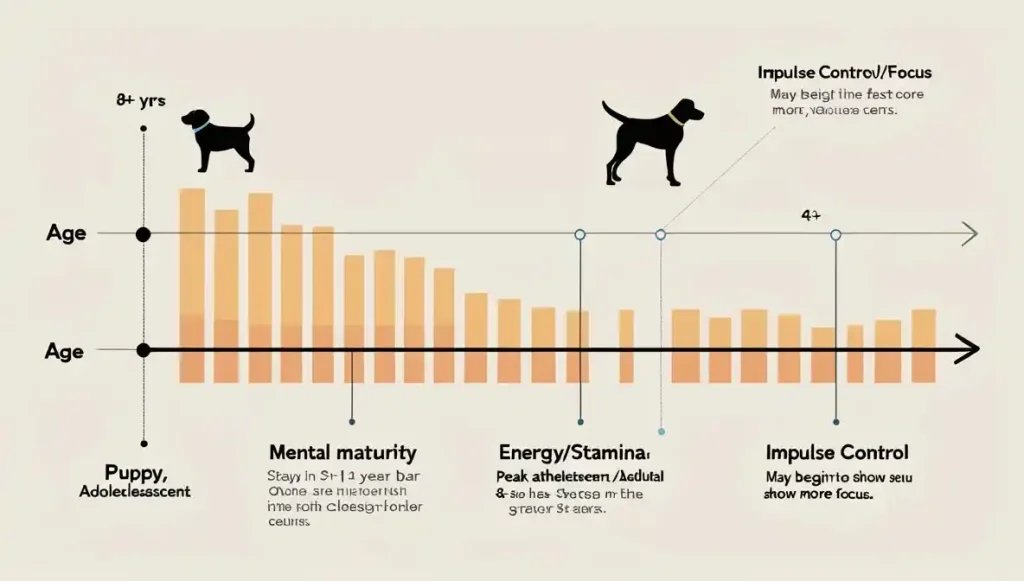
An Irish Setter’s temperament is defined by a series of delightful, yet demanding, contradictions:
- Boundless Energy with Deep Affection: They possess seemingly endless stamina, yet they are profoundly attached “velcro” dogs who crave physical closeness with their family.
- Independent Thinker with Sensitivity: Bred to work at a distance from their hunter, they can be willful and easily distracted by scents. Yet, they are emotionally tender and respond poorly to harsh correction, requiring gentle, positive guidance.
- Goofy Clown with Noble Bearing: One moment they are elegant and statuesque; the next, they are engaging in a full-body “happy dance” or a clumsy, joyful romp.
- Slow to Mature: Mentally, they often remain in a playful, distractible “puppy” stage until 3-4 years of age, testing an owner’s patience with their prolonged adolescence.
The Irish Setter Profile: Size, Lifespan & Lines
| Trait | Specification | Notes for Owners |
|---|---|---|
| Size | 55-70 lbs (Males larger) 25-27 inches tall at the shoulder | A substantial, athletic dog requiring space to stretch and move. |
| Average Lifespan | 11-15 years | Reaching the upper end requires proactive health screening, optimal weight management, and preventative care (e.g., gastropexy for bloat). |
| Breed Lines | Show Lines: Bred for conformation. Often slightly calmer demeanor, emphasis on coat and structure. Field/Working Lines: Bred for hunting performance. Typically possess higher drive, stamina, and intensity. | Your choice influences energy level and focus. Be honest with breeders about your lifestyle (active pet home vs. hunting partner). |
Irish Setters with Kids & Active Families
This is where the Irish Setter often shines brightest, provided the family environment is the right fit.
- The Perfect Match: For active, outdoor-oriented families who hike, run, or have space for vigorous play, an Irish Setter can be an ideal, patient, and gentle companion for respectful children. Their playful nature aligns beautifully with an active childhood.
- Essential Supervision: Their large size and famously enthusiastic, whip-like “happy tail” can accidentally knock over small children or clear coffee tables. Teach children calm interaction and always supervise play. Their exuberance is not malice, but sheer joy that needs channeling.
- A Home with Space: They do best in homes with secure yards for romping. Apartment living is challenging and requires an extraordinary commitment to multiple, long daily outings.
The Reality of Their Energy & Intelligence
This is the most critical point for prospective owners to grasp: Physical exercise alone will not produce a calm Irish Setter.
- The “Tired Body, Bored Mind” Problem: A long run may tire their muscles, but their intelligent, problem-solving mind remains active. Without mental engagement, this leads to anxiety, destructive chewing, obsessive barking, or escape attempts.
- The Solution – Provide a “Job”: They need purposeful activity. This can be formal (field training, agility, nosework) or simulated (daily training sessions, complex food puzzles, structured “find it” games that use their superb nose).
- The Mindset: You are not just a pet owner; you are a handler, coach, and activity director for a canine athlete.
Dr. Jackson’s Advice: “An Irish Setter doesn’t just want to be with you; they need to be working with you. The goal is to direct their magnificent energy and intelligence into constructive channels. The dog who destroys the couch isn’t bad; they’re bored. Your daily mission is to provide an outlet more interesting than your furniture.”
The Irish Setter Health & Care Protocol
The Irish Setter’s vibrant energy and stunning appearance are supported by a generally robust constitution, but the breed carries significant genetic vulnerabilities that demand a proactive, not reactive, approach to healthcare. In 2026, responsible ownership is defined by knowledge, screening, and prevention. Your partnership with a veterinarian who understands these breed-specific risks is as important as your daily walks.
Dr. Jackson’s Setter-Specific Health Strategy
Modern Setter care means moving beyond waiting for symptoms. It involves systematic screening and understanding the early warning signs of serious conditions.
Core Focus 1: Orthopedic Health – A Running Breed’s Foundation
Their athleticism depends on sound structure. Two key conditions threaten this:
- Hip & Elbow Dysplasia: Developmental malformations of these critical joints that lead to arthritis, pain, and lameness.
- Action Plan: Reputable breeders must provide OFA (Orthopedic Foundation for Animals) or PennHIP certification for both parents, proving healthy joint structure. For your puppy, avoid forced high-impact exercise (like long runs or jumping) until growth plates close (around 18-24 months).
- Hypertrophic Osteodystrophy (HOD): A painful, inflammatory bone disease that strikes during rapid growth phases (often 3-6 months old).
- Signs: Sudden lameness (often in multiple legs), fever, lethargy, loss of appetite.
- Action Plan: Know the signs. This is a veterinary emergency requiring immediate care to manage pain and inflammation and prevent permanent damage.
Core Focus 2: The Bloat (GDV) Emergency Protocol
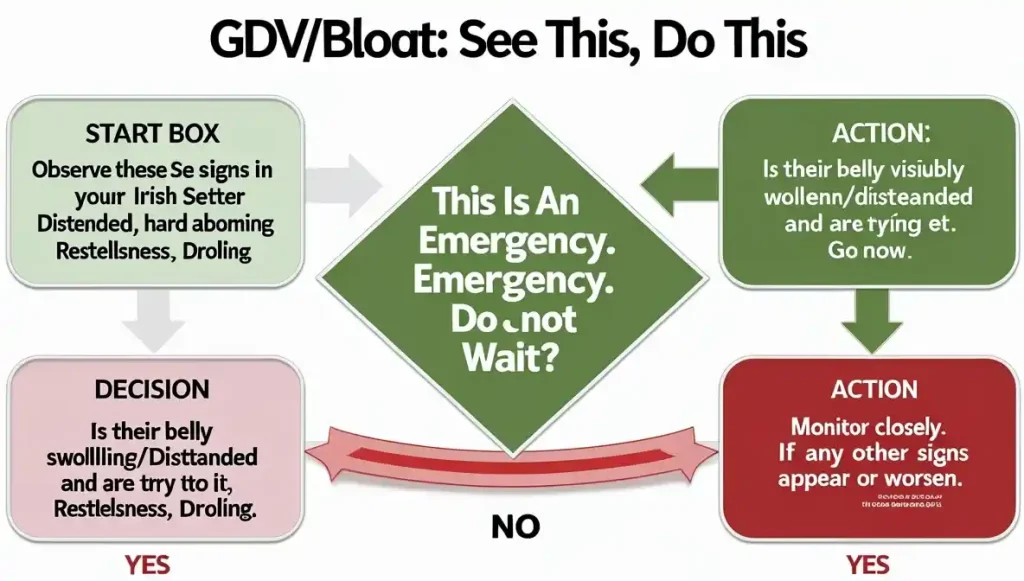
This is a true, life-threatening emergency with a very narrow window for survival. Deep-chested breeds like Irish Setters are at extremely high risk.
- What it is: Gastric Dilatation and Volvulus—the stomach fills with gas and twists, cutting off blood supply.
- Signs: Unproductive retching (dry heaving), a distended, hard abdomen, restlessness, drooling, rapid shallow breathing, collapse.
- Prevention & Action Plan:
- Feeding Management: Feed 2-3 smaller meals daily, not one large one. Avoid vigorous exercise for at least one hour before and after eating.
- Know Your Nearest ER: Have the address and phone number of a 24-hour veterinary emergency clinic saved.
- The Surgical Option – Prophylactic Gastropexy: This procedure surgically tacks the stomach to the body wall to prevent twisting. It is highly recommended, often performed during spay/neuter. It doesn’t prevent bloat but prevents the fatal twist.
Core Focus 3: Genetic & Immune-Mediated Conditions
- Canine Leukocyte Adhesion Deficiency (CLAD): A fatal immunodeficiency disorder. Reputable breeders will have genetically tested their breeding stock and will not produce affected puppies. Always ask for proof of CLAD testing.
- Hypothyroidism: Very common in the breed. Symptoms include unexplained weight gain, lethargy, hair loss, and skin issues. It is easily managed with daily medication. Annual thyroid screening is advised.
- Progressive Retinal Atrophy (PRA) & Epilepsy: Ask breeders for PRA genetic test results and about the history of seizures (epilepsy) in their bloodlines.
Nutrition for an Athlete: Fueling the Furnace
An active Irish Setter has high metabolic demands.
- Best Food for an Irish Setter: Choose a high-quality, performance or active breed formula from a reputable company. Look for named animal proteins as the first ingredients.
- Weight Management is Crucial: Keep them lean to reduce stress on joints and overall system. You should be able to easily feel their ribs. Their appetite can be hearty; measure meals and limit treats.
- Hydration: Always provide ample fresh water, especially after activity.
“For joint support from puppyhood, consider a diet or supplement containing glucosamine and chondroitin, or discuss options with your vet.”
“A slow-feed bowl can help prevent gulping, which is linked to bloat risk, and provides mental stimulation.”
Dr. Jackson’s Health Principle: “With an Irish Setter, you are their health advocate. The monthly lump check, the note about a slight limp, the question about thyroid screening at their annual visit—these small acts of vigilance are what stack the odds in favor of a long, active life. We have the knowledge to be proactive; we just have to commit to the action.”
The Grooming Commitment: Maintaining the Iconic Coat
The Irish Setter’s breathtaking mahogany coat is their crowning glory, but it is not a low-maintenance feature. That beautiful, silky feathering is a high-commitment responsibility that, if neglected, quickly leads to discomfort, skin issues, and a diminished quality of life for the dog. Grooming a Setter is not vanity; it is an essential pillar of their preventative healthcare and comfort.
Grooming as Preventative Care for the Red Coat
Think of their coat as a protective, insulating system that requires regular maintenance to function properly. Without it, mats form, skin cannot breathe, and parasites find a home.
The Shedding & Climate Reality
- Shedding: They are moderate shedders year-round, with more intense seasonal “coat blows” typically in spring and fall. Regular brushing is the only way to manage the volume of loose hair in your home.
- Climate Considerations: Their coat provides excellent insulation against cold. However, in hot or humid climates, they are prone to overheating. It is crucial to provide air-conditioned retreats, ample shade, and fresh water. Never shave an Irish Setter—their coat also protects from sunburn—but keeping them brushed out and well-trimmed aids in cooling.
The Non-Negotiable Routine
To prevent painful mats and maintain skin health, this schedule is mandatory:

- Brushing: 2-3 Times Per Week, Minimum.
- Toolkit: A slicker brush and a long-toothed metal comb are non-negotiable.
- Technique: You must practice “line brushing.” Part the coat down to the skin, brush that section thoroughly from skin to tip, then follow immediately with the comb to ensure zero tangles reach the skin. Pay special attention to high-friction areas: behind the ears, the armpits, the belly, the breeches (back of thighs), and the tail. Mats start invisibly at the skin.
- Ear Care: Weekly.
- Their long, floppy ears trap moisture and debris. Check weekly for redness, odor, or discharge. Clean gently with a vet-recommended ear cleaner on a cotton ball. Never use cotton swabs deep in the ear canal.
- Professional Grooming: Every 6-8 Weeks.
- This is not just a “haircut.” A professional groomer will:
- Give a hygienic trim (paws, sanitary area, feathering neatened).
- Thoroughly deshed and demat.
- Clean ears and express anal glands if needed.
- Provide a deep bath and blow-dry that reaches the undercoat.
- Average Cost: $80 – $150+ per session, depending on your location and the dog’s size/coat condition.
- This is not just a “haircut.” A professional groomer will:
- Paw & Nail Care:
- Nails: Trim every 2-3 weeks to keep them short. Long nails affect gait and can cause joint pain.
- Paw Pads: Check regularly for cracks, cuts, or embedded debris, especially after outdoor activity.
Bathing at Home
- Frequency: Every 4-6 weeks, or when dirty. Over-bathing can strip natural oils.
- Process: Always brush thoroughly before the bath to prevent wet mats from forming. Use a high-quality dog shampoo and conditioner. A high-velocity dryer is invaluable for completely drying the dense coat down to the skin, preventing hot spots and mildew.
Presented as Essential Health Tools:
- “Investing in the right tools makes the job easier and safer. A slicker brush and metal comb set designed for long coats is your first line of defense against mats.”
- “For at-home maintenance between grooms, a dog-specific nail grinder or clippers helps keep those fast-growing nails in check.”
The Grooming Bottom Line: When you choose an Irish Setter, you are committing to a significant, recurring investment of both time and money. Neglect is not an option, as it causes the dog real suffering. The reward is a healthy, comfortable dog whose magnificent appearance turns heads for all the right reasons.
Training the Independent Bird Dog
The Irish Setter’s mind is a marvel—sharp, curious, and wired for a specific purpose: to hunt independently. This is the source of both their charm and their greatest training challenge. In 2026, we understand that success lies not in demanding blind obedience, but in harnessing their natural instincts through partnership, patience, and creativity. You are not commanding a soldier; you are collaborating with a feathered-haired colleague.
Working with the Setter Mind, Not Against It
Forget rigid, repetitive drills. The traditional Irish Setter is bred to range ahead of a hunter, using their own judgment to find and point birds. This results in a dog that is:
- Easily Distracted: A fascinating scent will always trump your “come” command in their moment of discovery.
- An Independent Thinker: They may question the purpose of a command if it doesn’t align with their current interest.
- Sensitive: Despite their independence, they are emotionally soft. Harsh corrections or frustration will cause them to shut down and lose trust.
Positive Reinforcement & Soft Handling: The Only Path
Their sensitivity demands a specific approach.
- High-Value Motivation: Use what they love—often food, but also praise, play, or a chance to run. Find the treat (freeze-dried liver, cheese) that can compete with environmental smells.
- Keep it Short & Fun: Training sessions should be 5-10 minutes, multiple times a day. End on a success. Make it a game.
- Manage Your Energy: Stay calm and upbeat. Your frustration is their cue that training is unpleasant.
Essential Foundations for Safety & Sanity
These commands are not optional; they are the framework for safely managing a large, energetic dog with strong instincts.
- Rock-Solid Recall: The Lifelong Project.
- The Reality: A reliable off-leash recall in an unfenced area with distractions is a lofty goal that many Setters never fully achieve. It requires immense, consistent work.
- The Tool: A 30-foot long line is your best friend for life. It gives them freedom to explore while you maintain ultimate safety control. Practice recall on the long line with phenomenal rewards.
- Never Punish a Come: If they finally come after ignoring you, reward them lavishly. If you scold them, you teach them that coming to you ends the fun.
- Impulse Control: “Wait” and “Leave It”.
- Why: Prevents bolting out doors, chasing wildlife, or scavenging dangerous items.
- How: Start with easy temptations and build value by rewarding the choice to listen. These commands can literally save their life.
- Extensive, Positive Socialization.
- Critical Period: The first 14-16 weeks are golden. Expose your puppy positively to everything: different people, dogs, sounds, surfaces, and experiences.
- Goal: To build confidence and prevent the shyness or fear-based reactivity the breed can be prone to. A well-socialized Setter is a stable, happy companion.
The Ultimate Outlet: Channeling the Hunting Instinct
The best training fulfills their genetic purpose. Even pet Setters need this.
- Field Training Classes: These teach basic bird work in a controlled setting. It’s less about making a hunter and more about giving them a sanctioned, rewarding outlet for their drive.
- Scent Work/Nosework: The perfect urban alternative. Hiding treats or target odors for them to find taps directly into their greatest talent and provides a deep mental workout.
- Barn Hunt: A fun sport where they search for rats (safely contained in tubes) in a straw bale maze.
- Structured “Find It” Games at Home: Hide their favorite toy or treats around the yard or house. It turns play into a cognitive challenge.
Dr. Jackson’s Training Principle: “You cannot train the hunt out of a bird dog. The most successful Setter owners are those who redirect it. Your job is to make following your cues more rewarding than following their nose in that moment, and to provide structured outlets where following their nose is the rewarded behavior. It’s a balance of partnership and provision.”
The Honest Challenges & Cost of Ownership
The Irish Setter’s beauty and joyful spirit are intoxicating, but they are supported by a foundation of significant, ongoing commitments that fundamentally shape your lifestyle and budget. Choosing this breed is a decision that should be made with clear-eyed assessment, not just romantic admiration. Being prepared for these challenges is what transforms potential overwhelm into a manageable, rewarding partnership.
What Living with an Irish Setter Really Means
1. The Profound Energy & Time Commitment
This is the most common point of mismatch between expectation and reality.
- The Reality: An Irish Setter is not a dog that will be satisfied with a 30-minute walk. They require 60-90 minutes of dedicated, vigorous activity daily, plus consistent mental engagement. This is a 10-15 year commitment to an active lifestyle.
- The Consequence: An under-exercised or under-stimulated Setter will find their own entertainment, which manifests as destructive chewing, obsessive barking, digging, escape attempts, or anxiety-driven behaviors. This is not a behavior problem; it’s a needs-not-met problem.
2. The “Velcro” Tendency & Separation Anxiety
Their deep bond is a double-edged sword.
- The Reality: They form intense attachments and prefer to be with their people. This can border on dependency, making them prone to separation distress if not properly conditioned from puppyhood.
- The Management: Dedicated alone-time training using a crate or confinement area is non-negotiable. They must learn that being alone is safe and predictable. Forgetting this training often leads to destroyed homes and distressed dogs.
3. The Slow, Clumsy Maturation
Patience is not a virtue here; it’s a requirement.
- The Reality: The “big, goofy, easily-distracted puppy” phase lasts until they are 3-4 years old. They will be clumsy, will test boundaries, and may seem to “forget” training during adolescence.
- The Mindset: You must commit to consistent, gentle guidance for years, not months. This tests the resolve of even experienced owners.
4. The Significant Financial Investment
The initial purchase price is merely the entry fee to a lifetime of above-average costs.
| Expense Category | Estimated Annual Cost (2026) | Notes |
|---|---|---|
| Premium Food & Treats | $1,000 – $1,500 | High-quality diet for an active, large breed. |
| Professional Grooming | $1,000 – $2,000+ | Every 6-8 weeks, for life. A major line item. |
| Routine Veterinary Care | $500 – $800 | Exams, vaccines, preventatives, thyroid screening. |
| Pet Insurance Premiums | $800 – $1,400 | Highly recommended. Critical for mitigating risk of bloat surgery, cancer treatment, etc. |
| Training & Enrichment | $300 – $600 | Classes, sports, puzzles, toys. |
| Miscellaneous (Supplies, etc.) | $300 – $500 | Beds, leashes, replacements for chewed items. |
| Potential Health Incident Fund | $2,000 – $10,000+ | For emergencies or managing chronic conditions (e.g., bloat surgery alone can be $5,000-$10,000). |
5. Regional & Lifestyle Considerations (The GEO Factor)
Your environment directly impacts their well-being.
- Climate: Their thick coat is ideal for cooler climates. In hot or humid regions, you must be exceptionally vigilant about providing air conditioning, shade, and adjusted exercise schedules to prevent heatstroke.
- Living Space: They are best suited to homes with secure, spacious yards. Apartment living is intensely challenging and requires a Herculean effort to meet their exercise needs.
- Breeder Access: Reputable breeders who perform all health testing (hips, eyes, CLAD, thyroid) may require travel, as they are not available in every region.
Facing These Realities: This list is a filter for the right home. The ideal Irish Setter owner reads this and doesn’t see deterrents; they see a preparation checklist. They have an active, stable lifestyle, the financial means for premium care, a patient temperament, and a sense of humor about dog hair and goofy antics. They understand that the price of the Setter’s unwavering affection, stunning beauty, and shared adventures is this comprehensive commitment.
Irish Setter FAQs for 2026
Here, Dr. Allona Jackson, DVM, answers the most pressing and practical questions from prospective and current Irish Setter owners, focusing on knowledge and realistic expectations.
Are Irish Setters good for first-time dog owners?
Generally, no. Their combination of extremely high energy, slow maturity, sensitive nature, and independent streak presents a steep learning curve. A first-time owner must be exceptionally committed to research, have an active lifestyle, and ideally have mentorship (from a breeder, trainer, or vet) to succeed. A more predictable, lower-energy breed is often a better first-dog choice.
Can Irish Setters ever be reliable off-leash?
This is one of the breed’s biggest challenges. Due to their strong hunting instinct and tendency to range, a 100% reliable off-leash recall in an unsecured, distracting environment is rare. It requires a lifetime of dedicated, positive training with ultra-high-value rewards. Most owners use secure fencing or a 30+ ft long line for safe freedom. Never trust an untrained Setter off-leash near roads or wildlife.
How do I calm down an over-excited Irish Setter?
First, ensure their physical and mental needs are met—a tired Setter is easier to calm. Then, manage the excitement:
- Teach an “Off Switch”: Use a “place” or “mat” command where they must settle for treats.
- Manage Greetings: Ignore jumping and excited behavior; only give attention when all four paws are on the floor.
- Provide Mental Chews: A frozen Kong or a long-lasting chew can help them self-soothe.
- Rule Out Anxiety: Chronic over-arousal can stem from underlying anxiety; consult a trainer or vet.
What are the first signs of bloat (GDV) I should watch for?
Know this emergency checklist. Signs often appear suddenly, usually within a few hours of eating:
- Unproductive retching (trying to vomit but nothing comes up, or just foam).
- A distended, tight, or drum-like abdomen.
- Restlessness, pacing, unable to get comfortable.
- Excessive drooling.
- Pale gums.
- Rapid, shallow breathing.
If you see these signs, especially retching with a hard belly, go to an emergency vet immediately. Minutes count.
What’s the difference between a “field” and “show” Irish Setter?
While all are the same breed, lines are bred for different priorities:
- Field/Working Lines: Bred for hunting performance. They often have higher prey drive, more stamina, and greater intensity. They may be slightly leaner with a less profuse coat. Ideal for active homes wanting a hiking or sport partner.
- Show Lines: Bred for conformation to the breed standard. They often have a slightly calmer demeanor (though still high-energy) and the iconic, heavily feathered “picture perfect” coat. Often chosen as active family companions.
Tell a breeder your lifestyle; they can match you with the appropriate puppy temperament.
Do Irish Setters bark a lot?
They are not incessant barkers, but they are vocal. They may bark to alert, out of excitement, during play, or from boredom/anxiety. A well-exercised, mentally stimulated Setter is quieter. Nuisance barking is often a sign of unmet needs.
Conclusion & Your Next Steps
You have now journeyed through the complete landscape of Irish Setter ownership—from the heart-stopping beauty of their mahogany coat to the disciplined reality of their sporting dog energy, health vigilance, and grooming demands. Choosing an Irish Setter is not merely selecting a pet; it is committing to a lifestyle of activity, engagement, and proactive care with one of the canine world’s most sensitive and spirited athletes. The boundless joy, loyalty, and shared adventure they offer are the direct rewards for meeting their substantial needs with knowledge, patience, and consistency.
This guide has equipped you with the blueprint: the essential health screenings, the training philosophy for an independent mind, the grooming non-negotiables, and the honest financial and temporal investments. The path forward is one of purposeful partnership.
Your Responsible Ownership Action Plan:
- Conduct a Rigorous “Setter Fit” Audit: Be brutally honest. Does your daily life naturally include hours of outdoor activity? Do you have the financial stability for significant grooming and potential health costs? Do you possess the patience for a slow-maturing, sensitive dog? If your lifestyle is sedentary, time-poor, or financially tight, this breed is not the right fit.
- Prioritize Health-Testing in Your Breeder Search: Use Section 2 as your non-negotiable filter. A reputable breeder will have clear documentation for: Hip/Elbow (OFA/PennHIP), CLAD genetic testing, PRA genetic testing, and thyroid screening. They will openly discuss bloat prevention and the incidence of epilepsy in their lines.
- Secure Your Support Network Before Your Puppy Arrives:
- Veterinarian: Find a vet experienced with large, active breeds and proactive about bloat prevention (willing to discuss gastropexy).
- Groomer: Book a consultation. Establish a relationship and get on a schedule.
- Trainer: Identify a positive-reinforcement trainer who understands how to motivate independent scent hounds.
- Implement Financial Safeguards Immediately: Enroll in a comprehensive pet insurance policy the day you bring your puppy home, before any conditions manifest. Start a dedicated “Setter Care Fund” for grooming, training, and wellness.
Continue Your Informed Journey with AvailPet
This guide is part of our commitment to transparent, responsible pet ownership at AvailPet.com.
- 🔍 Compare with Clarity: See how the Irish Setter’s unique demands compare to other active family breeds in our definitive, updated resource: Best Dog Breeds for Families.
- 📚 Deepen Your Knowledge: For owners of other high-energy breeds, explore our detailed guides to Boxers and Standard Poodles.
Thank you for entrusting Dr. Allona Jackson, DVM, and AvailPet with this vital research. Your dedication to understanding the full scope of this commitment is the first, and most profound, act of love you can offer a future Irish Setter. By choosing knowledge, you choose to be the capable, engaged partner this magnificent breed needs and deserves.
Welcome to the vibrant, demanding, and breathtakingly beautiful adventure of life with an Irish Setter.
Medical Disclaimer: The information provided in this guide by Dr. Allona Jackson, DVM, is for educational and informational purposes only. It is not a substitute for professional veterinary advice, diagnosis, or treatment. Always seek the guidance of your own veterinarian with any questions regarding your pet’s health or medical condition. Never disregard professional advice or delay seeking it because of something you have read here.
Sources