Vet Reviewed By: Dr. Allona Jackson, DVM
Dr. Jackson is a practicing veterinarian with over 12 years of experience in small animal care. She reviews all content on AvailPet.com for medical accuracy and pet safety.
You’re bringing home an 8-week-old ball of fur, teeth, and energy. You have a leash, a bed, and a mountain of love. But what collar is actually safe for a puppy who grows an inch a week and chews everything in sight?
Walk into any pet store, and you’ll see collars labeled “small” or “petite.” But most of these are just miniature adult collars — too heavy, not adjustable enough, and missing critical safety features for growing puppies.
Puppies are not small adult dogs. Their necks are delicate. They grow at shocking speeds. And they explore the world with their mouths — including their own collar and their littermate’s collar.
I’m Dr. Allona Jackson, DVM. In this guide, I’ll walk you through the 5 best training collar for puppies, how to size for growth, why breakaway buckles save lives, and exactly when to transition to an adult collar.
Disclosure: This article contains affiliate links. If you purchase through these links, AvailPet.com earns a small commission at no extra cost to you.
The 5 Best Training Collar for Puppies at a Glance
*Short on time? Here are my top 5 vet-reviewed picks for puppies (8 weeks to 6 months, necks 6″-14″). Each collar has been evaluated for safety, adjustability, weight, and puppy-proof durability.*
| Product | Best For | Collar Type | Weight | Adjustability | Breakaway | Price Range |
|---|---|---|---|---|---|---|
| TagME Dog Collar for Small Dogs | Overall best for puppies | Nylon flat collar | 0.8 oz | 8″ – 14″ | Yes | 10−15 |
| TENICER Summer Dog Collar | Lightweight for tiny puppies | Soft nylon | 0.6 oz | 7″ – 12″ | No | 8−12 |
| TenCloud Pet Collar Set | Best multi-pack (great for litter) | Nylon flat collar | 0.9 oz | 8″ – 13″ | No | 12−18 (3-pack) |
| Blaoicni Puppy Collars for Litter | Best budget multi-pack | Soft polyester | 0.7 oz | 8″ – 12″ | No | 10−15 (4-pack) |
| TagME Breakaway (featured) | Safest option for crated puppies | Breakaway nylon | 0.8 oz | 8″ – 14″ | Yes | 12−16 |
Do Puppies Really Need a Special Training Collar? (Vet’s Perspective)
Let me be clear: A standard adult collar is not safe for most puppies.
Puppies are fundamentally different from adult dogs in ways that matter for collar safety.
Here’s why puppies need specialized collars:
- Rapid growth: Some large breed puppies gain 2-3 pounds per week. A collar that fits today may be dangerously tight in 10 days.
- Delicate tracheas: Puppy airways are still developing. Heavy collars or tight fits can cause long-term damage.
- Teething behavior: Puppies chew everything — including collars. They will chew their own collar and their littermate’s collar. Swallowed hardware is a surgical emergency.
- No impulse control: Puppies dive into tight spaces, play rough, and get snagged on things. Without breakaway safety, this is a strangulation risk.
The critical window: 8 weeks to 6 months is when puppies learn collar acceptance and leash manners. A bad first collar — too heavy, too tight, or uncomfortable — can create a lifetime of collar resistance.
“A puppy’s first collar isn’t for correction — it’s for habituation. They need to learn that a collar on their neck is normal, safe, and leads to fun walks. A bad first collar can create a lifetime of collar resistance.” — Dr. Allona Jackson, DVM
Important disclaimer: “Training collars for puppies” in this guide means flat collars for habituation and leash introduction — NOT e-collars, shock collars, or bark collars. Those are never appropriate for puppies under 6 months.
If you’re looking for correction-based training tools, see our guide for adult dogs instead →
How to Choose a Training Collar for a Puppy (Buying Guide)
Not all puppy collars are created equal. Here are the five features that matter most for growing puppies.
Weight (Lightest Is Best)
Puppy necks are delicate and still developing. A heavy collar causes neck strain and discomfort.
My recommendation: Under 1.0 ounce. Ideal is under 0.8 oz.
- TENICER wins at 0.6 oz (lighter than a ping pong ball)
- Blaoicni is 0.7 oz
- TagME is 0.8 oz
For reference, a standard adult small collar weighs 1.5-2.5 oz — up to 4x heavier than these puppy collars.
Adjustability (Room to Grow)
Puppies grow fast. A collar with only 2-3 adjustment holes will be useless in a month.
My recommendation: 4-6 inches of adjustability (e.g., 8″ to 14″).
- TagME offers 6 inches of adjustability (8″ to 14″) — best in class
- TenCloud offers 5 inches (8″ to 13″)
- TENICER and Blaoicni offer 4 inches (adequate for small breeds)
Pro tip: Check fit every 2 weeks and move to a larger hole. You’ll likely move up 1-2 sizes before your puppy outgrows the collar entirely.
Breakaway Safety Buckle (Essential for Crated Puppies)
A breakaway collar snaps open under pressure (like cat collars). This is the single most important safety feature for certain puppies.
When breakaway is essential:
- Puppies left in crates unsupervised
- Multi-puppy households (rough play can snag collars)
- Puppies who explore tight spaces (under beds, behind furniture)
When breakaway is NOT ideal:
- Walks on a leash (the collar may break if your puppy pulls hard)
My recommendation: Use a breakaway collar for crate/home. Swap to a standard buckle collar for walks.
The TagME offers breakaway — the only collar in this guide with this feature.
Material (Soft and Chew-Resistant)
Puppies teethe. They will chew their collar. They will chew their littermate’s collar.
My recommendation: Soft nylon or polyester. Avoid leather — puppies love chewing leather, and swallowed leather can cause intestinal blockage.
- TagME and TenCloud: Soft nylon (durable, slightly chew-resistant)
- Blaoicni: Soft polyester (softer but less durable)
- TENICER: Soft breathable nylon (best for hot weather)
What to avoid: Metal chain collars, prong collars, stiff leather, collars with small removable parts (bells, charms).
Width (Thin Is Better for Tiny Necks)
Wide collars rub on small necks. Thin collars are more comfortable for puppies.
My recommendation by puppy size:
| Puppy Weight | Recommended Collar Width |
|---|---|
| Under 10 lbs (toy breeds) | 0.5″ |
| 10 – 25 lbs (small/medium) | 0.6″ – 0.75″ |
| Over 25 lbs (large breeds) | 0.75″ – 1″ |
All collars in this guide are 0.5″ to 0.6″ wide — appropriate for puppies under 25 lbs.
5 Best Training Collar for Puppies – Full Reviews
1. TagME Dog Collar for Small Dogs – Overall Best for Puppies
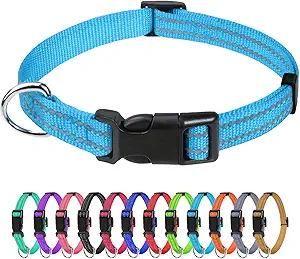
Why it’s #1: Perfect balance of lightweight (0.8 oz), adjustability (8″-14″), and safety (breakaway buckle). This is the collar I recommend for most puppies.
Best for: Most puppies 8 weeks to 6 months; first collar for new puppy owners.
Pros:
- Breakaway buckle (safest option for crated puppies)
- 6 adjustment holes (8″ to 14″ range)
- Soft nylon (comfortable, durable)
- Durable stitching
- 0.6″ width (perfect for small/medium puppies)
Cons:
- Slightly more expensive than basic collars
- Breakaway can pop open during strong pulls on walks
Dr. Jackson’s take: *”This is the collar I recommend for 90% of my puppy patients. The breakaway buckle is a lifesaver for crated puppies or multi-puppy households. Yes, it might pop open on a walk — that’s a feature, not a bug. It means your puppy won’t strangle if the collar snags on something.”*
🔗 Read our full in-depth review: TagME Dog Collar for Small Dogs Review →
2. TENICER Summer Dog Collar – Lightest Option for Tiny Puppies
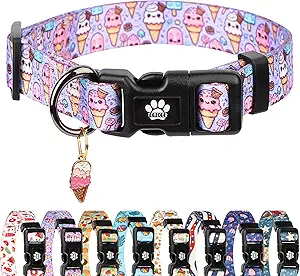
Why it’s #2: Ultra-lightweight at just 0.6 oz — barely noticeable on a 2-pound Teacup Yorkie. This is the collar for the tiniest puppies.
Best for: Toy breeds (Chihuahua, Yorkie, Maltese, Pomeranian), tiny puppies under 5 lbs.
Pros:
- Extremely lightweight (0.6 oz — lightest in this guide)
- Soft breathable material (great for hot weather)
- 7″ to 12″ adjustability
- Very affordable ($8-12)
- 0.5″ width (perfect for toy breeds)
Cons:
- No breakaway buckle
- Shorter adjustability range (only 5 inches)
- Less durable for aggressive chewers
Dr. Jackson’s take: “For a puppy that weighs less than a can of soup, weight is everything. The TENICER is so light your puppy won’t even know it’s there. Just don’t leave it on in a crate — no breakaway means strangulation risk. This is a supervised-walks-only collar for the tiniest puppies.”
🔗 Read our full in-depth review: TENICER Summer Dog Collar Review →
3. Blaoicni Puppy Collars for Litter – Best Budget Multi-Pack
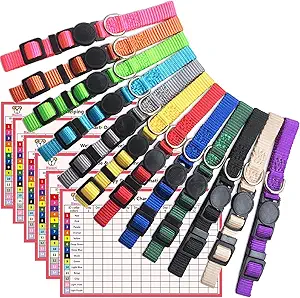
Why it’s #3: Four collars for under $15 — perfect for litters, foster homes, or owners who want backup collars for chewing emergencies.
Best for: Litters of puppies, foster homes, owners who want collar colors to tell puppies apart.
Pros:
- Very affordable ($10-15 for 4 collars)
- Soft polyester (gentle on skin)
- Lightweight (0.7 oz)
- 8″ to 12″ adjustability
- 0.5″ width
- 4 colors per pack
Cons:
- No breakaway buckle
- Cheaper hardware (may break faster)
- Polyester frays faster than nylon
Dr. Jackson’s take: *”If you’re fostering a litter of six, buying individual $12 collars adds up fast. The Blaoicni multi-pack gives you a functional collar for every puppy. Are they premium? No. But for a 4-week foster placement, they’re perfect. Just check for fraying daily — these won’t last as long as the TagME.”*
🔗 Read our full in-depth review: Blaoicni Puppy Collars for Litter Review →
4. TenCloud Pet Collar Set – Best Quality Multi-Pack
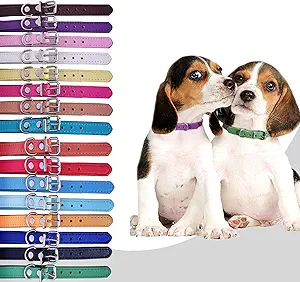
Why it’s #4: Three collars with better quality than Blaoicni, still affordable. The Goldilocks of multi-packs.
Best for: Multi-puppy households (2-3 puppies), owners who want multiple color options, higher quality than budget packs.
Pros:
- 3 collars per pack
- Soft nylon (better durability than Blaoicni’s polyester)
- 0.9 oz (slightly heavier but still fine)
- 8″ to 13″ adjustability
- 0.6″ width
- Good hardware quality
Cons:
- No breakaway buckle
- Slightly heavier than TENICER
- More expensive than Blaoicni
Dr. Jackson’s take: *”The TenCloud set is the Goldilocks of multi-packs — not as cheap as Blaoicni, not as premium as TagME. For two puppies in the same house, this is a solid choice. The nylon is softer than the Blaoicni’s polyester, and the hardware will last longer. If you can spend the extra $5, get this over Blaoicni.”*
🔗 Read our full in-depth review: TenCloud Pet Collar Set Review →
5. TagME Breakaway (Safety Focus) – Safest Option for Crated Puppies
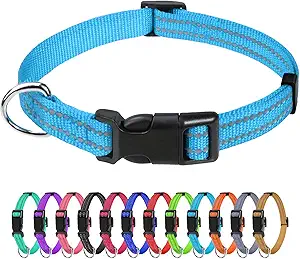
Why it’s #5: Same as the #1 pick but with emphasis on breakaway safety for crated puppies. I’m featuring it separately because the safety implications are that important.
Best for: Puppies who spend time in crates, multi-puppy households with rough play, owners who prioritize safety over durability.
Pros:
- Breakaway buckle prevents strangulation (life-saving)
- Same great features as TagME: 0.8 oz, 8″-14″ adjustability, soft nylon
- 6 adjustment holes
- 0.6″ width
Cons:
- Breakaway can pop open during enthusiastic walks
- Same price as standard TagME
Dr. Jackson’s take: “I’m featuring the TagME again because the breakaway feature is that important. If your puppy is ever in a crate unsupervised, this is the only collar I recommend. The risk of collar strangulation in crates is low but real — and completely preventable with a $12 collar. Buy this for crate safety. Buy a separate standard buckle collar for walks if you’re worried about breakaway popping open.”
🔗 Read our full in-depth review: TagME Breakaway Collar Review →
Comparison Table – All 5 Collars Side by Side
| Feature | TagME | TENICER | Blaoicni | TenCloud | TagME Breakaway |
|---|---|---|---|---|---|
| Collar Type | Nylon flat | Soft nylon | Soft polyester | Soft nylon | Nylon breakaway |
| Weight | 0.8 oz | 0.6 oz | 0.7 oz | 0.9 oz | 0.8 oz |
| Adjustability | 8″ – 14″ | 7″ – 12″ | 8″ – 12″ | 8″ – 13″ | 8″ – 14″ |
| Breakaway Buckle | Yes | No | No | No | Yes |
| Width | 0.6″ | 0.5″ | 0.5″ | 0.6″ | 0.6″ |
| Multi-Pack | No | No | Yes (4) | Yes (3) | No |
| Material Quality | High | Medium | Low-Medium | Medium-High | High |
| Price Range | $$ | $ | $ | $$ | $$ |
| Best For | Overall | Tiny puppies | Budget multi-pack | Quality multi-pack | Crated puppies |
How to Safely Train Your Puppy to Wear a Collar (Step-by-Step)
This is the most important section of this guide. Puppies aren’t born understanding collars. You must teach them that a collar is safe and neutral.
Step 1: Let the Puppy Sniff the Collar First
Place the collar on the floor. Let your puppy investigate it at their own pace.
- Reward with treats for sniffing or touching the collar
- Do NOT force the collar onto your puppy
- Repeat for 5-10 minutes, 2-3 times a day, for 1-2 days
Goal: Collar = treats, not fear.
Step 2: Wrap the Collar Loosely Around the Neck (No Buckle)
Gently lay the open collar around your puppy’s neck while feeding high-value treats (chicken, cheese).
- Don’t buckle it yet — just let it rest there
- Start with 2-3 seconds, then remove
- Repeat 10-15 times over 1-2 days
Goal: Puppy learns that something around the neck is normal.
Step 3: Buckle the Collar for 30 Seconds
Buckle the collar at the loosest setting. You should be able to fit 2-3 fingers easily (1 finger for toy breeds).
- Immediately feed treats continuously for 30 seconds
- Remove the collar
- Repeat 5-6 times on day 1
Goal: Short, sweet, heavily rewarded sessions.
Step 4: Gradually Increase Wearing Time
Use this schedule:
| Day | Duration | Frequency |
|---|---|---|
| Day 2 | 2 minutes | 5 times |
| Day 3 | 5 minutes | 4 times |
| Day 4 | 10 minutes | 3 times |
| Day 5 | 30 minutes | 2 times |
| Day 6 | 1 hour | then remove for 1 hour |
| Day 7+ | Several hours | throughout the day |
Goal: Your puppy should wear the collar comfortably for hours by day 7.
Step 5: Add a Lightweight Leash (Drag Training)
Attach a very lightweight leash (4-6 ft, thin nylon) to the collar.
- Let your puppy drag it around the house (supervised only)
- Do NOT pull or create tension
- The goal: Puppy learns that the leash has no tension unless they create it
Critical: Never leave a dragging leash on a crated or unsupervised puppy — strangulation risk.
Step 6: Never Use the Collar for Punishment
At this age, “training” means positive association only.
- No leash pops
- No scruffing
- No collar corrections of any kind
If your puppy resists, go back a step and use more treats. Rushing creates fear.
Dr. Jackson’s Puppy Safety Rules
- Check collar fit every 2 weeks — puppies grow fast
- Remove collar overnight and in crates (unless using breakaway)
- No collars on puppies under 8 weeks old (use a harness if needed)
- Inspect for chewing damage daily (puppies will chew each other’s collars)
- Transition to a lightweight adult collar around 6 months or 25 lbs
For detailed fitting instructions, see our proper collar fit guide →
What Size Training Collar Does My Puppy Need? (Growth Chart)
How to measure: Wrap a soft tape measure around the middle of your puppy’s neck (not the throat). Pull snug but not tight. Add 2 inches for growth.
Puppy growth chart by breed size:
| Puppy Breed Size | Typical Neck at 8 weeks | Typical Neck at 6 months | Recommended Collar Size |
|---|---|---|---|
| Toy (Chihuahua, Yorkie, Maltese) | 6″ – 8″ | 8″ – 10″ | 8″ – 12″ |
| Small (Pug, Frenchie, Shih Tzu) | 7″ – 9″ | 10″ – 12″ | 8″ – 14″ |
| Medium (Beagle, Corgi, Cavalier) | 8″ – 10″ | 12″ – 16″ | 10″ – 16″ |
| Large (Labrador, Shepherd, Golden) | 9″ – 11″ | 14″ – 18″ | 12″ – 18″ |
| Giant (Great Dane, Mastiff, Saint Bernard) | 10″ – 12″ | 18″ – 22″ | 14″ – 22″ |
When to move to a larger collar:
- You can fit more than 3 fingers under the collar
- The collar slides over your puppy’s head when pulled gently
- Your puppy is scratching at the collar constantly (too tight or too loose)
- You’re on the last adjustment hole (no room to grow)
Pro tip: Your puppy will likely outgrow 2-3 collars before reaching adult size. Don’t buy expensive collars for the rapid-growth phase. Save the premium collar for when your dog is fully grown.
For more detail, read our complete dog collar size guide →
FAQs About Best Training Collar for Puppies
When should I put a collar on my puppy?
You can start introducing a collar at 8 weeks old (when most puppies go to their new homes). Follow the step-by-step habituation guide above. Never leave a collar on a puppy under 8 weeks old — use a harness for any necessary restraint.
What type of collar is safest for a puppy?
A lightweight nylon collar with a breakaway buckle is safest for unsupervised puppies (especially in crates). For walks, a standard buckle or quick-release clasp is fine. Avoid chain collars, prong collars, and heavy leather collars until your puppy is fully grown.
Can I use a shock collar on my puppy?
Absolutely not. Never use an e-collar, shock collar, or bark collar on a puppy under 6 months old. Puppies lack the impulse control and understanding to associate the stimulation with behavior. You risk creating lifelong fear and anxiety. Stick to positive reinforcement training only.
How tight should a puppy collar be?
You should be able to fit 2 fingers between the collar and your puppy’s neck for medium/large breeds. For toy breeds under 10 lbs, use 1 finger. If you can fit your whole hand, it’s too loose. If you can’t fit any fingers, it’s too tight.
How often should I check my puppy’s collar fit?
Check every 2 weeks. Puppies grow incredibly fast — some large breeds gain 2-3 lbs per week. A collar that fits today may be too tight in 10 days. Mark your calendar.
Should I remove my puppy’s collar at night?
Yes — unless you’re using a breakaway collar. Strangulation risk is real, especially for crated puppies. Remove the collar at night and during any unsupervised crate time. Put it back on during the day when you’re supervising.
What’s the best collar for a teething puppy who chews?
Soft nylon or polyester collars (like TagME or TENICER) are best. Avoid leather — puppies love chewing leather, and swallowed leather can cause intestinal blockage. Also avoid collars with metal hardware that can damage teeth. Expect to replace your puppy’s first collar at least once due to chewing damage.
When should I switch from a puppy collar to an adult collar?
Switch when your puppy reaches 6 months of age OR 75% of their expected adult weight. For most medium and large breeds, that’s around 6 months. For giant breeds, that may be 8-10 months. For toy breeds, that may be 5 months. Your puppy will likely outgrow 2-3 collars before adulthood.
⚠️ Vet Warning: Do NOT Use a Standard Collar If Your Puppy Has:
- A tracheal anomaly (collapsing trachea) — common in Yorkies, Pomeranians, Shih Tzus, and Toy Poodles. Even a lightweight collar can trigger coughing and airway obstruction. Use a harness exclusively.
- A known neck or spine injury — from birth defects or trauma. Your veterinarian will advise on harness vs. collar.
- Brachycephalic airway syndrome (Bulldog, Pug, Boston Terrier, Boxer puppies) — any neck pressure compromises already-compromised breathing. Harness only, always.
- Severe separation anxiety — a collar won’t cause harm directly, but crate safety is critical. Use a breakaway collar or remove collar entirely when crated.
For all puppies, remove the collar during crate time unless you are using a breakaway collar designed to snap open under pressure. Strangulation is rare but catastrophic — and completely preventable with a $12 collar.
Conclusion – Which Training Collar Should You Buy for Your Puppy?
There’s no single “best” training collar for every puppy. The right choice depends on your puppy’s size, whether they’re crated, and your budget.
Here’s my quick recommendation guide:
| If your puppy… | Buy this… |
|---|---|
| Is your first puppy (you want the safest option) | TagME Breakaway – Breakaway buckle prevents strangulation in crates |
| Is a toy breed under 5 lbs (Chihuahua, Yorkie, Maltese) | TENICER – Ultra-lightweight at 0.6 oz, barely noticeable |
| Is one of a litter (foster or breeder, 4+ puppies) | Blaoicni – 4 collars for under $15, good enough for short-term use |
| Is one of two puppies (you want better quality) | TenCloud – 3 collars, better nylon, better hardware |
| Will be crated during the day while you’re at work | TagME Breakaway – Non-negotiable for crate safety |
| Is a large breed puppy (Lab, Shepherd) who won’t chew | TagME – Best overall, breakaway for crate, standard for walks |
“A puppy’s first collar isn’t for correction — it’s for habituation. They need to learn that a collar on their neck is normal, safe, and leads to fun walks. Take it slow. Use treats. And for the love of all that is holy, remove the collar before crating unless it has a breakaway buckle.” — Dr. Allona Jackson, DVM
Ready to learn more?
Explore our complete dog collar ecosystem:
- Pillar guide: Best Dog Collar (2026): The Ultimate Buying Guide for Every Dog →
- Related articles:
- Best Shock Collar for Large Dogs →
- Best Bark Collar for Small Dogs →
- Best Leather Dog Collar →
- Best Nylon Dog Collar →
- Best Reflective Dog Collar →
- Best Personalized Dog Collar →
Safety & educational guides:
- Dog Collar Safety Guide →
- How to Measure Dog Collar Size →
- How to Properly Fit a Dog Collar →
Disclaimer
The information provided in this article is for general informational and educational purposes only and does not constitute professional veterinary advice, diagnosis, or treatment. Always seek the advice of your veterinarian or a qualified veterinary behaviorist with any questions you may have regarding your pet’s medical condition or training needs. Never disregard professional veterinary advice because of something you have read in this article. Product recommendations are based on independent research and affiliate partnerships. AvailPet.com and Dr. Allona Jackson, DVM are not responsible for any injury, loss, or damage resulting from the use or misuse of any product mentioned in this guide.
Sources
- American Veterinary Medical Association (AVMA). “Puppy Development and Collar Safety.”
- American Kennel Club (AKC). “Puppy Training: Collar Habituation and Leash Introduction.”
- American College of Veterinary Behaviorists (ACVB). “Positive Reinforcement Training for Puppies.”
This guide was reviewed for medical accuracy by Dr. Allona Jackson, DVM. Last updated: May 2026.