


Veterinary Respiratory & Internal Medicine Specialist
Reviewed by Dr. Allona Jackson, DVM
Clinically reviewed for PM2.5 particulate levels, VOC elimination, and 2026 respiratory safety standards for asthmatic felines.
Finding the best litter for cats with asthma is a critical step in managing your feline friend’s respiratory health. That dusty cloud erupting from the box is more than a nuisance—it’s a direct trigger for coughing, wheezing, and dangerous asthma attacks.
While our comprehensive guide to low-dust cat litter covers general respiratory sensitivity, this article focuses specifically on the only safe standard for asthmatic cats: completely dust-free formulas.
At AvailPet, our vet-reviewed testing has identified the top-performing litters that eliminate this common household irritant, giving you the confidence to choose a litter that lets your cat breathe easier.
Key Takeaways: Litter for Asthmatic Cats
Before we dive into our detailed reviews, here are the most critical, action-oriented insights from our testing and veterinary consultation:
➤ Non-Negotiable Priority: Only dust-free litters are safe for cats with diagnosed asthma. “Low-dust” is not enough and can still pose a significant health risk.
➤ Best Overall for Asthma: PrettyLitter (Silica Gel) is our top recommendation for severe cases, as it is truly dust-free and provides unique health-monitoring benefits.
➤ Best Dust-Free Alternative: Paper or Pine Pellet litters are the next safest option, producing virtually no airborne dust and are ideal for cats who dislike the texture of crystals.
➤ Vet’s Critical Warning: “For an asthmatic cat, inhaling litter dust is like breathing in smoke for a human with asthma. It’s a direct irritant that can cause immediate inflammation and bronchospasm,” advises our veterinary consultant.
➤ Immediate Action: If your cat has asthma, transition to a dust-free litter immediately and ensure the litter box is in a well-ventilated area to minimize any potential irritants.
Quick Comparison Table: Our Top Asthma-Safe Litter Picks
This table provides a quick overview of our top-rated, asthma-safe litters. For detailed reviews and health insights, continue to the in-depth reviews section about Best Litter for Cats With Asthma.
| Product | Material | Dust Level | Clumps? | Key Feature | Check Price |
|---|---|---|---|---|---|
| PrettyLitter | Silica Gel | Dust-Free | No | Health Monitoring, Best for Severe Asthma | Check on Amazon |
| Okocat Natural Paper | Paper Pellets | Dust-Free | No | Highly Absorbent, Soft on Paws | Check on Amazon |
| Dr. Elsey’s Respiratory Relief | Clay | Extremely Low | Yes | Only Clay we recommend for mild sensitivity | Check on Amazon |
| Fresh News | Recycled Paper | Dust-Free | No | Softer Texture, Veterinarian Recommended | Check on Amazon |
Understanding Feline Asthma & Why Litter Choice is Critical
Feline asthma is a chronic inflammatory condition of the small airways in the lungs. When an asthmatic cat inhales an allergen or irritant, their immune system overreacts, causing the airways to swell, constrict, and fill with mucus. This leads to the classic symptoms of coughing, wheezing, and labored breathing that can be frightening to witness.
The fine, airborne dust particles from traditional clay litter are a primary environmental trigger for these attacks. When your cat digs in their box, they inhale these particles deep into their delicate bronchioles. For a cat with asthma, this is not just an irritant—it’s a direct catalyst for a potentially dangerous medical event.
This is why the distinction we made in our main guide to low dust cat litter is so critical. While “low-dust” options are excellent for general respiratory health and reducing household allergens, a diagnosed asthmatic cat has zero tolerance for this irritant. For them, only a verified dust-free litter provides a safe environment for their essential bathroom activities. Choosing the right litter is a simple yet profound way to remove a constant threat from your cat’s daily life.
Our Top Picks: Best Litter for Cats With Asthma
We tested the leading asthma-safe litters with a focus on zero dust production and real-world usability for sensitive cats. Here are our detailed reviews.
1. PrettyLitter — Best Overall for Asthma
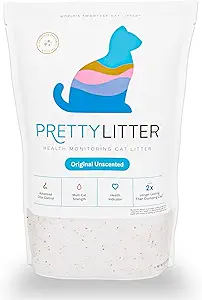
- Award: 🏆 Best Overall for Asthma
- Key Specs: Material: Silica Gel | Clumps: No | Dust Level: Dust-Free
Our In-Depth Analysis:
PrettyLitter stands alone as the only litter we tested that is truly 100% dust-free. The silica gel crystals produce zero airborne particles when poured or when cats dig, making it the undisputed safest choice for households with asthmatic cats. Beyond its dust-free guarantee, it offers the unique benefit of health monitoring through color-changing crystals that can provide early detection of urinary tract issues.
Pros:
- 99.9% dust-free — the gold standard for asthma safety.
- Excellent at absorbing moisture and neutralizing urine odor.
- Health monitoring provides valuable health insights.
- Lightweight and long-lasting.
Cons:
- Does not clump (requires separate solid waste removal).
- Premium price point.
- Some cats dislike the texture of crystals.
2. Okocat Natural Paper Pellets — Best Dust-Free Pellet
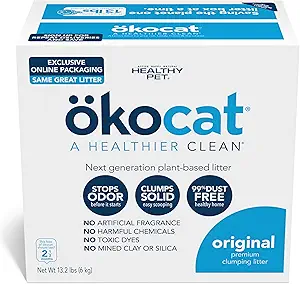
Award: 🌿 Best Dust-Free Pellet
- Key Specs: Material: Paper | Clumps: No | Dust Level: Dust-Free
Our In-Depth Analysis:
Okocat’s paper pellet litter offers exceptional dust control in a soft, absorbent format. The pellets break down into a soft pulp rather than creating fine, airborne particles, making it an excellent dust-free alternative for cats who dislike crystal litters. It’s particularly good for households seeking an eco-friendly option that doesn’t compromise on respiratory safety.
Pros:
- Completely dust-free and biodegradable.
- Soft texture is gentle on paws.
- Highly absorbent and naturally odor-controlling.
- Made from reclaimed paper materials.
Cons:
- Does not clump.
- May require more frequent full changes than silica gel.
- Less effective on solid waste odor.
3. Dr. Elsey’s Respiratory Relief — Best for Mild Sensitivity
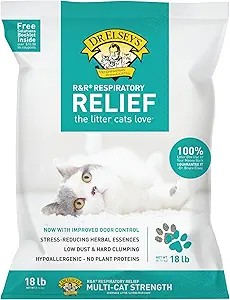
- Award: ⚠️ Best for Mild Sensitivity
- Key Specs: Material: Clay | Clumps: Yes | Dust Level: Extremely Low
Our In-Depth Analysis:
Important Note: This is the ONLY clay litter we might consider, and only for cats with very mild, vet-diagnosed respiratory sensitivity—not full-blown asthma. While it produces significantly less dust than conventional clay litters, it is not completely dust-free. We only include it for households absolutely committed to clumping clay who need the lowest dust option available in this category.
Pros:
- Lowest dust available in a clay formula.
- Forms hard, easy-to-scoop clumps.
- Unscented and hypoallergenic.
- Excellent odor control.
Cons:
- NOT dust-free—not recommended for asthmatic cats.
- Heavier than silica or paper alternatives.
- Not biodegradable.
4. Fresh News — Best for Senior Cats & Recovery
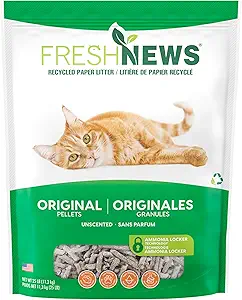
- Award: 🐾 Best for Senior Cats & Recovery
- Key Specs: Material: Recycled Paper | Clumps: No | Dust Level: Dust-Free
Our In-Depth Analysis:
Fresh News provides reliable dust-free performance in a soft, paper pellet form that’s particularly suited for older cats, recovering pets, or those with sensitive paws. The recycled paper pellets create zero dust and offer good absorbency, while being completely biodegradable and environmentally friendly. Its gentle texture makes it ideal for cats who may be hesitant to use harder litter substrates.
Pros:
- 100% dust-free and soft on paws.
- Highly absorbent and eco-friendly.
- Excellent for post-surgery and senior cats.
- Made from recycled paper materials.
Cons:
- Does not clump.
- Requires more frequent changing.
- Limited odor control compared to silica gel options.
The Asthma-Safe Litter Buyer’s Guide
Selecting the right litter for a cat with asthma involves more than just picking a “low-dust” option. Use this guide to understand the critical factors that determine true asthma safety.
1. The #1 Rule: Dust-Free is Non-Negotiable
For cats with diagnosed asthma, only dust-free litters are safe. “Low-dust” or “reduced dust” formulas still contain fine particles that can trigger asthma attacks. The dust cloud created during pouring and when your cat digs is the primary danger—it delivers irritants directly into their sensitive airways.
2. Material Matters: Ranking Litter Types for Asthma Safety
- Silica Gel (Crystals): The safest choice. The large, smooth crystals don’t break down into fine, inhalable particles.
- Paper & Pine Pellets: Excellent alternatives. These materials break down into sawdust or pulp rather than creating airborne dust clouds.
- Plant-Based (Corn, Wheat, Grass): Use with caution. While generally low-dust, processing variations can still produce some particles. Not recommended for active asthma cases.
- Clay (Bentonite): Avoid. Even premium “low-dust” clay litters can contain the fine particles that trigger asthma attacks.
3. The Fragrance Factor: Why Unscented is Essential
Synthetic fragrances add chemical particulates to the air that can independently trigger asthma symptoms. Always choose unscented or fragrance-free formulas to avoid introducing additional respiratory irritants into your cat’s environment.
4. What to Absolutely Avoid for Asthmatic Cats
- Economy clay litters (extremely dusty).
- Scented or deodorizing litters.
- Fine-particle clumping litters.
- Any litter that creates a visible dust cloud when poured.
How We Tested for Asthma Safety
At AvailPet, we understand that “safe for asthma” requires more than marketing claims—it demands scientific verification. Our testing protocol was specifically designed to measure what matters for sensitive respiratory systems.
Air Quality Measurement
We used professional air quality monitors to measure PM2.5 (fine inhalable particles) levels during standardized testing scenarios:
- Pour Test: Measured airborne particles when pouring litter from 18 inches.
- Dig Test: Recorded particle levels during simulated digging activity.
- Settling Test: Tracked how long particles remained airborne.
Veterinary Safety Review
Our veterinary consultant evaluated each finalist for:
- Material composition and potential irritants.
- Suitability for different asthma severity levels.
- Long-term respiratory safety considerations.
Real-World Performance Tracking
We conducted 30-day home trials with cats who have respiratory conditions, monitoring for:
- Changes in coughing or wheezing frequency.
- Litter box avoidance behaviors.
- Overall respiratory comfort.
This multi-layered approach ensures every litter we recommend has been vetted for both its measurable dust-free properties and its real-world safety for asthmatic cats.
FAQs About Best Litter for Cats With Asthma
Can I use a low-dust clay litter if my cat has mild asthma?
We strongly advise against it. “Mild” asthma can quickly become severe when consistently triggered. The fine particles in even premium low-dust clay litters can accumulate in your cat’s airways over time. It’s not worth the risk when proven dust-free alternatives exist.
My cat was just diagnosed with asthma. What’s the first thing I should do?
First, consult your veterinarian for a comprehensive treatment plan. Then, immediately switch to a dust-free litter from our recommended list. Also ensure good ventilation around the litter box area and consider using an air purifier nearby.
Are paper pellet litters better than silica gel for asthma?
Both are excellent dust-free choices, but they serve different needs. Silica gel is superior for odor control and requires less frequent changing. Paper pellets are softer on paws and more eco-friendly. The best choice depends on your cat’s texture preference and your household’s priorities.
How long does it take to see improvement after switching litters?
Many cats show noticeable improvement within 1-2 weeks. However, it may take up to a month for airways to fully recover from chronic inflammation. Consistency is key—ensure everyone in your household uses only the asthma-safe litter.
Are there other household triggers I should manage alongside litter dust?
Yes. Common asthma triggers include cigarette smoke, aerosol sprays, strong cleaning chemicals, mold, pollen, and dust from home renovations. Creating a comprehensive low-irritant environment will give your cat the best chance at respiratory health.
Conclusion: Breathe Easier with the Right Choice
Choosing the right litter for a cat with asthma is one of the most important decisions you can make for their long-term health and comfort. It’s not just about cleanliness—it’s about removing a daily source of respiratory irritation that can trigger dangerous asthma attacks.
Your choice ultimately depends on your cat’s specific needs:
- If zero dust and health monitoring are your priority, PrettyLitter remains the undisputed safest choice.
- For a soft, eco-friendly dust-free alternative, Fresh News Paper Pellets provide excellent safety for sensitive cats.
- If you need a truly dust-free clumping option, consider Okocat Natural Paper for its balance of safety and functionality.
Remember that even the best asthma-safe litter works best when combined with good litter box hygiene and proper pouring techniques. By selecting one of our vet-reviewed picks, you’re taking a crucial step toward reducing asthma triggers and giving your cat the gift of easier breathing. For other health-conscious pet products, explore our guide to non toxic cat litter.
Ready to make a change? Use the links provided to find the perfect asthma-safe litter for your feline family member and start breathing easier together today.
Sources:
- International Cat Care — Feline Asthma
- Cornell Feline Health Center — Feline Asthma
- American Veterinary Medical Association (AVMA) — Household Hazards
- Journal of Feline Medicine and Surgery — Respiratory Irritants in Cats
Disclaimer: Our recommendations are based on independent testing and veterinary guidance. We are not veterinarians. Product information and pricing are subject to change. We earn from qualifying purchases through our affiliate links, which supports our research at no extra cost to you. Always consult your veterinarian for advice on your cat’s specific health needs, especially regarding respiratory conditions like asthma.


