Vet Reviewed By: Dr. Allona Jackson, DVM
Dr. Jackson is a practicing veterinarian with over 12 years of experience in small animal care. She reviews all content on AvailPet.com for medical accuracy and pet safety.
Nylon dog collars are the workhorses of the pet world. They’re affordable, durable, quick-drying, and available in every color imaginable. But not all nylon is created equal.
Walk into any pet store or scroll through Amazon, and you’ll find nylon collars from 5to50. The cheap ones fray within months, fade in the sun, and fail at the worst possible moment — like when your 90-pound Labrador spots a squirrel.
Here’s the truth: Quality nylon — ballistic or tactical grade — is extremely strong, waterproof, and practically maintenance-free. It’s the best choice for active dogs who swim, hike, and live outdoor lifestyles.
I’m Dr. Allona Jackson, DVM. In this guide, I’ll walk you through the 3 best nylon dog collars for 2026, explain what makes ballistic and tactical nylon different, and help you choose the right one for your active dog.
Disclosure: This article contains affiliate links. If you purchase through these links, AvailPet.com earns a small commission at no extra cost to you.
The 3 Best Nylon Dog Collars at a Glance
*Short on time? Here are my top 3 vet-reviewed picks for nylon dog collars. Each has been evaluated for durability, hardware quality, and comfort for active dogs.*
| Product | Best For | Collar Type | Width | Weight | Hardware | Price Range |
|---|---|---|---|---|---|---|
| Ballistic Dog Collar (Tuff Pupper) | Heavy-duty with control handle | Ballistic nylon | 1.5″ | Heavy | Metal quick-release | 20−30 |
| Tactical Dog Collar (DAGANXI) | MOLLE compatibility / hiking | Tactical nylon | 1.5″ | Medium | Heavy-duty buckle | 15−25 |
| Adjustable Dog Collar (Wolfgang) | Everyday heavy-duty | Heavy-duty nylon | 1.5″ | Medium | Metal quick-release | 15−25 |
Why Choose Nylon Dog Collars? (Vet’s Perspective)
Let me be clear: Nylon isn’t the most stylish or the longest-lasting material — but for active, outdoor dogs, it’s often the most practical.
Here’s why nylon dominates the collar market (approximately 38% market share):
- Affordability: Nylon costs less than leather. A quality nylon collar is 15−30versus25-50+ for genuine leather.
- Waterproof: Nylon dries quickly and won’t rot like leather. Your dog can swim, play in mud, or walk in rain — rinse the collar and it’s fine.
- Low maintenance: No conditioning, no special care. Wash with soap and water, air dry, done.
- Durability: Quality nylon (ballistic or tactical grade) is extremely strong — 1680D ballistic nylon was originally developed for military flak jackets.
- Variety: Unlimited colors, patterns, and styles. You can find a nylon collar to match any personality.
“For the active dog who swims, hikes, and lives an outdoor lifestyle, nylon is often the best choice. It’s affordable, waterproof, and requires zero maintenance. Just avoid the cheapest options — they fray.” — Dr. Allona Jackson, DVM
But nylon has downsides:
- FraYS over time (replace every 1-2 years)
- Can cause “collar burn” (friction rash) in active dogs if too tight
- Doesn’t develop character like leather
- Cheap nylon (under 500 denier) fails quickly
If you want a collar that lasts 5+ years and develops a patina, choose leather instead → But for swimming, hiking, and muddy adventures, nylon wins.
Types of Nylon: What to Look For
Not all nylon is created equal. Here’s what the terms actually mean.
Ballistic Nylon (Strongest)
Originally developed for military flak jackets — 1680 denier or higher. Extremely tear-resistant and durable.
Best for: Large, strong dogs, working dogs, heavy pullers, dogs who drag their owners through brush.
The Tuff Pupper Ballistic Dog Collar uses this material.
Tactical Nylon (Very Strong)
1000-1500 denier nylon with reinforced stitching. Often includes MOLLE webbing for attaching gear.
Best for: Hiking dogs, working dogs (search and rescue, service dogs), owners who attach accessories (LED lights, ID pouches, poop bag holders).
The DAGANXI Tactical Dog Collar uses this material.
Standard Heavy-Duty Nylon (Good for Most Dogs)
500-1000 denier nylon — strong enough for most dogs. Good balance of durability and weight.
Best for: Everyday use, medium and large dogs, owners who don’t need extreme durability.
The Wolfgang Adjustable Dog Collar uses this material.
Cheap Nylon (Avoid)
Under 500 denier, thin webbing, single stitching. Frays quickly, buckles break, colors fade.
If a nylon collar is under $8, it’s probably cheap nylon. Avoid it.
My recommendation: For large or active dogs, choose ballistic or tactical nylon (1000+ denier). For small or calm dogs, standard heavy-duty nylon (500+ denier) is fine.
How to Choose a Nylon Dog Collar (Buying Guide)
Here are the five features that matter most for nylon collars.
Denier (Fabric Thickness)
Higher denier = stronger, more durable, heavier.
| Denier | Strength Level | Best For |
|---|---|---|
| 1680D (ballistic) | Strongest | Large/giant breeds, working dogs |
| 1000D-1500D | Very strong | Medium/large active dogs |
| 500D-900D | Standard | Small/medium or calm dogs |
| Under 500D | Weak — avoid | Nothing |
Width (Match to Dog Size)
Wider collars distribute pressure over more surface area.
| Dog Size | Recommended Width |
|---|---|
| Small (under 20 lbs) | 0.5″ – 0.75″ |
| Medium (20-50 lbs) | 0.75″ – 1.0″ |
| Large (50-90 lbs) | 1.0″ – 1.5″ |
| Giant (90+ lbs) | 1.5″ – 2.0″ |
All 3 collars in this guide are 1.5″ wide — best for medium/large dogs (30-100+ lbs). For smaller dogs, consider a narrower nylon collar.
Hardware (Quick-Release vs. Buckle)
- Quick-release buckle: Easy on/off, good for everyday use. Tuff Pupper and Wolfgang use this.
- Heavy-duty buckle: More secure, better for strong pullers or working dogs. DAGANXI uses this.
- Metal vs. plastic: Metal lasts longer; good quality plastic is fine for most dogs.
Handle (Built-in vs. No Handle)
A built-in handle gives you instant control in traffic, around other dogs, or during emergencies.
- Tuff Pupper has a padded handle
- DAGANXI and Wolfgang do not have handles
Padded vs. Unpadded
Padded collars are more comfortable for dogs who pull. Unpadded collars are lighter and dry faster.
None of these 3 have padding — they rely on wide width (1.5″) for comfort.
3 Best Nylon Dog Collars – Full Reviews
1. Ballistic Dog Collar (Tuff Pupper) – Best with Control Handle
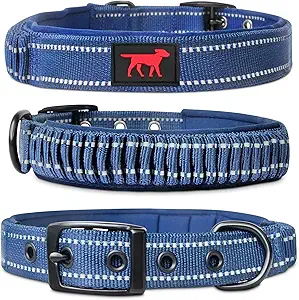
Why it’s #1: The built-in control handle sets this collar apart. When you need instant control — traffic, another dog, an emergency — grab the handle instead of the leash. The ballistic nylon (1680D) is the strongest material in this guide, originally developed for military flak jackets.
Best for: Large and giant breeds (Labrador, German Shepherd, Rottweiler, Pit Bull, Great Dane, Boxer), owners who want emergency control, dogs who need occasional restraint.
Pros:
- 1680D ballistic nylon (military-grade)
- Built-in padded handle for instant control
- Metal quick-release buckle
- Reflective stitching for low-light visibility
- 1.5″ width (good for large dogs)
- Double stitching throughout
Cons:
- Heavy (the handle adds weight)
- Handle can snag on things (brush, crate wires)
- More expensive than basic nylon ($20-30)
Dr. Jackson’s take: *”The handle on this collar is a game-changer for large, strong dogs. When your 90-pound Labrador spots a squirrel, grabbing the handle gives you control that a leash alone can’t match. The ballistic nylon is extremely tough — this collar will outlast your dog’s pulling phase. For city dogs who encounter traffic or other dogs, that handle is peace of mind.”*
🔗 Read our full in-depth review: Tuff Pupper Ballistic Dog Collar Review →
2. Tactical Dog Collar (DAGANXI) – Best for Hiking & MOLLE Gear
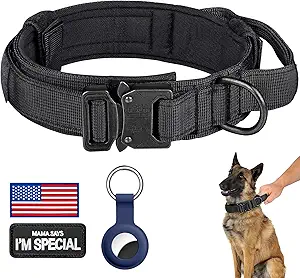
Why it’s #2: The MOLLE webbing system lets you attach patches, pouches, lights, and other gear directly to the collar. Perfect for hiking, working dogs, or owners who like customization. The heavy-duty buckle is more secure than quick-release for rugged use.
Best for: Hiking dogs, working dogs (search and rescue, service dogs), owners who want to attach gear (LED lights, ID pouches, poop bag holders, GPS trackers), medium and large breeds.
Pros:
- MOLLE webbing for attaching gear
- Heavy-duty buckle (not quick-release — more secure, no accidental openings)
- 1000D tactical nylon (very durable)
- 1.5″ width
- Reinforced stitching throughout
- Loop for hook-and-loop name patches
Cons:
- No handle (unlike Tuff Pupper)
- Buckle is slower to use than quick-release
- MOLLE webbing adds bulk (may be overkill for casual owners)
Dr. Jackson’s take: “For the hiking dog or working dog, the DAGANXI’s MOLLE system is genuinely useful. You can attach an LED light for night hikes, a small pouch for poop bags, or a reflective patch. The buckle is heavy-duty and secure — no accidental releases on the trail. If you’re not attaching gear, you don’t need MOLLE. But if you are, this is the collar.”
🔗 Read our full in-depth review: DAGANXI Tactical Dog Collar Review →
3. Adjustable Dog Collar (Wolfgang) – Best Everyday Heavy-Duty
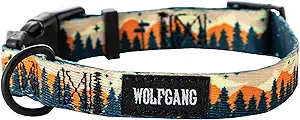
Why it’s #3: Solid heavy-duty nylon with no frills — just durable construction, good hardware, and a comfortable 1.5″ width. This is the collar for owners who want quality without extra features they’ll never use.
Best for: Medium and large dogs (Labrador, Boxer, Husky, Golden Retriever, Beagle), everyday use, owners who want a simple, reliable nylon collar.
Pros:
- Heavy-duty nylon (denier not specified but feels substantial — estimated 800-1000D)
- Metal quick-release buckle
- 1.5″ width (good for medium/large dogs)
- Double stitching
- Affordable ($15-25)
- Simple, clean design (no bulky extras)
Cons:
- No handle (unlike Tuff Pupper)
- No MOLLE webbing (unlike DAGANXI)
- Less distinctive than the other two
- No reflective stitching
Dr. Jackson’s take: “The Wolfgang is the ‘vanilla’ of this list — and that’s not an insult. Sometimes you just want a solid, reliable nylon collar without extra features you’ll never use. The Wolfgang delivers. It’s durable, comfortable, and affordable. For most medium and large dogs on daily walks, this is all you need. No handle to snag, no MOLLE to catch dirt, just a good collar.”
🔗 Read our full in-depth review: Wolfgang Heavy Duty Adjustable Dog Collar Review →
Comparison Table – All 3 Collars Side by Side
| Feature | Ballistic (Tuff Pupper) | Tactical (DAGANXI) | Adjustable (Wolfgang) |
|---|---|---|---|
| Material | 1680D Ballistic nylon | 1000D Tactical nylon | Heavy-duty nylon (~800-1000D) |
| Built-in Handle | Yes (padded) | No | No |
| MOLLE Webbing | No | Yes | No |
| Buckle Type | Metal quick-release | Heavy-duty buckle | Metal quick-release |
| Reflective Stitching | Yes | No | No |
| Width | 1.5″ | 1.5″ | 1.5″ |
| Best For | Emergency control | Hiking / gear attachment | Everyday use |
| Price Range | $$ | $$ | $$ |
How to Fit and Maintain a Nylon Dog Collar (Step-by-Step)
Nylon is low-maintenance, but proper fit and occasional cleaning extend its life.
Step 1: Measure Your Dog’s Neck
Wrap a soft tape measure around the middle of your dog’s neck (not the throat). Pull snug but not tight. Add 2 inches for comfort — nylon doesn’t stretch.
For the 1.5″ wide collars in this guide, measure carefully. Wide collars fit tighter than narrow ones of the same length.
Step 2: Check the Two-Finger Rule
You should be able to fit two fingers between the collar and your dog’s neck.
- If you can’t fit two fingers: Too tight — risk of collar burn and discomfort
- If you can fit your whole hand: Too loose — escape risk
- Two fingers snugly: Just right
Step 3: Inspect for Fraying Monthly
Nylon fraYS over time, especially at the buckle holes and edges.
Run your fingers along the entire collar. If you feel loose threads or see exposed webbing, replace the collar immediately. A frayed nylon collar can snap at the worst moment.
Step 4: Clean When Dirty
Nylon is waterproof — take advantage of it.
- Rinse mud off with a hose
- For deeper cleaning: mild soap and water, scrub with a soft brush
- For stinky collars: soak in 50/50 white vinegar and water for 30 minutes, then rinse
- Air dry only — no dryer (heat damages nylon fibers)
Step 5: Replace Every 1-2 Years
Even good nylon fraYS eventually.
- Ballistic nylon (1680D): 2-3 years
- Tactical nylon (1000D): 1-2 years
- Standard nylon (500-900D): 1 year
- Replace at first sign of significant fraying or hardware failure
Dr. Jackson’s nylon care tip: “Nylon is the least demanding collar material. No conditioning, no special care. Just rinse when dirty and replace when frayed. For active, swimming, muddy dogs, nylon is often the most practical choice. But a frayed collar is a broken collar waiting to happen — don’t wait until it snaps.”
For detailed fitting instructions, see our proper collar fit guide →
What Size Nylon Collar Does My Dog Need?
How to measure: Wrap a soft tape measure around the middle of your dog’s neck (not the throat). Add 2 inches.
Important note: All 3 collars in this guide are 1.5″ wide — best for medium and large dogs (30-100+ lbs). For smaller dogs, consider a narrower nylon collar (0.5″ to 1.0″).
Size chart for 1.5″ wide nylon collars:
| Breed Size | Example Breeds | Neck Circumference | Will 1.5″ Width Work? |
|---|---|---|---|
| Small (under 20 lbs) | Chihuahua, Yorkie, Pug, Shih Tzu | 8″ – 14″ | ❌ Too wide — will rub and cause irritation |
| Medium (20-50 lbs) | Beagle, Corgi, Frenchie, Cavalier | 12″ – 18″ | ⚠️ Possibly — depends on neck length and build |
| Large (50-90 lbs) | Labrador, Shepherd, Boxer, Golden | 16″ – 22″ | ✅ Yes — ideal |
| Giant (90+ lbs) | Great Dane, Mastiff, Saint Bernard | 20″ – 28″ | ✅ Yes — ideal |
For small or medium dogs: These 1.5″ collars may be too wide. Consider a 0.75″ or 1.0″ nylon collar instead. The width of the collar should be proportional to your dog’s neck length — wide collars on short necks cause rubbing.
For more detail, read our complete dog collar size guide →
FAQs About Best Nylon Dog Collars
Are nylon dog collars safe?
Yes, when properly fitted. Nylon is strong, waterproof, and low-maintenance. However, cheap nylon fraYS and can break — inspect monthly. Also, nylon can cause “collar burn” (friction rash) in very active dogs if the collar is too tight. Check the two-finger rule weekly for active dogs.
How long do nylon dog collars last?
A quality nylon collar (500D+ denier) lasts 1-2 years with daily use. Ballistic nylon (1680D) can last 2-3 years. Cheap nylon (under 500D) may last only 3-6 months. Replace at the first sign of fraying — don’t wait for it to break.
What’s the difference between ballistic nylon and regular nylon?
Ballistic nylon (1680D) was originally developed for military flak jackets. It’s significantly stronger and more tear-resistant than regular nylon (500-1000D). For large, strong, or active dogs (Labradors, Shepherds, Pit Bulls, Rottweilers), ballistic nylon is worth the extra cost. For calm small dogs, regular nylon is fine.
Can nylon dog collars get wet?
Yes — nylon is waterproof. Unlike leather, nylon won’t rot, crack, or stretch when wet. Rinse mud off with a hose, wash with soap and water, and air dry. This is one of nylon’s biggest advantages over leather. Just don’t machine dry — heat damages nylon fibers.
What is a tactical dog collar?
A tactical dog collar is made from heavy-duty nylon (usually 1000D-1500D) with reinforced stitching and often includes MOLLE webbing for attaching gear (patches, pouches, lights, ID holders, GPS trackers). They’re designed for working dogs, military/police dogs, hiking, and outdoor activities.
Do nylon collars cause hair loss?
Nylon can cause friction hair loss (“collar burn”) if the collar is too tight or if the dog is extremely active (constant rubbing). The 1.5″ wide collars in this guide distribute pressure better than narrow collars, reducing the risk. Check fit regularly (two-finger rule), remove the collar overnight to let the skin breathe, and watch for bald spots or redness.
How do I clean a smelly nylon dog collar?
Soak in a 50/50 mixture of white vinegar and water for 30 minutes. Rinse thoroughly. Air dry. For heavy odors, use a mild dish soap, scrub gently, rinse well, and air dry. Never machine dry — heat damages nylon fibers. For collars with metal hardware, dry thoroughly to prevent rust.
What’s the best nylon collar for a dog that pulls?
For pullers, look for a wider collar (1.5″+) to distribute pressure. The Tuff Pupper Ballistic Collar (with handle) gives you extra control — grab the handle, not the leash, when your dog lunges. However, for chronic pullers, a no-pull harness is safer than any collar (see the vet note on harnesses in our pillar guide). Collars concentrate pressure on the trachea; harnesses distribute it across the chest.
⚠️ Vet Warning: Do NOT Use a Nylon Collar If Your Dog:
- Has severe skin allergies — nylon is generally hypoallergenic, but some dogs react to the dyes, waterproof coatings, or materials. If your dog develops neck redness, itching, or hair loss, switch to leather or biothane.
- Is a chronic puller (without training) — a collar alone won’t stop pulling, and the pressure can damage the trachea (especially in small breeds and brachycephalic breeds). Use a harness for pulling, or pair the collar with training. See our harness note in the pillar guide.
- Has an untreated neck injury or tracheal collapse — consult your veterinarian before using any collar.
For most dogs, nylon is safe, affordable, and practical. But inspect monthly for fraying — a broken collar means a lost dog. And for pullers, consider a harness.
Nylon vs. Leather vs. Biothane – Quick Comparison
| Material | Durability | Waterproof | Maintenance | Best For |
|---|---|---|---|---|
| Nylon | 1-2 years | Yes | Low | Swimming, active dogs, budget |
| Genuine Leather | 4-6 years | No | High | Daily wear, style, large breeds |
| Biothane | 5+ years | Yes | Very low | Hiking, muddy dogs, easy cleaning |
Bottom line:
- Choose nylon for active, swimming dogs and budget-conscious owners
- Choose leather for style, longevity, and daily wear (if you don’t mind maintenance)
- Choose biothane for extreme durability and easy cleaning (best for hiking and muddy conditions)
👉 See our full nylon vs. leather comparison guide →
Conclusion – Which Nylon Collar Should You Buy?
There’s no single “best” nylon collar for every dog. The right choice depends on your dog’s size, activity level, and your preferences for features.
Here’s my quick recommendation guide:
| If your dog… | Buy this… |
|---|---|
| Is large/strong and needs emergency control (traffic, other dogs, squirrels) | Tuff Pupper Ballistic – Built-in handle gives you instant control when you need it most |
| Hikes or works outdoors and needs to attach gear (lights, pouches, GPS) | DAGANXI Tactical – MOLLE webbing for attaching lights, pouches, patches, and other accessories |
| Just needs a solid, reliable everyday collar (no extra features) | Wolfgang Adjustable – Simple, durable, no frills — does the job perfectly |
*”Nylon is the workhorse of the dog collar world. It’s affordable, waterproof, and requires almost no maintenance. For the active dog who swims, hikes, and lives an outdoor lifestyle, nylon is often the best choice. Just avoid the cheapest options — they fray. Invest in ballistic or tactical nylon, and you’ll get 2-3 years of reliable use. And for the love of all that is holy, check for fraying every month.”* — Dr. Allona Jackson, DVM
Ready to learn more?
Explore our complete dog collar ecosystem:
- Pillar guide: Best Dog Collar (2026): The Ultimate Buying Guide for Every Dog →
- Related articles:
- Best Shock Collar for Large Dogs →
- Best Bark Collar for Small Dogs →
- Best Training Collar for Puppies →
- Best Leather Dog Collar →
- Best Reflective Dog Collar →
- Best Personalized Dog Collar →
Safety & educational guides:
- Dog Collar Safety Guide →
- How to Measure Dog Collar Size →
- How to Properly Fit a Dog Collar →
- Dog Collar Nylon vs. Leather →
Disclaimer
The information provided in this article is for general informational and educational purposes only and does not constitute professional veterinary advice, diagnosis, or treatment. Always seek the advice of your veterinarian or a qualified veterinary behaviorist with any questions you may have regarding your pet’s medical condition or training needs. Never disregard professional veterinary advice because of something you have read in this article. Product recommendations are based on independent research and affiliate partnerships. AvailPet.com and Dr. Allona Jackson, DVM are not responsible for any injury, loss, or damage resulting from the use or misuse of any product mentioned in this guide.
Sources
- American Veterinary Medical Association (AVMA). “Pet Collar Safety and Material Selection.”
- American Kennel Club (AKC). “Nylon vs. Leather Dog Collars: Pros and Cons.”
- Pet Professional Guild. “Collar Types and Safety Considerations.”
This guide was reviewed for medical accuracy by Dr. Allona Jackson, DVM. Last updated: May 2026.