Vet Reviewed By: Dr. Allona Jackson, DVM
Dr. Jackson is a practicing veterinarian with over 12 years of experience in small animal care. She reviews all content on AvailPet.com for medical accuracy and pet safety.
Leather dog collars are the leather boots of the dog world — expensive upfront, but they last for years, age beautifully, and look better with every scratch.
But not all leather is created equal. Walk into any pet store or scroll through Amazon, and you’ll see “genuine leather,” “PU leather,” “bonded leather,” “full-grain leather” — the terminology is confusing, and cheap “leather” collars fall apart in months.
Here’s the truth: A quality leather collar is an investment. It requires a break-in period, regular conditioning, and protection from water. But in return, you get 5-10 years of durability, custom-molded comfort, and a collar that develops character over time.
I’m Dr. Allona Jackson, DVM. In this guide, I’ll walk you through the 5 best leather dog collars for 2026, explain which leather types are worth your money, and tell you which dogs should avoid leather altogether.
Disclosure: This article contains affiliate links. If you purchase through these links, AvailPet.com earns a small commission at no extra cost to you.
The 5 Best Leather Dog Collars at a Glance
*Short on time? Here are my top 5 vet-reviewed picks for leather dog collars. Each has been evaluated for leather quality, durability, hardware, and comfort for dogs of all sizes.*
| Product | Best For | Leather Type | Width | Hardware | Break-In Required | Price Range |
|---|---|---|---|---|---|---|
| Rolled Leather Dog Collar | Long-haired breeds (prevents matting) | Genuine leather | 0.5″ (rolled) | Brass | Yes (1-2 weeks) | 15−25 |
| ADITYNA Leather Dog Collar | Best overall genuine leather | Genuine leather | 1.0″ | Zinc alloy | Yes | 15−20 |
| DAIHAQIKO Genuine Leather Collar | Best padded for large breeds | Genuine leather (padded) | 1.5″ | Stainless steel | Yes | 20−30 |
| Didog Soft PU Leather Collar | Best vegan/waterproof option | PU leather (faux) | 0.8″ | Zinc alloy | No | 10−15 |
| TEEMERRYCA Leather Dog Collar | Best decorative/style | Genuine leather | 1.0″ | Brass | Yes | 15−20 |
Why Choose a Leather Dog Collar? (Vet’s Perspective)
Let me be clear: Leather isn’t for every dog or every owner. But for the right dog, a quality leather collar is superior to nylon in several ways.
Here’s why leather stands out:
- Durability: A quality leather collar lasts 5-10 years. A nylon collar lasts 1-2 years. Over a decade, you’ll buy one leather collar versus five nylon collars.
- Comfort: Leather softens and molds to your dog’s neck over time, creating a custom fit. Nylon stays the same stiffness forever.
- Hypoallergenic: Leather is naturally resistant to dust mites, pollen, and other allergens. For dogs with environmental allergies, leather is often better than nylon (which traps allergens).
- Aesthetic: Leather develops a patina — a rich, darkened sheen — with age. Nylon fades and frays.
“A quality leather collar is an investment. Yes, it costs more upfront than nylon. But you’ll buy one leather collar for every five nylon collars you would have replaced. For large, active dogs, leather often pays for itself.” — Dr. Allona Jackson, DVM
But leather has downsides:
- Requires maintenance (conditioning every 3-6 months)
- Not waterproof (water causes cracking, stretching, and rot)
- Needs a 1-2 week break-in period (stiff at first)
- More expensive upfront than nylon
If you’re a low-maintenance owner or your dog swims weekly, leather may not be for you. See our nylon collar guide instead →
Types of Leather: What’s Actually Worth Buying?
Not all leather is created equal. Here’s what the labels actually mean.
Full-Grain Leather (Best Quality)
The top layer of the hide — the strongest, most durable part. Full-grain leather develops the richest patina and lasts the longest.
Pros: Extremely durable, beautiful aging, breathable
Cons: Expensive (rare in sub-$50 collars)
Look for: “Full-grain” in the product description
Top-Grain Leather (Very Good)
The second-highest quality. Top-grain is sanded to remove imperfections, then stamped or finished.
Pros: Durable, attractive, good balance of quality and price
Cons: Slightly less durable than full-grain
Look for: “Top-grain” or premium genuine leather
Genuine Leather (Good – What Most Collars Use)
The third layer of the hide. Still real leather, but not as durable as top-grain. This is the standard for $15-30 leather collars.
Pros: Affordable, real leather, lasts 3-5 years with care
Cons: Not as durable as top-grain, can crack if not conditioned
All collars in this guide are genuine leather unless noted
Bonded Leather (Avoid)
Made from leather scraps ground up and glued together. Falls apart quickly — not worth buying at any price.
Pros: Cheap (under 10)∗∗Cons:∗∗Lasts3−6months,looksterrible,can′tbeconditioned∗∗Ifacollarisunder10 and says “leather,” it’s probably bonded. Avoid.**
PU Leather (Faux Leather / Vegan)
Polyurethane — synthetic leather look with no animal products.
Pros: Waterproof, no break-in period, vegan, affordable
Cons: Less durable (lasts 1-2 years), doesn’t develop patina, can crack in extreme cold
Good for: Dogs who swim, owners who don’t want maintenance
My recommendation: Genuine leather is the sweet spot for most owners. Full-grain is great but expensive. Bonded leather is garbage — avoid it at all costs.
How to Choose a Leather Dog Collar (Buying Guide)
Here are the six features that matter most when buying a leather collar.
Leather Type (Avoid Bonded at All Costs)
Look for “genuine leather” minimum. “Full-grain” or “top-grain” is better but more expensive. If the product doesn’t specify the leather type, assume it’s bonded leather and move on.
Width (Match to Dog Size)
Wider collars distribute pressure over more surface area — important for large dogs and pullers.
| Dog Size | Recommended Width |
|---|---|
| Small (under 20 lbs) | 0.5″ – 0.75″ |
| Medium (20-50 lbs) | 0.75″ – 1.0″ |
| Large (50-90 lbs) | 1.0″ – 1.5″ |
| Giant (90+ lbs) | 1.5″ – 2.0″ |
Hardware Quality (Brass or Stainless Steel)
Cheap hardware rusts, breaks, or bends. Good hardware lasts the life of the collar.
Look for: Brass, stainless steel, or zinc alloy
Avoid: Painted metal (paint flakes off), plastic buckles on leather collars
Rolled vs. Flat Leather
- Rolled leather: Round shape — glides through fur instead of snagging. Essential for long-haired breeds.
- Flat leather: Traditional shape — more durable, better for large dogs and pullers.
Stitching and Construction
Look for double stitching or reinforced stitching. Single-stitched leather collars fail at the stress points. Check reviews for mention of stitching failure.
Break-In Period (Leather Needs Time)
New leather collars are stiff. This is normal, not a defect.
Expect 1-2 weeks of daily wear before the collar softens. Apply leather conditioner to speed up the process.
5 Best Leather Dog Collars – Full Reviews
1. Rolled Leather Dog Collar – Best for Long-Haired Breeds
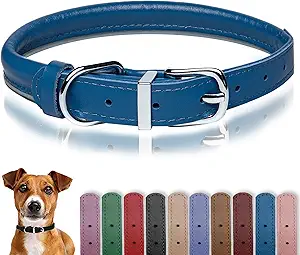
Why it’s #1: The rolled shape prevents matting and breakage in long-haired breeds. This isn’t a luxury — it’s a necessity for dogs who suffer from collar-induced hair damage.
Best for: Long-haired breeds (Shih Tzu, Yorkie, Maltese, Collie, Afghan Hound, Golden Retriever, Chow Chow).
Pros:
- Rolled shape prevents matting and hair breakage
- Brass hardware (won’t rust)
- Genuine leather
- 0.5″ width (good for small/medium long-haired dogs)
- Gentle on fur
Cons:
- Less durable than flat leather (the rolled shape is thinner)
- Not for strong pullers (may stretch over time)
- Break-in period required
Dr. Jackson’s take: “For any long-haired breed, a rolled leather collar isn’t a luxury — it’s a necessity. Flat collars break long hair, causing painful mats and breakage. The rolled shape glides through fur instead of snagging. If you have a Shih Tzu, Yorkie, or Collie, buy this collar.”
🔗 Read our full in-depth review: Rolled Leather Dog Collar Review →
2. ADITYNA Leather Dog Collar – Best Overall Genuine Leather
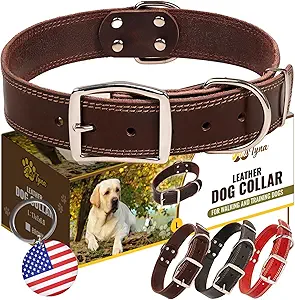
Why it’s #2: Solid genuine leather construction, good hardware, and affordable price. This is the standard bearer for quality leather collars — what most people picture when they think “leather dog collar.”
Best for: Most dogs (all breeds except long-haired), everyday wear.
Pros:
- Genuine leather
- Zinc alloy hardware (won’t rust)
- Double stitching for durability
- 1.0″ width (good for medium and large dogs)
- Affordable ($15-20)
Cons:
- Break-in period required (1-2 weeks)
- Not waterproof
- Flat design may catch on long hair
Dr. Jackson’s take: “The ADITYNA is what most people picture when they think ‘leather dog collar.’ It’s solid, reliable, and affordable. For a first leather collar, this is a safe bet. Just be patient with the break-in period — it will feel stiff for the first week.”
🔗 Read our full in-depth review: ADITYNA Leather Dog Collar Review →
3. DAIHAQIKO Genuine Leather Dog Collar – Best Padded for Large Breeds
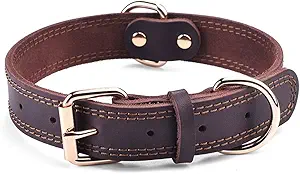
Why it’s #3: Padded interior adds comfort for large dogs who pull or have sensitive necks. The 1.5″ width distributes pressure across more surface area, reducing tracheal pressure.
Best for: Large breeds (Labrador, German Shepherd, Rottweiler, Husky), dogs who pull on leash.
Pros:
- Padded interior for extra comfort
- 1.5″ width (best for large/giant breeds)
- Stainless steel hardware (top quality)
- Heavy-duty stitching
- Genuine leather
Cons:
- Heavy (too much for small dogs)
- Longer break-in period (2-3 weeks)
- More expensive ($20-30)
Dr. Jackson’s take: *”For a 90-pound Labrador who pulls, a narrow collar concentrates pressure on a small area of the neck. The DAIHAQIKO’s 1.5″ width and padding spread that pressure out over a larger surface. Your dog’s trachea will thank you. This is my top pick for large, strong breeds.”*
🔗 Read our full in-depth review: DAIHAQIKO Genuine Leather Collar Review →
4. Didog Soft PU Leather Collar – Best Vegan / Waterproof Option
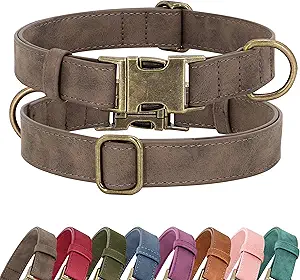
Why it’s #4: PU leather is synthetic — no animals involved, fully waterproof, no break-in period. Perfect for dogs who swim or owners who want low maintenance.
Best for: Dogs who swim, owners who want vegan options, dogs with leather allergies (rare but possible), low-maintenance owners.
Pros:
- Waterproof (can swim, get muddy, rinse clean)
- No break-in period (soft from day one)
- Vegan (no animal products)
- Affordable ($10-15)
- 0.8″ width (good for small/medium dogs)
Cons:
- Less durable than genuine leather (lasts 1-2 years)
- Doesn’t develop patina (no aging character)
- Can crack in extreme cold or sun exposure
Dr. Jackson’s take: *”If your dog swims weekly, genuine leather will rot. It’s not a matter of if, but when. The Didog’s PU leather is waterproof — hose it off and you’re done. Just know you’re trading durability for convenience. This won’t last 5 years like genuine leather. For swimming dogs, it’s worth the trade-off.”*
🔗 Read our full in-depth review: Didog Soft PU Leather Collar Review →
5. TEEMERRYCA Leather Dog Collar – Best Decorative / Style Option
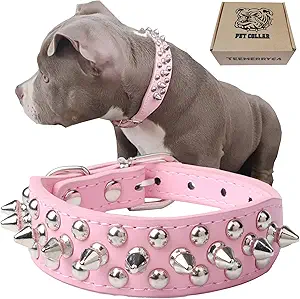
Why it’s #5: Beautiful decorative stitching and brass hardware — this is the collar for owners who want their dog to look sharp for special occasions or everyday style.
Best for: Fashion-forward owners, special occasions (photos, weddings, holidays), smaller dogs (looks best on medium and smaller breeds).
Pros:
- Beautiful decorative stitching
- Genuine leather
- Brass hardware
- Attractive design (multiple color options)
- 1.0″ width
Cons:
- Decorative stitching may fray over time with heavy use
- Style over substance — not for working dogs
- Break-in period required
Dr. Jackson’s take: “Let’s be honest — sometimes you buy a collar because it looks good. The TEEMERRYCA is that collar. The leather quality is solid, the brass hardware is nice, and the decorative stitching is beautiful. Just don’t expect this to survive a working dog’s lifestyle. For a city dog who goes on daily walks and looks good doing it, this is perfect.”
🔗 Read our full in-depth review: TEEMERRYCA Leather Dog Collar Review →
Comparison Table – All 5 Collars Side by Side
| Feature | Rolled Leather | ADITYNA | DAIHAQIKO | Didog (PU) | TEEMERRYCA |
|---|---|---|---|---|---|
| Leather Type | Genuine | Genuine | Genuine (padded) | PU (faux) | Genuine |
| Width | 0.5″ (rolled) | 1.0″ | 1.5″ | 0.8″ | 1.0″ |
| Hardware | Brass | Zinc alloy | Stainless steel | Zinc alloy | Brass |
| Break-In Required | Yes (1-2 weeks) | Yes | Yes (longer) | No | Yes |
| Waterproof | No | No | No | Yes | No |
| Best For | Long-haired breeds | Overall | Large breeds | Swimming/vegan | Style |
| Durability (years) | 3-5 | 4-6 | 5-7 | 1-2 | 3-5 |
| Price Range | $$ | $$ | $$$ | $ | $$ |
How to Break In and Maintain a Leather Dog Collar (Step-by-Step)
A leather collar that isn’t broken in properly will be stiff, uncomfortable, and may cause neck irritation. Proper maintenance extends the life from 2 years to 5-10 years.
Step 1: Apply Leather Conditioner Before First Use
New leather is dry. Conditioner adds back oils, making the collar more flexible and preventing cracks.
- Use a dedicated leather conditioner (not oil, not wax — Leather Honey or Bickmore are good brands)
- Apply sparingly to both sides of the collar with a soft cloth
- Let it soak in for 2-4 hours
- Wipe off excess with a clean, dry cloth
Step 2: Introduce Gradually (Don’t Go 24/7 Immediately)
Your dog needs time to adjust to the feel of a leather collar, and the leather needs time to mold to your dog’s neck.
- Day 1-2: 1-2 hours of wear
- Day 3-4: 4-6 hours
- Day 5-7: 8-12 hours
- Day 8+: Full-time wear (remove for swimming and heavy rain)
Step 3: Monitor for Stiff Spots
The collar will soften over 1-2 weeks of wear.
- If a spot remains stiff, massage it with your fingers
- Apply more conditioner to stubborn spots
- If the collar is painfully stiff after 3 weeks, it may be poor-quality leather
Step 4: Clean When Dirty (Never Soak)
Leather and water don’t mix.
- Wipe down with a damp cloth (not wet)
- Use saddle soap for heavy dirt or mud
- Never submerge leather in water
- Air dry only — no heat (hair dryers cause cracking)
Step 5: Condition Every 3-6 Months
This is the most important maintenance step — and the most commonly skipped.
- Apply conditioner every 3 months for active dogs (daily wear, outdoor lifestyle)
- Every 6 months for indoor-only dogs or dogs who wear collars occasionally
- More often in dry climates (leather dries out and cracks faster in low humidity)
What NOT to Do:
- No dish soap (strips natural oils, ruins leather)
- No soaking (causes warping and stretching)
- No heat drying (causes cracking)
- No olive oil or cooking oils (goes rancid, smells bad, attracts bacteria)
Dr. Jackson’s leather care tip: *”The most common mistake I see is owners never conditioning the collar. After 6 months without conditioner, leather dries out, cracks, and breaks. A 10bottleofconditionerturnsa20 collar into a 5-year investment. Buy the conditioner. Use the conditioner.”*
What Size Leather Dog Collar Does My Dog Need?
How to measure: Wrap a soft tape measure around the middle of your dog’s neck (not the throat). Pull snug but not tight. Add 2 inches for comfort.
Important: Leather doesn’t stretch much over time (despite what some owners think). Measure carefully.
Size chart by breed for leather collars:
| Breed Size | Example Breeds | Neck Circumference | Recommended Width | Recommended Collar Length |
|---|---|---|---|---|
| Toy | Chihuahua, Yorkie, Maltese | 8″ – 12″ | 0.5″ – 0.6″ | 10″ – 14″ |
| Small | Pug, Shih Tzu, Frenchie | 10″ – 14″ | 0.6″ – 0.8″ | 12″ – 16″ |
| Medium | Beagle, Corgi, Cavalier | 14″ – 18″ | 0.8″ – 1.0″ | 16″ – 20″ |
| Large | Labrador, Shepherd, Golden | 16″ – 22″ | 1.0″ – 1.5″ | 18″ – 24″ |
| Giant | Great Dane, Mastiff, Saint Bernard | 20″ – 28″ | 1.5″ – 2.0″ | 22″ – 30″ |
Special note for rolled leather collars: Because they’re round, they fit slightly looser than flat collars. You may need to go down 0.5-1 inch in length compared to a flat leather collar.
For more detail, read our complete dog collar size guide →
FAQs About Best Leather Dog Collar
Is a leather dog collar better than nylon?
For durability, yes — a quality leather collar lasts 5-10 years versus 1-2 years for nylon. Leather also molds to your dog’s neck for custom comfort. However, leather requires maintenance (conditioning) and isn’t waterproof. Nylon is better for swimming and low-maintenance owners. Choose based on your lifestyle.
Are leather collars safe for dogs?
Yes, when properly fitted and maintained. Leather is hypoallergenic and breathable. However, leather collars can harbor bacteria if not cleaned regularly. And never use a leather collar for swimming — wet leather stretches, cracks, and can rot. For swimming dogs, use nylon or PU leather.
What’s the difference between genuine leather and PU leather?
Genuine leather is real animal hide. It’s durable, develops a patina, and lasts years with proper care. PU leather is synthetic (plastic). It’s waterproof, cheaper, and requires no break-in, but it cracks after 1-2 years and doesn’t develop character. Choose genuine for durability, PU for waterproof convenience.
How long does a leather dog collar last?
A quality genuine leather collar lasts 4-6 years with proper maintenance (conditioning every 3-6 months). A full-grain leather collar can last 10+ years. A PU leather collar lasts 1-2 years. A bonded leather collar (avoid!) may last only 3-6 months. The biggest factor is maintenance — conditioned leather lasts, unconditioned leather cracks.
Can I use a leather collar on a dog that swims?
No. Water damages genuine leather — it causes stretching, cracking, and rot. If your dog swims regularly (weekly or more), buy a PU leather collar (waterproof) or a nylon collar. Save the genuine leather collar for dry land and daily walks.
How do I clean a leather dog collar?
Wipe with a damp cloth (not wet). Use saddle soap for heavy dirt or mud. Never submerge in water. Apply leather conditioner after cleaning. For deep cleaning, some owners use a 50/50 vinegar and water solution — test on a small area first.
What’s a rolled leather collar? Do I need one?
A rolled leather collar is round instead of flat. It’s specifically designed for long-haired breeds. The rolled shape glides through fur instead of snagging, preventing painful mats and hair breakage. If your dog has long hair (Shih Tzu, Yorkie, Maltese, Collie, Golden Retriever), a rolled collar is highly recommended — almost necessary.
My leather collar is stiff — is something wrong?
No. New leather collars are stiff. This is normal, not a defect. The collar will soften over 1-2 weeks of wear. Apply leather conditioner to speed up the break-in process. If the collar remains painfully stiff after 3 weeks of daily wear and conditioning, it may be poor-quality leather (bonded leather or heavily coated genuine leather).
⚠️ Vet Warning: Do NOT Use a Leather Collar If Your Dog:
- Swims regularly or lives in a wet climate — water damages genuine leather (cracking, stretching, rot). Use a waterproof PU leather or nylon collar instead.
- Has severe environmental allergies — leather can trap pollen, mold, and dust mites in its pores. If your dog has atopic dermatitis, wash the leather collar weekly with a damp cloth or switch to a washable nylon collar.
- Is a chronic puller (without training) — while leather is strong, a leather collar on a 100-pound puller can still cause tracheal damage. Pair with training or use a harness for pulling.
- Has a known leather allergy — rare, but possible. If your dog develops neck redness, itching, or hair loss with a leather collar, switch to nylon or biothane.
For most dogs, leather is safe and comfortable. But leather requires maintenance. A cracked, dried-out leather collar can break unexpectedly — inspect monthly and condition regularly.
Leather vs. Nylon vs. Biothane – Which Material Is Right for Your Dog?
| Material | Durability | Waterproof | Maintenance | Best For |
|---|---|---|---|---|
| Genuine Leather | 4-6 years | No | High (condition every 3 months) | Daily wear, style, large breeds |
| PU Leather (faux) | 1-2 years | Yes | Low | Swimming, vegan owners |
| Nylon | 1-2 years | Yes | Low | Swimming, budget, active dogs |
| Biothane | 5+ years | Yes | Very low | Hiking, muddy dogs, easy cleaning |
Dr. Jackson’s recommendation by lifestyle:
| If your dog… | Choose this material |
|---|---|
| Is a city dog, daily walks, style matters | Genuine Leather |
| Swims weekly (beach, lake, pool) | Nylon or PU Leather |
| Hikes in mud and rain | Biothane (not in this guide, but worth considering) |
| Has a low-maintenance owner | Nylon (no conditioning needed) |
| Has long hair | Rolled Leather (prevents matting) |
👉 See our full nylon vs. leather comparison guide →
Conclusion – Which Leather Collar Should You Buy?
There’s no single “best” leather collar for every dog. The right choice depends on your dog’s coat type, size, lifestyle, and your maintenance preferences.
Here’s my quick recommendation guide:
| If your dog… | Buy this… |
|---|---|
| Has long hair (Shih Tzu, Yorkie, Collie, Golden) | Rolled Leather Collar – Prevents matting and hair breakage |
| Is a medium/large breed (Lab, Shepherd, Boxer) | ADITYNA – Best overall genuine leather |
| Is a large breed who pulls (Rottweiler, Husky, Dane) | DAIHAQIKO – Padded, 1.5″ width distributes pressure |
| Swims weekly or you want low maintenance | Didog PU Leather – Waterproof, no break-in |
| Is a fashion-focused small or medium dog | TEEMERRYCA – Beautiful decorative stitching |
“A quality leather collar is an investment. Yes, it costs more upfront than nylon. But you’ll buy one leather collar for every five nylon collars you would have replaced. Buy the conditioner. Inspect monthly. Condition every 3 months. Your dog will wear the same collar for years.” — Dr. Allona Jackson, DVM
Ready to learn more?
Explore our complete dog collar ecosystem:
- Pillar guide: Best Dog Collar (2026): The Ultimate Buying Guide for Every Dog →
- Related articles:
- Best Shock Collar for Large Dogs →
- Best Bark Collar for Small Dogs →
- Best Training Collar for Puppies →
- Best Nylon Dog Collar →
- Best Reflective Dog Collar →
- Best Personalized Dog Collar →
Safety & educational guides:
- Dog Collar Safety Guide →
- How to Measure Dog Collar Size →
- How to Properly Fit a Dog Collar →
- Dog Collar Nylon vs. Leather →
Disclaimer
The information provided in this article is for general informational and educational purposes only and does not constitute professional veterinary advice, diagnosis, or treatment. Always seek the advice of your veterinarian or a qualified veterinary behaviorist with any questions you may have regarding your pet’s medical condition or training needs. Never disregard professional veterinary advice because of something you have read in this article. Product recommendations are based on independent research and affiliate partnerships. AvailPet.com and Dr. Allona Jackson, DVM are not responsible for any injury, loss, or damage resulting from the use or misuse of any product mentioned in this guide.
Sources
- American Veterinary Medical Association (AVMA). “Pet Collar Safety and Material Considerations.”
- American Kennel Club (AKC). “Leather vs. Nylon Dog Collars: Pros and Cons.”
- The Humane Society of the United States. “Choosing Safe Collars for Your Dog.”
This guide was reviewed for medical accuracy by Dr. Allona Jackson, DVM. Last updated: May 2026.