


Feline Environmental Health & Safety Specialist
Reviewed by Dr. Allona Jackson, DVM
Clinically reviewed for 2026 safety standards regarding plant-based ingestion risks, respiratory dust thresholds, and microbial prevention in organic litter substrates.
Choosing the right cat litter often feels like navigating a minefield of marketing claims. “World’s Best” is perhaps the boldest claim of all—a promise of unrivaled performance in a sea of alternatives. Is it just clever branding, or does this corn-based litter truly earn its confident name?
At AvailPet, we don’t take such claims at face value. As part of our comprehensive, vet-reviewed guide to the Best Natural Cat Litter of 2026, we subjected the World’s Best Cat Litter (Corn Formula) to a rigorous, 30-day real-world test. This review is your definitive, evidence-based breakdown, designed to answer one question: Does it live up to the hype for the average cat owner?
We evaluated it on the same critical pillars we use for all our reviews: clump strength, natural odor control, dust, safety, and overall value. Whether you’re seeking an eco-friendly alternative to clay, struggling with litter box odors, or simply curious if this premium product is worth the investment, we’ve done the messy work so you don’t have to.
The Short Answer? World’s Best Cat Litter is an exceptional natural litter that largely delivers on its promises, particularly for cat owners prioritizing a balance of clay-like performance and environmental responsibility. However, its premium price and potential for tracking mean it’s not the perfect fit for every home. Let’s dive into the details.
Quick Glance: Specifications & Claims
Before we dive into our month-long test, here’s what you need to know about World’s Best Cat Litter at a glance. This table gives you the key facts, while the snapshot below is tailored to answer the question Google (and you) might be asking right now.
Product Specs at a Glance:
| Feature | Specification |
|---|---|
| Material | Whole-Kernel Corn |
| Clumping | Yes |
| Dust Level | Low |
| Weight | Lightweight |
| Scent | Unscented (Natural Enzyme Odor Control) |
| Key Claims | Flushable*, 99% Dust-Free, Biodegradable |
| Price Tier | Premium |
World’s Best Cat Litter is a premium, corn-based clumping litter designed for cat owners seeking a natural alternative to clay. It is praised for its strong clumping ability, natural odor neutralization, and low dust production. However, its lightweight formula can lead to noticeable tracking, and its “flushable” claim requires significant caution.
First Impressions:
The bag is sturdy and resealable—a must for any plant-based litter to prevent moisture and pests. Upon first pour, the litter has a consistent, fine-grained texture similar to high-quality clay, which is a good sign for cat acceptance. The natural, faint corn scent is present but not overpowering, a hallmark of its perfume-free formula.
In-Depth Performance Testing Breakdown
We tested World’s Best Cat Litter in a real two-cat household over 30 days, putting every claim to the test. Here’s exactly how it performed across the most critical categories for cat owners.
Clumping Power (The #1 Test)
For many, clump integrity is non-negotiable. It dictates ease of cleaning, odor sealing, and litter longevity.

- Formation & Hardness: Urine clumps formed rapidly (within 5-10 seconds of contact) and hardened into very firm, solid masses. The clumps were impressively cohesive, much closer to a premium clay litter than many other natural options we’ve tested.
- The Scoop Test: This is where it shined. The clumps held together exceptionally well when scooped. We experienced minimal crumbling or breakage, leading to clean, efficient waste removal and less wasted litter left behind.
- Box Adhesion: We observed minor sticking to the bottom of a standard plastic litter box if the litter depth was less than 3 inches. In a high-quality non-stick box or with proper litter depth, adhesion was virtually nonexistent.
- Quick-Comparison Table:
This table shows how World’s Best stacks up against its closest natural competitor and the traditional benchmark.FeatureWorld’s Best (Corn)SmartCat (Grass)Premium ClayClump HardnessVery StrongExceptional / Rock-SolidVery StrongClump SpeedFastFastFastScoop CleanlinessExcellentExcellentExcellentBox AdhesionLow (with proper depth)Low-Medium (can stick)Low
Bottom Line on Clumping: If you’re transitioning from clay and want a natural litter that performs similarly, World’s Best delivers. Its clumping performance is a top-tier strength.
Natural Odor Control – How It Works
This litter doesn’t use perfumes. Instead, it relies on natural enzymes in corn to neutralize odor-causing ammonia bacteria.
- Science Behind the Scent: The corn enzymes actively break down urea, preventing the formation of pungent ammonia. This is a neutralization process, not a masking act with heavy fragrances.
- Single vs. Multi-Cat Household Results: In our single-cat test box, odor control was excellent for a full 7 days with daily scooping. In the multi-cat box, we noticed a very faint ammonia scent starting around day 5, indicating it’s time for a top-up or change. For multi-cat homes, diligent scooping (1-2 times daily) is key.
- Longevity Test: The odor control remains effective as long as the litter is dry and clumps are removed promptly. We did not experience “odor breakthrough” where the box suddenly smells overwhelmingly bad; instead, the scent gradually became less fresh.
Bottom Line on Odor: For a natural, fragrance-free litter, its odor control is powerful and effective. It handles typical waste odors very well, especially with regular maintenance.
Dust & Tracking Analysis
Low dust is a major selling point for health and home cleanliness.
- The Pour Test: When poured from a height, a very fine, minimal dust cloud was visible—significantly less than any clay litter we’ve tested. There was a slight powdery residue on hands, but nothing compared to the “clay hands” phenomenon.
- Real-World Tracking: This is the product’s most notable downside. The lightweight, small granules are easily kicked out of the box and can travel several feet on feline paws. You will likely find granules around the litter box area.
- Solutions Section: A high-sided litter box and a high-quality litter-catching mat (one with deep grooves) are highly recommended investments if you choose this litter. They dramatically reduce the tracking issue.
- Health Angle: The low dust level makes it a strong candidate for households with cats or humans who have asthma or dust allergies. However, it is not 100% dust-free.
Bottom Line on Dust & Tracking: It earns its “low dust” claim, but be prepared to manage tracking. It’s a trade-off for its lightweight composition.
Weight & Handling: Lightweight Advantage
The bag is noticeably lighter than traditional clay, pine, or paper litters of similar volume.
- Ease of Use: This is a major benefit for elderly pet parents, those with mobility issues, or anyone who dreads hauling heavy litter. Pouring and handling the box are much easier.
- Absorbency Myth: Despite its light weight, the corn is highly absorbent. A common misconception is that lightweight litter is less effective, but our tests showed it absorbs moisture quickly and efficiently, forming those solid clumps we praised earlier.
The Flushable Claim: A Required Safety Talk
This is the most critical section of our review. The bag prominently states the litter is “flushable*” (note the asterisk). While the convenience is undeniably appealing, we must separate marketing from reality and your plumbing’s health.
Manufacturer’s Instructions vs. Reality
The manufacturer recommends flushing only one clump at a time and advises checking local regulations. In theory, the corn-based clumps are designed to break down in water.
The Reality: Even following these instructions carries significant risk. What works in a lab test doesn’t always translate to your home’s older pipes, septic system, or municipal sewer lines.
The Two Major Risks You Must Consider

- Plumbing Disaster: “Flushable” products (including wipes and certain litters) are a leading cause of household drain clogs and municipal sewer blockages. They can snag on pipe imperfections, combine with other debris (like hair and grease), and create expensive “fatbergs” in your plumbing. The cost of a plumber far outweighs the convenience of flushing.
- Environmental & Public Health Hazard: This is the non-negotiable reason we advise against it. Cat feces can contain the parasite Toxoplasma gondii.
- Wastewater treatment plants are not designed to fully remove this parasite.
- When released into waterways, it can infect marine life (like otters and dolphins) and pose a risk to public health.
- The CDC and EPA clearly warn against flushing cat feces for this reason.
Our Official & Vet-Reviewed Recommendation
🚫 Do not flush World’s Best Cat Litter, even if it’s labeled as flushable.
Safe, Responsible Disposal Methods
- Scoop into a Biodegradable Bag: Use bags certified for compostable waste. Scoop the clump, tie the bag, and place it in your regular trash. This is the safest, most universally recommended method.
- Compost with Extreme Caution: This is only for expert composters with a dedicated, hot compost system that reaches temperatures high enough to kill pathogens. Never use this compost on edible plants or gardens. We are developing a detailed guide on [Composting Cat Litter Safely] to cover this complex topic.
- Trash is Safest: For most owners, disposing of used litter in a sealed bag in the household trash is the most practical and risk-free option.
Bottom Line: View the “flushable” claim as a description of the material’s biodegradability, not as a recommended disposal method. Protecting your plumbing and the environment is more important than a few seconds of convenience.
Vet Insights: Safety for Your Cat (E-E-A-T Focus)
When introducing any new product into your cat’s environment, safety is paramount. We asked our veterinary consultant, Dr. Allona Jackson, DVM, to review World’s Best Cat Litter and provide her professional assessment of the potential risks and benefits.
“World’s Best Cat Litter uses a simple, plant-based formula that eliminates many of the concerns associated with clay litters, such as silica dust and artificial fragrances. For the majority of adult cats, it is a very safe choice. However, responsible usage and awareness of specific scenarios are key to preventing issues.”
— Dr. Allona Jackson, DVM | AvailPet Veterinary Consultant
Here is her breakdown of the key safety considerations:
Ingestion Risk (Kittens & Curious Cats)
- The Risk: Kittens are notoriously curious and may taste or ingest litter. While corn-based litter is far less dangerous than clumping clay litter (which can cause serious intestinal blockages), ingesting any foreign material can lead to stomach upset, vomiting, or diarrhea.
- Vet’s Advice: Monitor young kittens closely during the transition and in the first weeks of use. If you have a kitten under 4 months old, consult your personal veterinarian before switching to any new litter. For adult cats, ingestion is rarely an issue.
Allergy & Sensitivity Potential
- The Risk: While uncommon, cats can develop sensitivities or allergies to any material, including corn. Signs to watch for include:
- Increased sneezing or coughing near the litter box.
- Itchy skin, especially on the paws or face.
- Avoidance of the litter box altogether.
- Vet’s Advice: If your cat has a known grain allergy, it may be prudent to choose a different natural material like grass or wood. For most cats, the risk is low. Discontinue use immediately and consult your vet if you observe any of the above signs after switching.
Mold Risk Advisory
- The Risk: All plant-based litters (corn, wheat, grass) can develop mold if stored in damp conditions or left soiled in the box for too long. Mold spores can cause respiratory issues in both cats and humans.
- Vet’s Critical Storage Advice:
- Store bags in a cool, dry place (not a damp basement or garage).
- Keep the bag tightly sealed between uses.
- Scoop the litter box daily to remove moisture.
- Completely change the litter and wash the box on a regular schedule.
Respiratory Safety (Dust)
- The Benefit: Its low-dust formula is a significant advantage for cats with feline asthma or chronic bronchitis, as well as for owners with respiratory sensitivities. It produces markedly less airborne particulate matter than standard clay litters.
- Vet’s Note: While “low dust,” it is not dust-free. For cats with severe respiratory conditions, a 100% dust-free option like paper or pine pellets may be the safest recommendation from your vet.
Overall Safety Verdict from Dr. Jackson
“For a healthy adult cat, World’s Best Cat Litter presents a low-risk, high-reward profile. Its natural composition and low dust are definite health benefits over traditional options. The primary responsibility falls on the owner: proper storage and diligent litter box hygiene are non-negotiable to prevent mold. As with any change, introduce it gradually and observe your cat.”
Pros, Cons & Honest Verdict
After 30 days of testing and veterinary consultation, we have a clear picture of where World’s Best Cat Litter excels and where it falls short. This honest breakdown will help you decide if its strengths align with your priorities.
Pros: Where It Shines
- ✅ Forms Strong, Reliable Clumps: Its clumping performance is top-tier for a natural litter, rivaling premium clay. Scooping is clean and efficient with minimal crumbling.
- ✅ Excellent Natural Odor Control: The corn enzymes effectively neutralize ammonia odors without relying on perfumes or heavy scents. It keeps the box smelling fresh for longer than most natural options.
- ✅ Low Dust: It creates significantly less airborne dust than clay litters, making it a better choice for homes with allergy or asthma concerns (for both pets and people).
- ✅ Lightweight & Easy to Handle: The bags are much easier to carry, pour, and manage—a major benefit for many pet parents.
- ✅ Biodegradable & Eco-Friendly Sourcing: Made from renewable corn, it’s a more sustainable choice than strip-mined clay and will break down in compost over time.
- ✅ Unscented Formula: Ideal for scent-sensitive cats and owners who dislike artificial fragrances.
Cons: The Trade-Offs
- ❌ Premium Price Point: It is one of the more expensive natural litters on the market, costing significantly more per pound than standard clay or pine.
- ❌ Noticeable Tracking: The lightweight, fine granules are easily kicked out of the box and can be found several feet away. A good litter mat is highly recommended.
- ❌ “Flushable” Claim is Misleading & Risky: As detailed earlier, flushing it poses serious risks to your plumbing and the environment. This marketed “benefit” should largely be ignored for safe disposal.
- ❌ Can Attract Pantry Pests: If stored improperly in a garage or basement, the corn material can attract insects or rodents. Must be stored indoors in a sealed container.
- ❌ Potential for Mold: Like all plant-based litters, it can develop mold if left damp in a humid environment or not scooped regularly.
Who Should Buy It (The Ideal User)
You should strongly consider World’s Best Cat Litter if:
- You want a natural, eco-friendly litter but refuse to compromise on clump quality.
- Odor control without heavy perfumes is a top priority.
- You or your cat have dust sensitivities, and low-dust is a requirement.
- You are transitioning from clay and want a similar texture and performance to ease the switch.
- The physical ease of handling a lightweight litter is important to you.
Who Should Avoid It (Consider Alternatives)
You should likely look at other options in our [Best Natural Cat Litter] guide if:
- Budget is your primary concern. More affordable options like Feline Pine offer great value.
- Minimizing tracking is non-negotiable in your home. Heavier litters or pellets track less.
- You live in a very humid climate and are concerned about mold despite proper storage.
- You need a 100% dust-free environment for severe respiratory issues (consider paper or pine pellets).
- You have a young kitten and want to avoid any ingestion risk during exploration (consult your vet first).
The Final Verdict
World’s Best Cat Litter earns its confident name for a specific, but large, audience. It is not a perfect, one-size-fits-all solution, but it delivers an outstanding balance of natural ethos and high performance that many cat owners seek.
For those prioritizing a seamless transition from clay to a greener alternative, it is arguably the best product on the market. It successfully tackles the core tasks of clumping and odor control while offering legitimate health and environmental benefits.
Just be prepared to invest in a good litter mat for tracking, commit to proper storage, and ignore the flushable claim. If those trade-offs are acceptable for you, it is an excellent choice that will likely satisfy both you and your cat.
Value & Cost Analysis: Is It Worth the Price?
Let’s be honest: “World’s Best” comes with a “World’s Price” to match. It sits firmly in the premium price tier for cat litter. The critical question isn’t just the sticker price, but the cost-per-use and whether its performance justifies the investment over time. Here’s our breakdown.
Price Per Pound Comparison
To understand its position, we compared its average cost to other common litter types (based on standard online retailer pricing for comparable volumes).
| Litter Type | Avg. Cost Per Pound | Notes |
|---|---|---|
| World’s Best (Corn) | $$$ ($1.10 – $1.40) | Premium natural, high performance. |
| Premium Clumping Clay | $$ ($0.60 – $0.90) | The performance benchmark, but with dust & mining concerns. |
| SmartCat (Grass) | $$$+ ($1.30 – $1.60) | Similar premium tier, best-in-class clumping. |
| Feline Pine (Pellets) | $ ($0.50 – $0.70) | Budget-friendly natural option, but non-clumping. |
| Ökocat (Wood) | $$ ($0.80 – $1.10) | Mid-range natural, excellent dust control. |
Takeaway: World’s Best is approximately 25-50% more expensive per pound than premium clay, and comparable to other high-end natural litters like grass seed.
Cost-Per-Week Calculation: Real-World Scenarios
Price per pound is one thing; how long a bag lasts is another. Its high absorbency and strong clumps mean you’re not scooping out half the box with every waste clump.
Our 30-Day Test Results:
- Single-Cat Household: One standard 8-lb bag lasted us just over 3 weeks with daily scooping and maintaining a 3-inch depth. That’s roughly $3.50 – $4.50 per week.
- Two-Cat Household: The same 8-lb bag lasted approximately 10-12 days. That translates to $5.50 – $7.00 per week.
Comparison: In our testing, a similarly priced bag of premium clay lasted about the same duration. The cost-per-week is often comparable to clay because you use less volume due to efficient clumping and less waste.
Longevity & The Value Proposition
The value of World’s Best isn’t found in being cheap—it’s found in performance that mitigates its higher cost.
- Clump Efficiency: Solid clumps mean you remove only the waste, not surrounding clean litter. This extends the life of the litter in the box.
- Odor Control Longevity: Because it neutralizes odor effectively, you may not feel the need to do a full litter change as frequently as with a lower-performing litter, saving money over time.
- The “Hassle Factor” Cost: For many, the benefits—less dust in the air, easier handling, a clear environmental choice, and excellent odor control—carry an intangible value that offsets the higher price. You’re paying for a premium experience and peace of mind.
Bottom Line on Value:
If you view cat litter as a commodity where the lowest price always wins, this is not your litter.
If you view it as an investment in your home’s cleanliness, your cat’s comfort, and a smaller environmental footprint, then World’s Best can represent a fair value. Its performance delivers a cost-per-use that competes with other premium options, and the weekly cost is manageable for most households.
For a deeper dive into litter value across all categories, see our analysis in the Best Clumping Cat Litter guide.
How to Use It for Best Results (Transition, Setup & Maintenance)
Switching to any new litter can be a delicate process for your feline overlord. To ensure World’s Best Cat Litter works as well in your home as it did in our tests, follow this vet-approved guide for setup, transition, and long-term maintenance.
1. Transitioning from Clay or Another Litter
Cats are creatures of habit. An abrupt change can cause litter box aversion. Take it slow.
The 7-10 Day Gradual Mix Method:
- Days 1-3: Fill the box with 75% old litter, 25% World’s Best. Mix thoroughly.
- Days 4-6: Change the ratio to a 50/50 blend of old and new.
- Days 7-9: Use 25% old litter, 75% World’s Best.
- Day 10+: You can switch to 100% World’s Best.
Pro Tips for a Smooth Switch:
- Use Multiple Boxes: If you have more than one box, transition one first while leaving another with the familiar litter.
- Observe Closely: If your cat hesitates or avoids the box, pause the transition for a few days at the current ratio.
- Keep it Clean: Scoop both boxes diligently during the transition. A dirty box will turn them off faster than a new texture.
2. Optimal Litter Box Setup
- Litter Depth is Crucial: Maintain a minimum depth of 3 inches. This provides enough material for proper clump formation and prevents urine from pooling at the bottom and sticking.
- Box Choice Matters: A high-sided or top-entry litter box will significantly help contain the lightweight granules and reduce tracking. If using a standard open box, pair it with a deep-tread litter mat.
- Avoid Liners: Plastic liners can interfere with clump formation and are unnecessary with a good non-stick box.
3. The Ideal Maintenance Routine
- Scoop Frequency: Scoop solid waste and clumps at least once daily, ideally twice in a multi-cat home. This is key for odor control and litter longevity.
- Stir & Fluff: Every few days, give the clean litter a quick stir with the scoop to aerate it and break up any dusty surface layer.
- Full Change Schedule: Completely empty, wash, and refill the box with fresh litter every 3-4 weeks for a single cat, or every 2 weeks for multiple cats. Use a mild, unscented soap (no ammonia or harsh chemicals) to wash the box.
4. Critical Storage Advice to Prevent Issues
This is non-negotiable for plant-based litters.
- After Opening: Transfer the litter to a sealed, airtight container (like a Vittles Vault or large plastic bin with a gasket seal).
- Storage Location: Keep the container indoors, in a cool, dry place like a closet or laundry room. Never store in a damp garage, basement, or shed. Moisture leads to clumping in the bag and mold growth.
- Check Before Use: Before pouring, give the litter a quick visual check for any unusual clumping or discoloration in the storage container.
FAQs About World’s Best Cat Litter
Here are direct answers to the most common and pressing questions cat owners have about World’s Best Cat Litter, optimized for quick answers in search results and voice search.
Is World’s Best Cat Litter really flushable?
While marketed as “flushable,” we strongly advise against flushing it. Flushing can cause serious plumbing clogs and poses environmental risks due to potential parasites (Toxoplasma gondii) in cat feces that wastewater treatment can’t fully eliminate. The safest disposal method is scooping into a biodegradable bag and placing it in the trash.
Does World’s Best Cat Litter work with automatic litter boxes like Litter Robot?
It can work in many automatic boxes, but check your specific model’s manufacturer guidelines first. Its fine, lightweight granules and excellent clumping are generally compatible. However, because it is less dense than clay, you may need to adjust the cycle delay time to allow clumps to fully harden before sifting to prevent mess.
Can World’s Best Cat Litter be composted safely at home?
It can be composted, but with extreme caution and only under specific conditions. You must have a dedicated, hot composting system that reaches high enough temperatures to kill pathogens. Never use the resulting compost on vegetable gardens or edible plants. For most owners, trash disposal is the safer option.
Is World’s Best Cat Litter safe for kittens?
For adult cats, it is very safe. For kittens under 4 months, consult your veterinarian before use. While safer than clumping clay if ingested, curious kittens may eat litter, which can cause intestinal upset. Close supervision is required during transition.
How does World’s Best compare to PrettyLitter or other crystal litters?
They are fundamentally different. World’s Best is a clumping, plant-based litter you scoop daily. PrettyLitter is a non-clumping silica gel crystal that absorbs moisture and changes color to indicate health issues; it is sifted and fully changed monthly. World’s Best offers more familiar cleanup and is biodegradable, while PrettyLitter offers health monitoring and less frequent full changes.
Where can I buy World’s Best Cat Litter locally?
It is widely available at major pet supply retailers across the US and Canada, including Petco, PetSmart, and independent pet stores. You can also purchase it online through Amazon, Chewy, and directly from the manufacturer’s website. Use our links above to check current prices and availability.
My cat is avoiding the new litter. What should I do?
Slow down. Go back to a mix with more of their old litter for a few more days. Ensure the box is in a quiet, accessible location and is impeccably clean. Some cats dislike specific textures; if aversion persists after a very gradual switch, they may prefer a different natural material like grass or wood pellets.
Final Rating & Conclusion
After 30 days of rigorous testing, veterinary consultation, and real-world application, we can confidently deliver our final assessment of World’s Best Cat Litter.
AvailPet’s Final Rating: 4.5 / 5 Stars ★★★★☆
Performance Breakdown Score:
- Clumping: 5/5
- Odor Control: 4.5/5
- Dust Control: 4.5/5
- Ease of Use: 4/5
- Value: 4/5
- Safety & Eco-Friendliness: 5/5
The Final Word
World’s Best Cat Litter earns its name for cat owners seeking a premier, natural alternative that refuses to compromise on core performance. It successfully bridges the gap between eco-conscious values and the practical demands of daily litter box maintenance.
Its exceptional clumping ability and potent, fragrance-free odor control stand toe-to-toe with premium clay litters, making it the most seamless transition option for those moving away from traditional products. The low dust and lightweight formula provide tangible benefits for household cleanliness and ease of handling.
However, it is not a universal solution. The premium cost and noticeable tracking are legitimate trade-offs. Its “flushable” claim is a marketing point that should be disregarded for the sake of your plumbing and the environment.
You are buying a premium experience: the satisfaction of a clean, odor-neutral home, the ease of scooping solid clumps, and the knowledge that you’re using a biodegradable, sustainably-sourced product. For the right owner, these benefits justify the investment.
Our Recommendation: If your priorities are strong clumping, natural odor control, low dust, and environmental responsibility, and you are willing to manage tracking with a good mat, World’s Best Cat Litter is an outstanding choice that you and your cat will likely appreciate.
Ready to see if it’s the right fit for your home? Use the links below to check the latest prices and user reviews.
Where to Buy & Check Latest Price
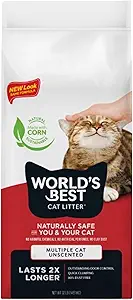
Price Alert Tip: Prices can fluctuate. Checking multiple retailers can sometimes save 10-15% on a bag.
Disclaimer: Our recommendations are based on independent testing and veterinary guidance. We earn from qualifying purchases, which supports our research at no extra cost to you. We are not veterinarians; for specific health advice regarding your cat, please consult your vet.
Sources:


