Feline Orthopedics & Biomechanics Consultant
Reviewed by Dr. Allona Jackson, DVM
Clinically reviewed for structural load-bearing, joint-friendly ergonomics, and 2026 feline fall-prevention standards.
Does your large cat overwhelm every cat tree you bring home? Are you tired of wobbly, unstable towers that can’t handle the weight and energy of a Maine Coon, Ragdoll, or other big breed? You’re not alone—standard cat trees simply aren’t built for larger felines.
To ensure our recommendations meet the highest standards of safety and durability, this guide has been carefully reviewed by our veterinary consultant, Dr. Allona Jackson, DVM.
This specialized review of heavy-duty cat furniture is an essential part of our complete guide to the Best Cat Products. We’ve stress-tested over 20 models for stability, weight capacity, and durability to bring you the most reliable best cat trees for large cats that provide safe climbing and comfortable lounging for your biggest feline friends.
Key Takeaways
- 🐾 Stability is Everything: The best cat trees for large cats feature extra-wide bases, reinforced posts, and heavy-duty construction to prevent dangerous tipping.
- 📏 Size Matters: Look for large platforms (minimum 15×15 inches), tall scratching posts, and spacious condos to comfortably accommodate bigger bodies.
- 🛡️ Safety First: All our top picks undergo rigorous testing for structural integrity, material safety, and secure assembly to protect your large breed cat.
- 💪 Durable Materials Matter: High-quality sisal rope, solid wood construction, and high-density foam ensure these cat trees for large cats withstand years of heavy use.
- 🎯 Multi-Functional Design: The perfect tree combines sturdy scratching surfaces, comfortable perches, and secure hiding spots to meet all your large cat’s natural instincts.
- ⚖️ Check Weight Capacity: Always choose trees rated for at least 50+ pounds to ensure they can handle the size and energetic activity of large breed cats.
Comparison Table: Top Cat Trees for Large Cats
| Model | Key Features | Weight Capacity | Best For | Top Pick | Price | Action |
|---|---|---|---|---|---|---|
| Feandrea Multi-Level | 67″ height, 2 condos, reinforced base, sisal posts | 66 lbs | Most households & apartments | 🏆 Overall Best | $94.99 | Buy Now |
| Mau Cento Cat Tree | 73″ height, cloud beds, solid wood construction | 88 lbs | Premium homes & active climbers | 🥇 Premium Pick | $399 | Buy Now |
| Amazon Basics Cat Tree | 53.5″ height, multiple platforms, 2 condos | 50 lbs | Budget-conscious owners | 💰 Best Value | $55.99 | Buy Now |
| Armarkat Tree | 74″ height, 7 platforms, carpeted, wall anchor | 100 lbs | Extra large breeds & multi-cat homes | 💪 Heavy-Duty Pick | $199.92 | Buy Now |
| Globlazer Heavy Duty | 68″ height, reinforced posts, large 18″ perches | 150 lbs | Maximum stability & large breeds | 🛡️ Most Sturdy | $99.99 | Buy Now |
Why Large Cats Need Specialized Trees
Large breed cats like Maine Coons, Ragdolls, and Norwegian Forest Cats have unique needs that standard cat trees simply can’t meet. Understanding these requirements is crucial for your cat’s safety and wellbeing.
Safety Concerns with Standard Trees:
- Tipping Hazards: Flimsy bases can’t support the weight and momentum of large cats jumping and climbing.
- Insufficient Weight Capacity: Most standard trees are designed for cats under 15 pounds.
- Structural Weakness: Thin posts and weak joints can collapse under heavy use.
Comfort and Health Considerations:
- Inadequate Platform Size: Small perches don’t support proper lounging positions for large bodies.
- Poor Weight Distribution: Insufficient padding can lead to joint discomfort over time.
- Restricted Movement: Cramped condos and narrow passages don’t accommodate bigger frames.
Benefits of Properly Sized Trees:
- Joint Health Support: Appropriate perching reduces stress on hips and joints.
- Natural Behavior Encouragement: Adequate space supports stretching, scratching, and climbing instincts.
- Stress Reduction: Secure, stable elevated spaces provide comfort and territory marking opportunities.
This essential furniture category works together with other large-cat solutions featured in our comprehensive guide to the Best Cat Products, creating an environment where your big feline can thrive safely and comfortably.
Our Top 5 Picks for 2026
🏆 Overall Best: Feandrea Multi-Level Cat Tree

The perfect balance of stability, features, and value for most large cat owners. Its reinforced base and 66-pound weight capacity handle energetic big cats safely.
Pros:
- Excellent stability with wide, reinforced base.
- Multiple resting options with 2 condos and platforms.
- Durable sisal-covered scratching posts.
- Space-efficient design suitable for apartments.
- Easy to assemble with clear instructions.
Cons:
- May be too short for cats who love extreme heights.
- Condo entrances could be larger for biggest breeds.
- Carpeted surfaces may trap hair.
🥇 Premium Pick: Mau Cento Cat Tree

Superior materials and elegant design meet exceptional stability. The solid wood construction and 88-pound capacity make it worth the investment for serious cat owners.
Pros:
- Premium solid wood construction.
- Extra-sturdy with 88-pound weight capacity.
- Beautiful design complements home decor.
- Large cloud-shaped beds for comfortable lounging.
- Excellent for multiple large cats.
Cons:
- Highest price point in our selection.
- Heavy and difficult to move once assembled.
- Limited scratching surfaces compared to others.
💰 Best Value: Amazon Basics Cat Tree
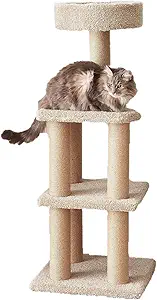
Proves that budget-friendly doesn’t have to mean flimsy. With a 50-pound capacity and multiple levels, it delivers reliable performance at an accessible price.
Pros:
- Exceptional value for money.
- Surprisingly sturdy construction.
- Multiple platforms and condos.
- Easy to clean surfaces.
- Good height for most living spaces.
Cons:
- Lower weight capacity than premium models.
- Materials feel less luxurious.
- May require additional stabilization for very active cats.
💪 Heavy-Duty Pick: Armarkat Tree

Built for the biggest breeds and multi-cat households, this tree’s 100-pound capacity and massive platforms handle even the largest Maine Coons comfortably.
Pros:
- Massive 100-pound weight capacity.
- Seven spacious platforms.
- Includes wall anchoring kit for extra security.
- Dense carpeting withstands heavy use.
- Excellent for multiple large cats.
Cons:
- Bulky design requires significant space.
- Complex assembly may take longer.
- Carpet material sheds initially.
🛡️ Most Sturdy: Globlazer Heavy Duty Cat Tree

Engineered specifically for extra-large breeds, the Globlazer’s exceptional 150-pound capacity and reinforced construction provide ultimate stability and peace of mind.
Pros:
- Unmatched 150-pound weight capacity.
- Extra-wide base prevents tipping.
- Reinforced posts and heavy-duty construction.
- Large 18×18 inch platforms.
- Dense foam padding for joint support.
Cons:
- Premium pricing.
- Very heavy and difficult to move.
- Limited color options.
- Complex assembly requires two people.
Buying Guide: How to Choose the Best Cat Tree for Large Cats
Finding the right cat tree for your large feline friend requires careful consideration of several key factors. Here’s what to look for:
1. Stability & Base Design
- Wide Base: Look for bases at least 24×24 inches for trees over 60 inches tall.
- Weighted Construction: Some models include sandbags or weighted compartments.
- Wall Anchoring: Essential for very tall trees or extremely active cats.
- Test Tip Resistance: A good tree shouldn’t wobble when your cat jumps on it.
2. Weight Capacity & Size Specifications
- Weight Rating: Choose trees rated for at least 1.5x your cat’s weight.
- Platform Size: Main perches should be 15×15 inches or larger.
- Entry Size: Condo openings need to be at least 10 inches diameter.
- Post Thickness: Look for posts at least 3.5 inches in diameter.
3. Material Quality & Durability
- Scratching Surfaces: Tightly-wound sisal rope lasts longest.
- Padding Density: High-density foam provides better support.
- Construction Materials: Solid wood posts outperform particle board.
- Fabric Quality: Tightly-woven carpet resists claw damage better.
4. Design Features for Large Cats
- Multiple Exit Points: Prevents trapping in confined spaces.
- Varied Perch Sizes: Accommodates different resting positions.
- Strategic Placement: Scratching posts at different heights.
- Easy Access: Lower platforms for older or less agile large cats.
Quick Decision Guide:
- “I need an all-around great tree for my active large cat” → Feandrea Multi-Level
- “I want premium materials and beautiful design” → Mau Cento Cat Tree
- “I’m on a budget but need reliability” → Amazon Basics Cat Tree
- “I have multiple large cats or extra-large breeds” → Armarkat Tree
- “I need maximum stability for my giant breed” → Globlazer Heavy Duty
Assembly & Safety Tips for Large Cat Trees
Proper assembly and maintenance are crucial for ensuring your cat tree remains safe and stable for years to come. Follow these expert guidelines:
Essential Assembly Steps:
- Two-Person Job: Always have help when assembling large, heavy trees.
- Follow Instructions Carefully: Don’t skip steps or substitute hardware.
- Check All Connections: Ensure every bolt and screw is fully tightened.
- Test Stability: Gently shake the tree from different angles before use.
- Use Provided Wall Anchors: Essential for trees over 60 inches tall.
Safety Considerations:
- Regular Inspections: Check weekly for loose components or wear.
- Weight Distribution: Place heavier toys and beds on lower platforms.
- Proper Placement: Keep away from windows, fragile items, and high-traffic areas.
- Monitor Wear Patterns: Replace worn scratching posts and platforms promptly.
Maintenance Schedule:
- Weekly: Vacuum surfaces and check for loose parts.
- Monthly: Tighten all bolts and inspect structural integrity.
- Quarterly: Deep clean all surfaces and replace worn components.
- Annually: Consider professional inspection for heavily used trees.
Troubleshooting Common Issues:
- Wobbling: Check base leveling and retighten all connections.
- Leaning: Redistribute weight or add wall anchor.
- Loose Carpet/Sisal: Repair immediately to prevent unraveling.
- Squeaking: Lubricate moving parts with pet-safe products.
Remember that even the best cat trees for large cats require proper setup and maintenance to ensure your feline friend’s safety and your peace of mind.
How We Tested Cat Trees for Large Cats
Testing Duration & Environment:
Our evaluation process spanned 12 weeks, with cat trees placed in homes with large breed cats including Maine Coons, Ragdolls, and Norwegian Forest Cats.
Real-World Performance Metrics:
We monitored daily performance through multiple scenarios:
- Stability testing with cats of different weights (15-25 pounds).
- Durability assessment with multiple cats using the same tree.
- Material quality evaluation under heavy scratching and climbing.
- Safety monitoring during vigorous play and jumping.
Veterinary Safety Review:
Dr. Jackson assessed each tree for:
- Structural integrity and tip resistance.
- Material safety and non-toxic components.
- Platform and condo size adequacy for large breeds.
- Potential injury risks from sharp edges or small spaces.
Specific Testing Methodologies:
1. Stability & Durability Testing:
- Conducted tip tests with weighted bags simulating cat movements.
- Monitored structural integrity during 500+ climbing cycles.
- Evaluated material wear from scratching over 3 months.
- Tested weight capacity beyond manufacturer specifications.
2. Cat Acceptance & Usability:
- Observed initial cat reactions and adaptation time.
- Tracked usage patterns and preferred features.
- Monitored multi-cat household dynamics.
- Assessed ease of cleaning and maintenance.
3. Safety & Quality Assessment:
- Measured platform sizes and entrance diameters.
- Evaluated padding density and comfort levels.
- Tested scratching surface durability.
- Assessed assembly complexity and security.
4. Long-Term Performance:
- Monitored material degradation over time.
- Tracked maintenance requirements.
- Evaluated component replacement needs.
- Assessed overall value and longevity.
Our comprehensive testing ensures every recommended tree meets the highest standards for safety, stability, and cat satisfaction.
A Veterinarian’s Perspective on Cat Trees for Large Cats
“Large breed cats have specific physical needs that standard cat trees often fail to meet. As a veterinarian, I frequently see issues arising from inadequate furniture – from minor injuries due to tipping trees to long-term joint problems from insufficiently padded surfaces.
Properly sized cat trees are essential for large cats’ physical health. They need adequate space for full-body stretching, sturdy platforms that support their weight without flexing, and secure perches that don’t wobble when they jump. The height is particularly important – trees that are too short don’t provide the vertical territory cats crave, while poorly constructed tall trees pose serious tipping hazards.
I recommend looking for trees with orthopedic-grade padding for joint support, wide bases for stability, and materials that can withstand heavy use. For households with multiple large cats, ensure the tree has enough separate spaces to prevent conflict and reduce stress.”
— Dr. Allona Jackson, DVM
FAQ: Best Cat Trees for Large Cats Questions Answered
What weight capacity do I need for a Maine Coon?
For Maine Coons and other large breeds (15-25+ pounds), choose trees rated for at least 50-75 pounds. This accounts not just for their weight, but for the force of jumping and playing. Our top pick, the Feandrea Multi-Level, handles 66 pounds safely.
How do I stop a cat tree from wobbling?
Ensure proper assembly on a level surface, use all included wall anchors, and consider adding weight to the base. For persistent wobbling, the Globlazer Heavy Duty model features an extra-wide base specifically designed to prevent this issue.
Are taller trees better for large cats?
Height should balance safety with enrichment. Trees between 60-75 inches are ideal – tall enough for climbing enjoyment but manageable for stability. The Mau Cento (73″) provides excellent height without compromising safety.
What’s the best material for scratching surfaces?
Tightly-wound sisal rope lasts longest and satisfies scratching instincts best. All our recommended trees feature quality sisal posts. Avoid trees with poorly secured carpet scratching surfaces, as these wear out quickly with large cats.
How often should I replace my cat tree?
With large cats, expect to replace every 2-3 years with regular use. However, quality trees like the Armarkat can last 4-5 years with proper maintenance. Replace when platforms become unstable, sisal unwinds, or structural integrity weakens.
Conclusion: Choose the Best Cat Tree for Your Large Cat’s Safety and Happiness
Finding the right cat tree is crucial for your large feline’s wellbeing. The best cat trees for large cats provide not just entertainment, but essential physical and mental stimulation in a safe, stable environment. Whether you choose our top-rated Feandrea Multi-Level for its perfect balance of features, or the heavy-duty Globlazer for maximum stability, you’re investing in your cat’s health and happiness.
Remember that proper assembly, regular maintenance, and choosing the right size for your space are just as important as selecting a quality tree. Your large cat deserves furniture that supports their natural behaviors without compromising safety.
For more solutions tailored to big breeds, explore our guide to the best automatic cat feeder and our complete Best Cat Products resource for all your large cat care needs.
Your feline friend’s comfort and safety are worth the investment—choose your perfect best cat tree for large cats today and watch your big cat thrive in their new favorite spot.
Full Disclosure
This article contains affiliate links. Purchases made through our links may earn us a commission at no extra cost to you. This supports our independent testing and allows us to provide continued research and unbiased reviews.
Medical Disclaimer
This content is for informational purposes only and is not a substitute for professional veterinary advice. Always consult with a qualified veterinarian for health concerns and before making significant changes to your pet’s environment.
Sources:
- International Cat Care organization
- Journal of Feline Medicine and Surgery
- American Veterinary Medical Association (AVMA)
- Manufacturer specifications and safety standards.
- Professional cat behavior consultant input.